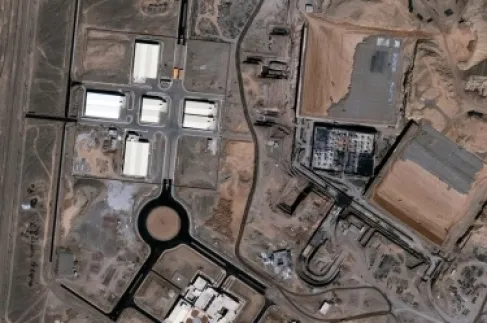
Khaberni - The administration of US President Donald Trump praised last year's bombing of Iranian nuclear sites as one of its greatest military successes.
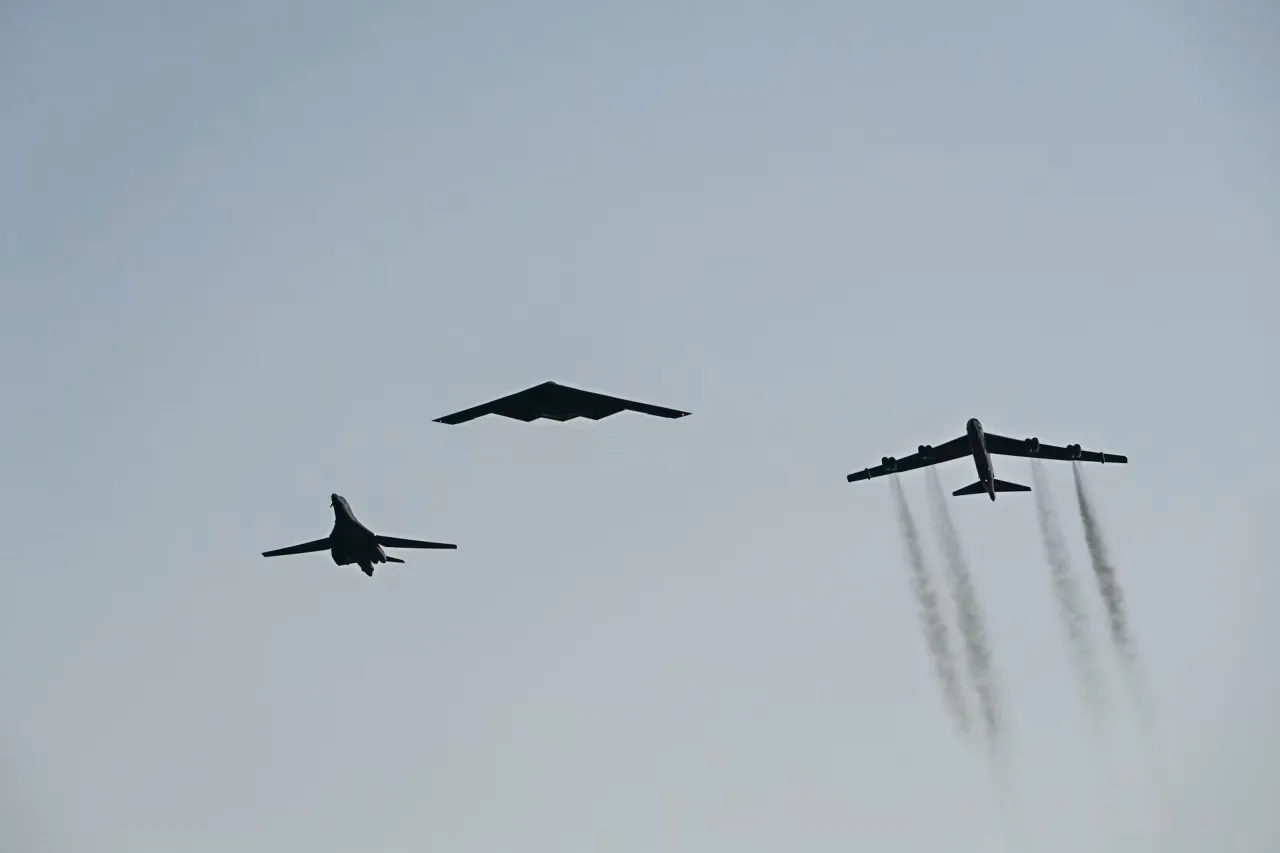
B-2 bombers from the US Air Force dropped 14 of the world's largest bombs, hitting two Iranian nuclear facilities without any casualties or losses of American aircraft, including dozens of fighter jets, refueling aircraft, and support planes that helped carry out the mission.
And now Trump threatens to attack Iran again, this time in solidarity with the hundreds of thousands of Iranians who have taken to the streets to oppose the hardline regime in Tehran.
However, analysts say that any new American attack on Iran is unlikely to mirror the strikes that targeted three nuclear sites last summer.
Any attack in support of the protesters would need to focus on a range of command centers and other targets related to the Iranian Revolutionary Guard, its affiliated Basij forces, and the Iranian police forces, which are the main entities carrying out the bloody crackdown against the opposition.
But these command centers are located inside populated areas, meaning there is a significant risk that American raids could kill the civilians Trump is trying to support, according to analysts. Civilian casualties could have counterproductive results.
Analyst Carl Schuster, a former US Navy captain and resident of Hawaii, said: "Whatever the United States does, it must be very precise without any injuries among those not affiliated with the Iranian Revolutionary Guard."
He added: "Any attack that harms civilians, even if unintentional, signals a foreign force seeking to suppress Iran and dominate it, not a liberating force."
What might the United States target?
Fellow analyst Peter Layton, a visiting fellow at the Griffith Asia Institute in Australia, reiterated the warning about the potential for civilian casualties but stated that there is a variety of targets available to Washington.
Layton said the top leadership in Iran would first be vulnerable, most likely indirectly, because Iran learned from Israeli attacks that targeted and killed top members of the Iranian military and nuclear scientists last year.
Schuster commented: "Iranian leaders have recognized the need to scatter and hide what is important to them. We have shown that we can hit what we can find."
However, targeting the residences and offices of the regime leaders would send a message, according to Layton, who mentioned that “the military value is minimal, but in reality, it's just theater to show that something is being done for the protesters."
Analysts believe that Washington might also target Iranian leaders financially.
Layton said: "The leadership and the Revolutionary Guard own a range of business enterprises and income-generating ventures across the country. Attack the specific facilities of financial importance to them as individuals and to their families."
He noted that there are many of these, citing Australian government estimates that between a third to two-thirds of Iran's gross domestic product is controlled by the Iranian Revolutionary Guard.
Layton continued, suggesting that "vulnerabilities" could be found in a list of institutions belonging to the Iranian Revolutionary Guard.
Schuster pointed to the gap between the Iranian Revolutionary Guard and Iran's upper leadership. He stated: "The goal is to make the Revolutionary Guard's leadership and bases ... care more about their survival than the survival of the regime," adding: "The Iranian Revolutionary Guard was never suicidal."
What weapons might the United States use?
The analysts noted that while B-2 bombers were the spearhead of last summer's American attack on nuclear sites, the diverse range of now-present targets might be better suited for other American weapons.
Schuster said: "The regional headquarters and bases of the Iranian Revolutionary Guard could be targeted with cruise (Tomahawk) missiles."
High-precision Tomahawk missiles can be launched from US Navy submarines and surface ships far off the Iranian coasts, reducing the risk of American losses.
JASSM (Joint Air-to-Surface Standoff Missile) is another missile option. This missile carries a 1000-pound (453.6 kilogram) penetrating warhead, has a range of 620 miles (1000 kilometers), and can also be launched from a variety of American Air Force aircraft, including F-15, F-16, and F-35 fighters and B-1, B-2, and B-52 bombers, as well as F/A-18 Navy fighters.
The analysts mentioned that drones could also be used.
Layton said: "We are unlikely to see manned aircraft dropping short-range ammo or free-falling bombs, as it would be deemed too risky."
While the United States typically has an aircraft carrier in the Middle East, as of last Monday, the closest carrier, the USS Abraham Lincoln, was thousands of miles away in the South China Sea.
Aircraft carriers sail with a flotilla of ships capable of delivering missiles and other forms of support for operations. In the fall, the Trump administration moved a carrier group, along with a large number of ships, aircraft, and thousands of troops, to the Caribbean as part of its pressure campaign on the leadership of Venezuela. As some of these assets began gradually returning outside the region, it reduced the options available to military planners for immediate action against Iran.
This means that any imminent airstrikes would come from a range of air bases in the Arabian Gulf region or from further afield.
During last summer's stealth B-2 bomber raids, they flew non-stop from their base in Missouri, USA, to Iran, refueling in-flight along the way. Any of the aforementioned American Air Force aircraft can also be refueled in-flight.
The analysts said that monitoring the movements of refueling aircraft could be one sign of an impending American move, along with whether attack aircraft like the B-1 bomber or F-15 fighter have been moved closer to Iran.
"Military theater"
Layton observed that "whatever method the Trump administration may choose to strike Iran this time, it is expected to be dramatic."
He stated: "The Trump administration is drawn to theatrical displays. This means exciting events that attract media attention and turn heads."
He added that he expects it to be swift, just like the one-time strike on nuclear facilities last year.
Layton mentioned that one way to do this might be to strike oil facilities in the waters of the Gulf. He added: "They are an easier and safer set of targets."
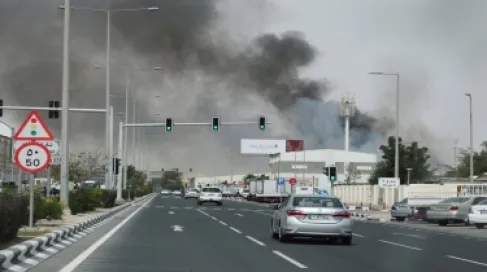
He continued: "This would inflict economic damage on Iran in the medium to long term. There would be some drama in the large smoke columns, and it would be easy for foreign media to cover it."