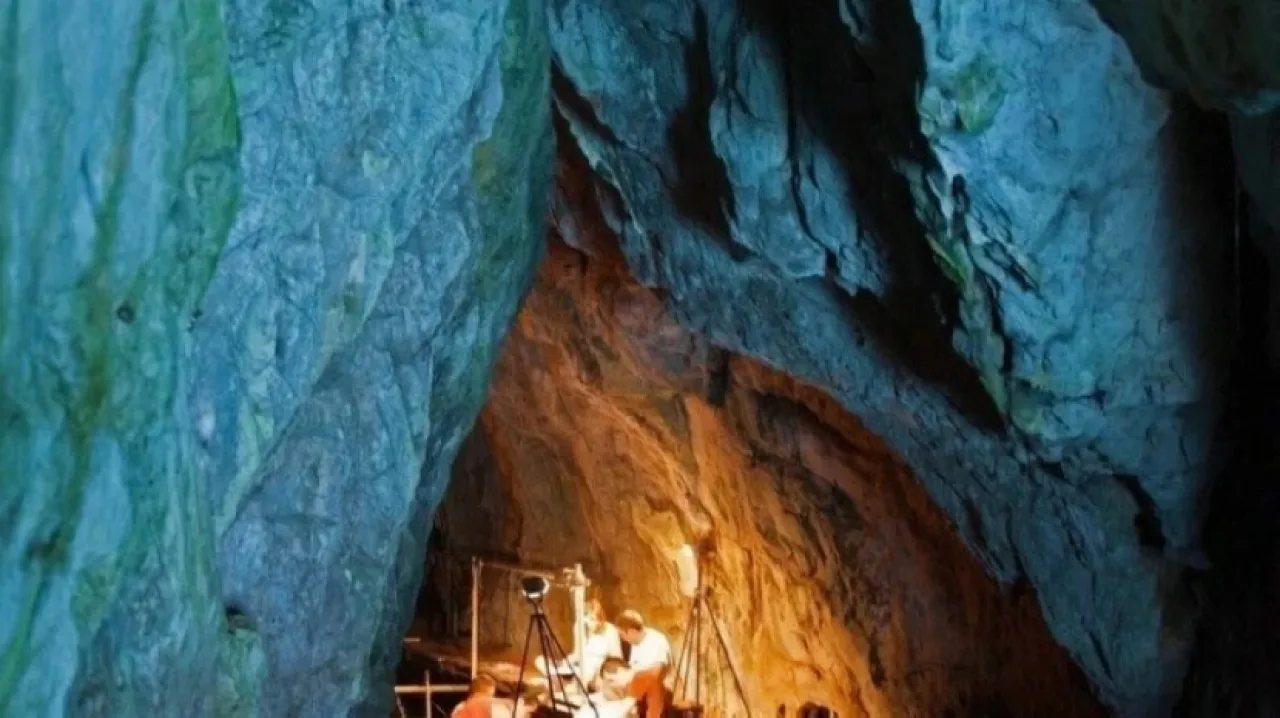
Khaberni - A new archaeological discovery in the Gorham's Cave Complex in Gibraltar has amazed archaeologists around the world, after revealing a secret room inside Vanguard Cave, which had been completely closed and isolated for no less than 40,000 years, in a discovery described by researchers as a "rare time capsule" that could redraw the understanding of human history and change the narrative about the extinction of Neanderthals.
The National Museum of Gibraltar, under the leadership of Professor Clive Finlayson, the museum director and chief scientist, announced that the new room, about 13 meters long, was discovered during ongoing survey work since 2012, when the team noticed fine sandy deposits on the back wall of the cave, expanded the gap, and discovered a space that no one had entered since the Old Stone Age.
Predatory Animal Remains
The research team found inside the sealed room remains of rare predatory animals in a cave context, bones and slits, spotted hyena, vultures, and a large marine snail shell brought by the "Neanderthal" about 20 meters into the cave from the shoreline, indicating deliberate human activity and the use of distant marine resources.
The scientists noted that the sands blocking the room are dated to about 40,000 years ago, confirming that the room is older and that the "Neanderthals" were the ones who used it.
Gorham's Cave Complex has been a UNESCO World Heritage site since 2016 and is considered one of the last strongholds of "Neanderthal Man" on Earth, where the first Neanderthal skull in history was discovered in Gibraltar in 1848, and it was previously believed that Neanderthals had gone extinct in the area about 42,000 years ago.
The Last Strongholds of "Neanderthal Man"
However, increasing evidence at Gorham from stone tools, stone engraving dating back more than 39,000 years, evidence of seal hunting, decoration with feathers, and even the use of fire, indicates that some groups continued to live there until 33-24 thousand years ago, which is thousands of years after their extinction in most of Europe.
This new discovery, details of which were announced in January of this year, supports the idea that the Iberian Peninsula, especially Gibraltar, was a last refuge for the "Neanderthals," thanks to its mild climate and diverse marine and terrestrial resources, which prompts scientists to reevaluate the timing and causes of extinction of this close human relative.