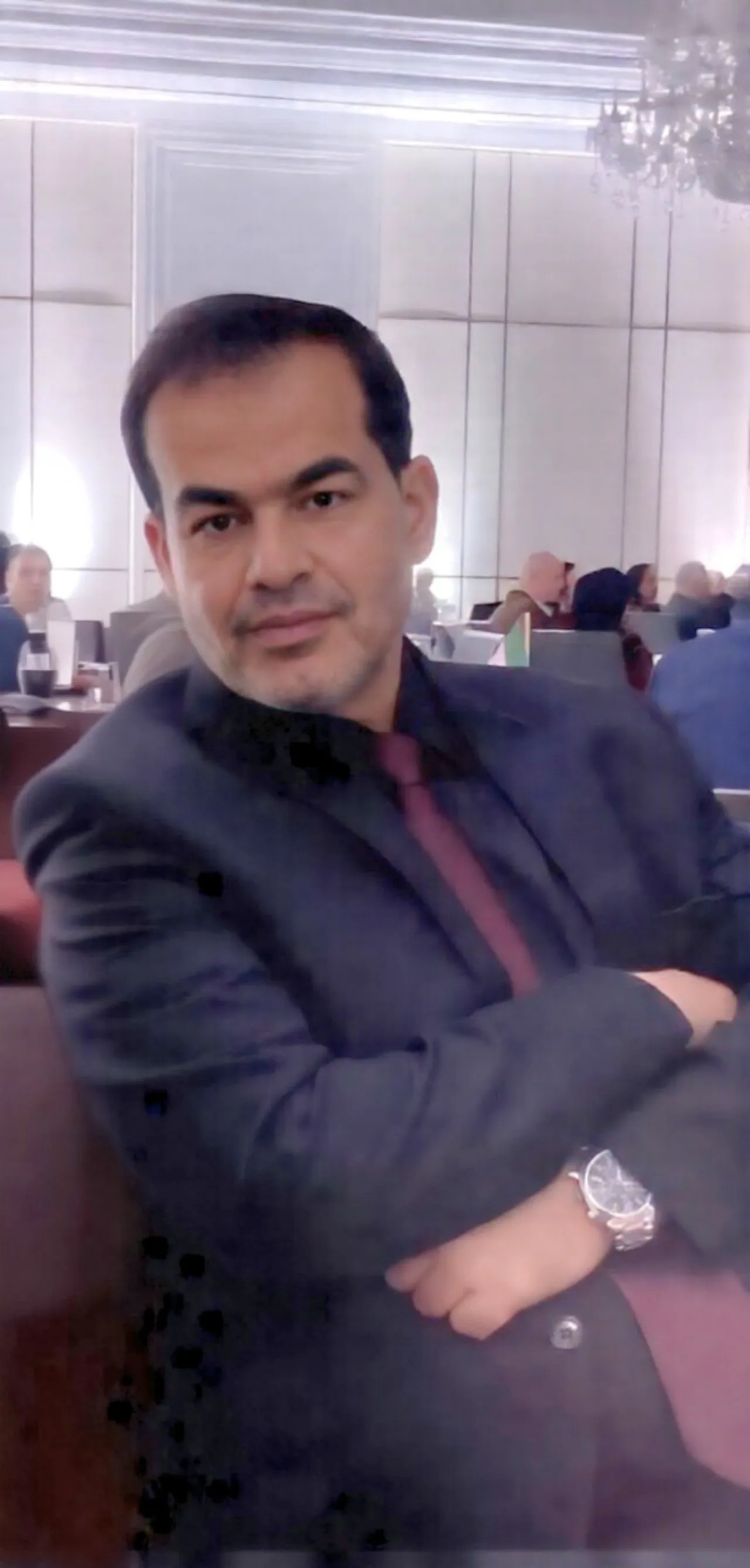
From the very moment Prime Minister Jafar Hassan appeared on the Jordanian television, the scene was not just a belated interview or a calculated protocol appearance; it resembled more of an internal signal, perceived by those who understand states from within, not from their headlines.
The discourse was neither noisy nor defensive, nor laden with claims of achievement; instead, it was a quiet yet decisive shift from an exhausted language to a language being tested!
For many years, the official Jordanian discourse lived within tired medical and political metaphors: the reanimation chamber, the bottleneck, regional circumstances, unprecedented challenges... etc.
Initially, these terms served as honest descriptions of a pressing reality, but their repetition turned them into something akin to a linguistic mask; used not to understand reality, but to adapt to it, and perhaps to coexist with its continuation!
The danger in this lexicon is not that it is false, but that over time, it reshapes the state's consciousness of itself; a state that always sees itself in an emergency loses -slowly- its ability to plan, replacing strategic imagination with survival management!
What Jafar Hassan did, with the calm of a man who has experienced the state at its heart, was not to invoke this vocabulary for shelter, but to surpass it. When he declared that 2026 is the year to begin building, he was not just launching a temporal slogan, nor selling cheap hope, but realigning the relationship between the state and time; because states do not rise by complaining more, but by having the courage to say: one phase ends, and another begins!
Here, this appearance intersects with what I previously wrote about Jafar Hassan as an interpreter of the Jordanian state, not because he is the most eloquent of politicians, but because he carries the institutional memory.
His emergence from the royal decision-making kitchen—serving as the chief of the Royal Court and the director of the office—means he was formed in a place where ideas are tested before being announced, and words are measured by their impact a decade later, and possibly more, not by what they create in a news bulletin or a press statement!
The state, in its profound sense, is neither an administrative apparatus nor a rhetorical platform. It is a living entity with memory, sensibility, and precise boundaries between what is said and what is done. And those who understand its internal language can speak on its behalf without usurping it! Jafar Hassan doesn't seem like a vision maker from nowhere, but as a reader of a long tradition of calm recalculation, and he tries to shift it from managing fragility to creating capacity!
Economically, the importance of what was presented lies not in the magnitude of the numbers, but in the nature of the direction. Talking about billions being invested in: water, transport, energy, and regional linkage, is a discussion about reshaping the structure of the economy, not just beautifying its outcomes. The difference between a state that manages crises and a state that builds a future is the difference between one who funds consumption and one who invests in sovereign assets.
The national carrier, the railroads, the feather, developing logistical infrastructure...etc. are not mere government projects, but pillars of a state thinking in terms of decades and not in terms of electoral cycles.
In the file of urban expansion, the defense of "Umrah" was far from populist. The city wasn't presented as a dream nor as an escape, but as a rational response to demographic shifts that silently press on the quality of life in Amman and Zarqa, where collapse doesn’t happen all at once, but erodes time, space, and service, day after day.
Preemptive thinking here is not a luxury, but a calm attempt to save existing cities before they suffocate.
Politically, the discourse -in my opinion- was mature to a rare extent. Replacing the logic of overcoming with the logic of cooperating with the legislature is not a weakness, but a recognition that true reform in composite states is not done by bypassing institutions, but by being patient with them. This is the language of someone who knows that institution building is slow, exhausting, and not populist, but it is the only one that does not collapse at the first test.
In the background, an essential idea lurks not spoken directly: states do not operate efficiently when signals multiply, and major projects do not succeed when decisions splinter. Unity of rhythm, not a cacophony of powers, is what creates achievements, and recent experiences have taught us that the absence of this harmony transforms the executive officer into a manager of balances rather than a leader of execution, as smart states do not eliminate institutional diversity, but they manage it well so that the state moves in one direction.
Regionally, the speech was uniquely Jordanian without additions: Palestine as a depth for national security not as rhetoric, Syria as a neighbor not as a battleground, and water as a matter of existence that does not allow politicization! This is not language of emotion, but that of a state that knows itself.
Ultimately, Jafar Hassan emerged from this interview placing the government's credibility, and with it the executive state's credibility, before the test of time, because those who set deadlines, name projects, and provide figures, cannot later afford to hide behind language.
Jordanians don’t wait for miracles, nor do they easily believe words, but they know well that states do not start with accomplishments, but with a vision! What was presented here is not just rhetoric, but a complete concept: either it transforms into a new foundational moment, or —God forbid— it is added to the archive of terms we have mastered!
Yet, history tells us one consistent thing:
States do not enter their major phases with noise,
but when something deep changes in their language.
And when talk shifts from justification,
to announcing a beginning.
And here...
the Era of Building begins!