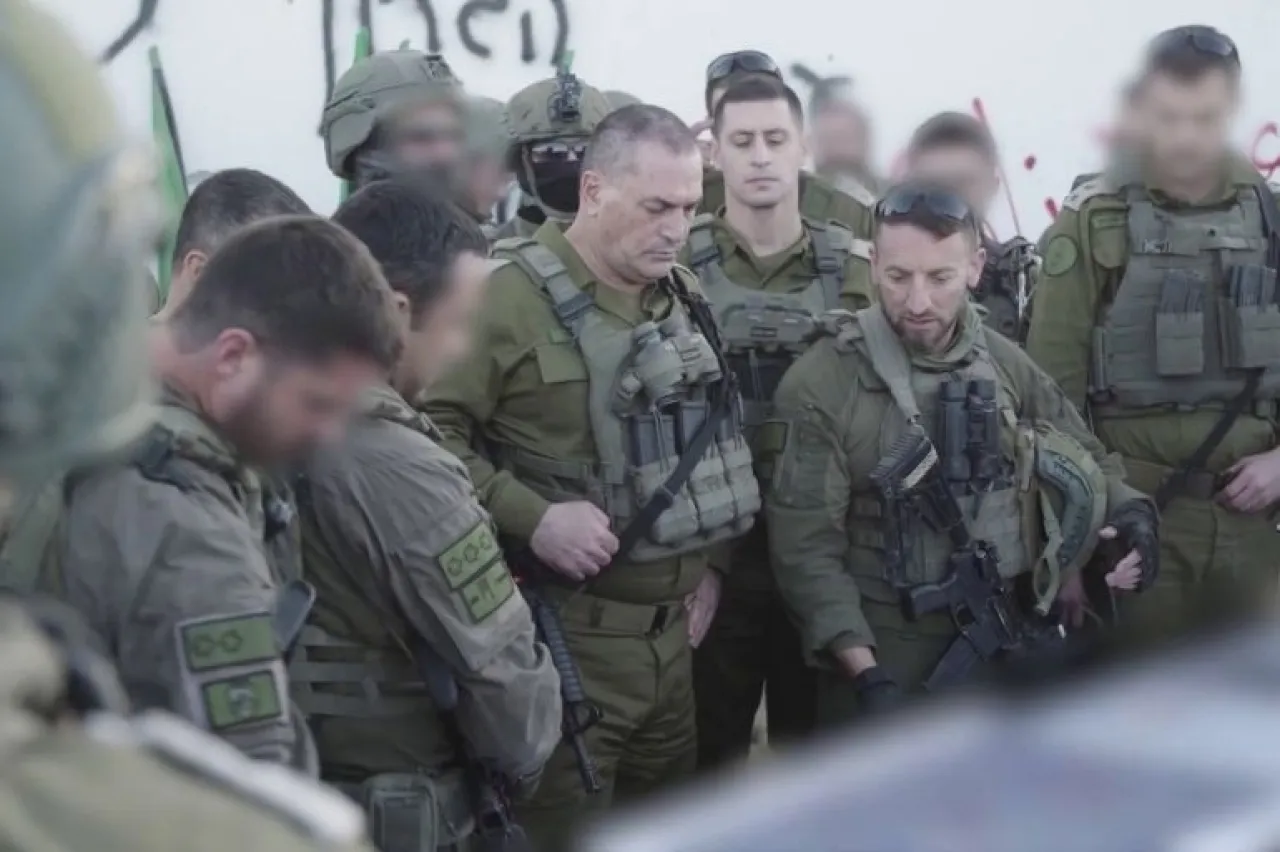
Khaberni - Israeli Channel 13 stated that today, Monday, the Israeli army presented the development plan of Chief of Staff Eyal Zamir for the next decade, estimated to cost 350 billion shekels (approximately $111 billion).
The channel reported that officials in the Israeli army said that "the army is in an arms race and learning against an enemy that continues to develop itself."
The channel added that the plan, named "Hoshen", was written after an assessment of the situation in the Israeli army and is based on lessons from the attack on Iran and the war in Gaza and Lebanon.
The channel mentioned that the plan is detailed in terms of goals, steps, and specifics for each of the next five years, noting that the Israeli army was instructed to design the plan by the political level, and it will be reviewed each year according to developments in the Middle East.
According to the channel, "the plan prioritizes restoring the capabilities of the Israeli army after two years of war, preparing for the upcoming war, and adapting the army to face future challenges."
"The Essence of the Plan"
The channel continued that "the essence of the plan lies in the readiness of the Israeli army for a surprise war, as it includes border fortifications in light of the lessons of October 7, to prevent another surprise attack."
In conclusion, it stated that "the Israeli army identifies Iran as the main enemy, and the plan includes rebuilding the capabilities demonstrated in Operation 'Rising Lion.' The Israeli army also emphasizes the issue of manpower, in light of attrition among regular and reserve personnel."
In turn, "Israel Today" newspaper clarified that the plan includes developing the offensive maneuvering capabilities of the army, ensuring the continuous operation of units under precise and heavy fire, enhancing intelligence gathering capabilities, supporting innovation projects, and using robots and autonomous systems, with a focus on expanding capabilities in the space sector, and making extensive organizational changes to prepare for military operations in this field.
The newspaper added that the plan includes support teams focused on improving efficiency for the optimal use of resources and dealing with what it calls "technological surprises" in the areas of defense and attack, in addition to another team focused on organizational culture within the army.
"Israel Today" explained that the "Hoshen" plan is spread across 12 main tracks, symbolically referring to the 12 stones in the "Hoshen" (High Priest's breastplate) associated with the tribes of Israel, and it includes a specific track for addressing the exhaustion among soldiers in compulsory, permanent, and reserve service after two years of war.
The newspaper clarified that the 350 billion shekel budget for the decade does not include American aid, as the path of this aid will be discussed in the coming weeks within joint workgroups between Israel and the United States.
"Israel Today" quoted Zamir saying that the "Hoshen" plan "sets the track on which the army will operate in the coming years, based on the lessons of October 7 and the war."
Arms Import
Last month, Israeli Prime Minister Benjamin Netanyahu said on Wednesday that Israel will spend 350 billion shekels ($111 billion) on developing an independent arms industry to reduce its dependence on other countries.
He added during a graduation ceremony for new pilots, "We will continue to obtain essential supplies while working to arm ourselves independently."
Israel ranks 15th globally in arms imports, accounting for about 2% of total global arms imports.
The United States is the largest supplier of arms to Israel, accounting for 69%, followed by Germany with 30%, and Italy with 0.9%, in addition to other suppliers with smaller percentages such as the UK, France, and Spain.
However, according to Netanyahu, Israel is seeking to move beyond reliance on foreign support, as he announced approval for allocating more than $100 billion over the next decade to build an independent Israeli munitions industry and "reduce dependence on any party, including allies."