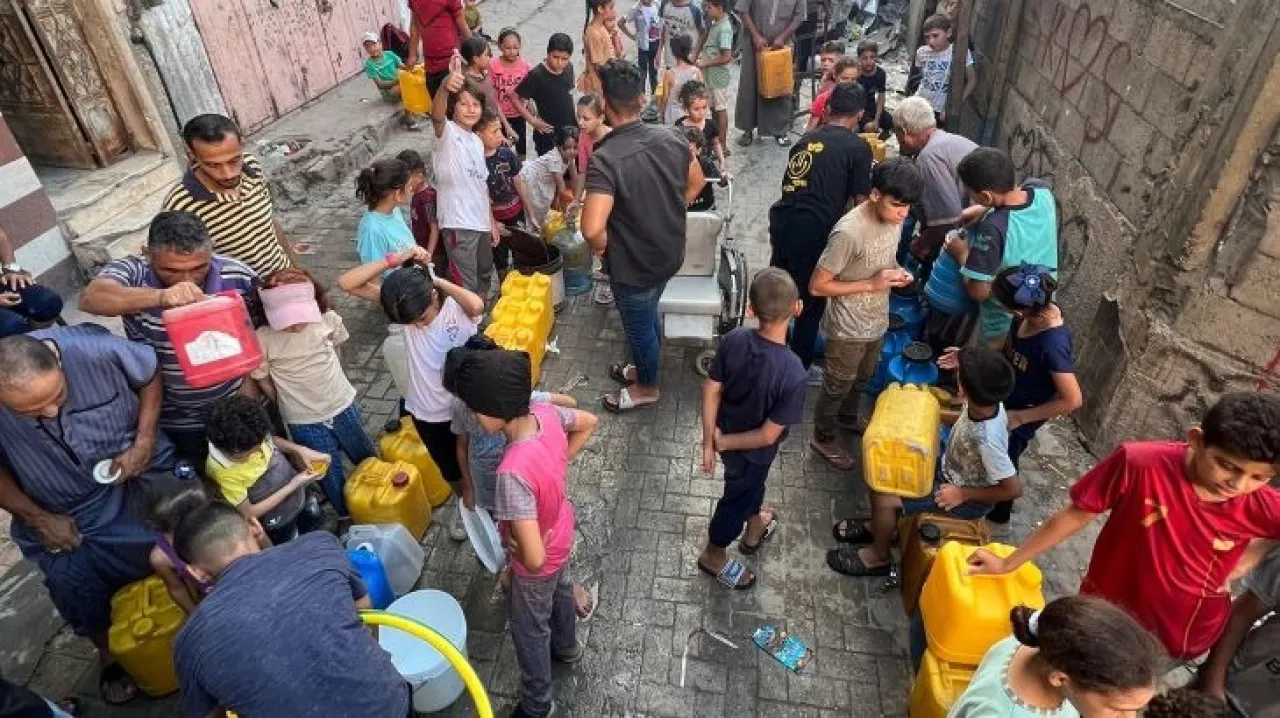
Khaberni - The UN Special Rapporteur on the right to drinking water, Pedro Arrojo Agudo, stated that the Gaza Strip is facing an unprecedented humanitarian catastrophe due to the widespread destruction of water infrastructure, accusing the Israeli army of using water as a weapon in the war, in an explicit violation of international humanitarian law.
Agudo added - in an interview with Al Jazeera Mubasher - that about 90% of the desalination and purification water stations in Gaza were destroyed or directly attacked during the war, stressing that - four months after the ceasefire - the water supply to the sector has not resumed sufficiently, and the severe shortage of drinking water still exists.
He continued that international institutions and non-governmental organizations are experiencing severe restrictions that prevent them from providing the minimum of water and food for the population, amidst the destruction of wells and water tanks, noting that what remains is only enough for a few thousand residents.
Regarding the per capita share of potable water, the rapporteur stated that currently only about 10% is available compared to what was available before the war, pointing out that the disabled purification stations have not yet been repaired, resulting in the spread of contaminated water with severe effects, especially on children and the elderly.
Agudo emphasized that the problem lies not only in the lack of water, but in the absence of drinkable water, and warned of the spread of diseases, describing what is happening as a form of ethnic cleansing and the systematic use of water as a war tool against Palestinian civilians.
Weapon of War
The UN Special Rapporteur on the right to drinking water confirmed that he agrees with reports from human rights organizations - such as Human Rights Watch and Oxfam - which considered that Israel uses water as a weapon of war in Gaza, clarifying that this behavior is prohibited under international humanitarian law.
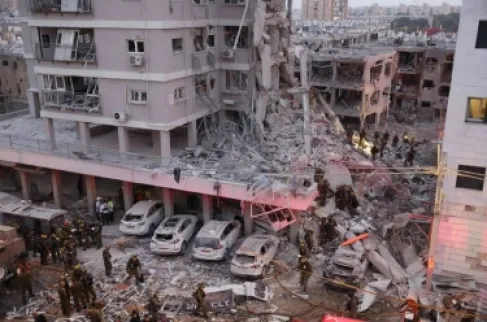
He mentioned that he participated - alongside the special rapporteur concerned with Palestinian affairs - in preparing a report on the reconstruction of Gaza, which concluded that 92% of the facilities and infrastructure in the sector need rebuilding, including water facilities and sanitation, considering that the scale of destruction in Gaza exceeds that seen in other conflicts.
Agudo confirmed that Palestinians have the right to dignity, self-determination, and the establishment of their state, considering that any pathway for the reconstruction of Gaza must be based on international law and humanitarian law, not on the logic of investment or commercial exploitation.
He reminded of the decision of the International Court of Justice issued in July 2024, which called for the cessation of the Israeli occupation, which was later confirmed in a meeting of the United Nations General Assembly in September of the same year.
Regarding urgent measures, the rapporteur called for the immediate implementation of the humanitarian agreements signed in Sharm el-Sheikh, including the introduction of aid and basic services through all crossings, especially the Rafah crossing, and the reactivation of water desalination and purification stations at full capacity, ensuring they are not targeted again.
Agudo concluded by affirming that restoring the right to drinking water represents the first and fundamental step in restoring life and dignity to the residents of the Gaza Strip after many months of suffering.