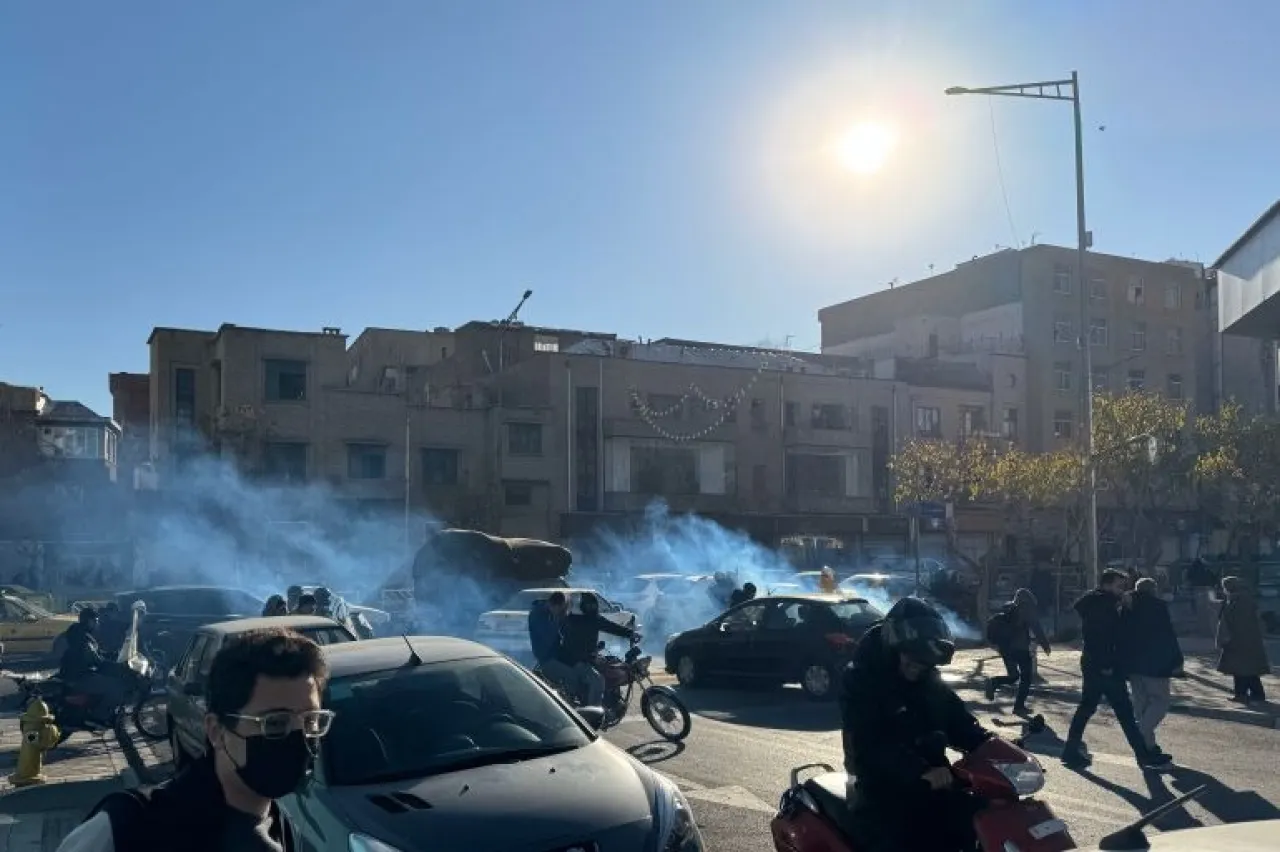
Khaberni - New clashes on Thursday between protesters and security forces resulted in 3 additional deaths in western Iran, on the fifth day of the angry protest demonstrations that were accompanied by rioting and led to casualties and a number of injuries.
Here are answers to 4 questions that summarize what is happening in Iran:
1 – What are the reasons for the protests?
Traders sparked the initial protests last Sunday, walking over a bridge in Tehran in protest against the high cost of living and the economic downturn in the country.
Images of many shops completely shut down were seen, indicating that the protests had impacted economic activity.
Other segments of society quickly joined the traders, and the protests expanded to other areas.
These protests occurred after the Iranian rial lost more than a third of its value against the dollar, while hyperinflation has been weakening the purchasing power of Iranians for years.
2 – What about the human and material losses?
The protests turned into riots and there were clashes with the police in more than one area.
By Thursday afternoon, 6 deaths were reported including security personnel, according to media sources, along with a number of injuries, while official buildings also suffered damage due to the rioting.
3 – How did the authorities and security agencies respond?
The police used tear gas and made several arrests, vowing to crush any attempt to spread chaos and jeopardize security. The Iranian News Agency (IRNA) confirmed that the police had arrested some of the riot leaders.
Head of the Judiciary in "Lorestan" province, western Iran, Saeed Shahwari, announced the opening of a judicial file regarding the death of a member of the Mobilization Forces, known in Iran as "Basij Forces," in the city of "Kuhdasht," during skirmishes that occurred during protests in the city on Wednesday afternoon.
Shahwari emphasized the need for thorough and legal investigation in all aspects of this incident and demanded decisive actions, without any leniency or negligence, against those responsible and the perpetrators.
Meanwhile, the chief prosecutor of Kuhdasht city, Kazem Nazari, announced the arrest of 20 people as a result of what he called disturbances witnessed in the city on Wednesday.
Tasnim News Agency reported on Wednesday evening that 7 individuals described as affiliated with "groups hostile to the Islamic Republic based in the United States and Europe" were detained.
It added that those arrested were intending to lead popular protests into chaos and rioting, and it was found that one of the detainees was armed, according to its claim.
Fars News Agency later added that during disturbances in Lordegan, movement of some key instigators by vehicles without registration plates was observed, from which weapons and ammunition were being distributed to rioters, stressing that the police had managed to arrest some of the riot leaders, and that the situation is now calm in the city, according to their expression.
4- How did President Bezshkyan handle the events?
Iranian President Masoud Bezshkyan refused to attribute the Iranian citizens' discontent to foreign parties, such as the United States or others.
He asserted that the problem stems from poor internal management, and called for serious engagement with the demands of the protesters.
In a meeting in "Chaharmahal and Bakhtiari" province in the southwest of the country, the Iranian president emphasized the importance of listening to people's concerns and not imposing additional burdens on them.
In a televised speech, he said: "From an Islamic perspective, if we do not solve the issue of people's livelihood, we will end up in hell."