Khaberni - Babak Tavassoli, a political and credit risk analyst at "Scor", confirmed in a post on "LinkedIn" that the probability of a military strike on Iran increases with the ongoing US military mobilization.
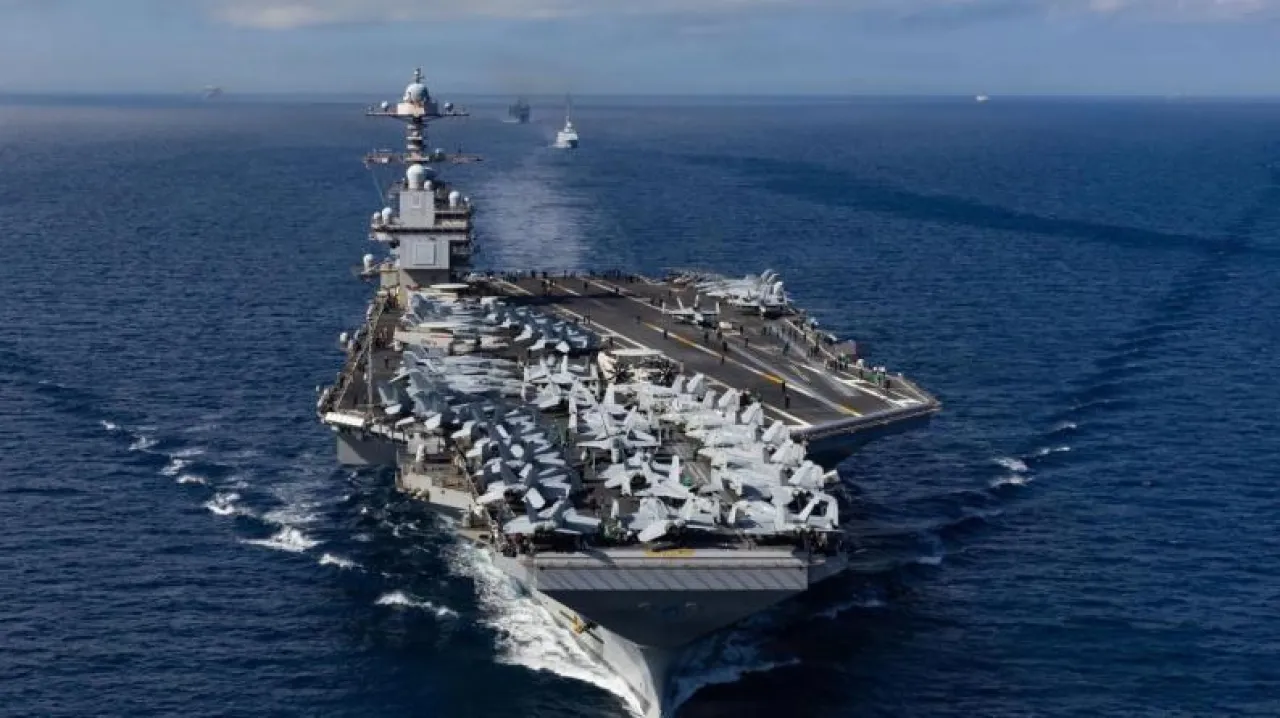
Tavassoli pointed to what he described as the largest military mobilization since the invasion of Iraq in 2003, considering that the scale of deployment exceeds the purpose of deterrence, and wrote: "You cannot mobilize such a force merely for show".
He highlighted three possible scenarios, focusing on their different consequences for insurance companies.
The first scenario (70%): A limited American attack followed by an agreement
According to this primary scenario, the United States will launch targeted strikes aimed at missile production facilities, nuclear facilities, and the infrastructure of the Iranian Revolutionary Guard. The goal is to impose clear dominance in case of escalation and to force Tehran back to the negotiating table.
In this case, insurance coverage will include material damages in Israel, especially in major urban centers such as Tel Aviv, Haifa, Ashdod, and Netanya. Tavassoli also pointed to an increased exposure to damages that may affect ports and energy infrastructure.
The second scenario (20%): Successful mobilization without an attack
In this scenario, Tavassoli believes that the enhancement of U.S. military power alone may be enough to pressure Tehran into negotiations. Here, the threat of force (without actual use) succeeds in averting a military confrontation. As a result, the insurance industry does not incur any material losses, nor does geopolitical tension have a tangible negative impact on financial or operational aspects.
The third scenario (10%): A prolonged military campaign
Tavassoli says this scenario is the least likely but the most dangerous. It involves a continuous American military campaign lasting several weeks, including strikes on Iranian oil export facilities, and potentially targeting the regime's leadership (state head assassinations) to maximize leverage before any diplomatic agreement.
The insurance impacts include:
- More extensive property damages in Israel.
- Broader commercial credit risks.
- Potential for Iranian military strikes on Saudi Arabia and the UAE, directly affecting commercial credit and political risks in both countries.
- A sharp escalation in maritime accident risks, especially those unrelated to China.
- Possibility of closing the Strait of Hormuz, potentially raising oil prices to $150 per barrel, and increasing credit pressures on oil-importing economies.
It is noted that, in addition to the massive military reinforcements mobilized by the United States in the Middle East, the U.S. State Department issued today, Monday, an order for non-emergency government employees and their family members to leave due to the security situation in Beirut, as well as forbidding embassy staff from traveling for personal reasons without prior permission.