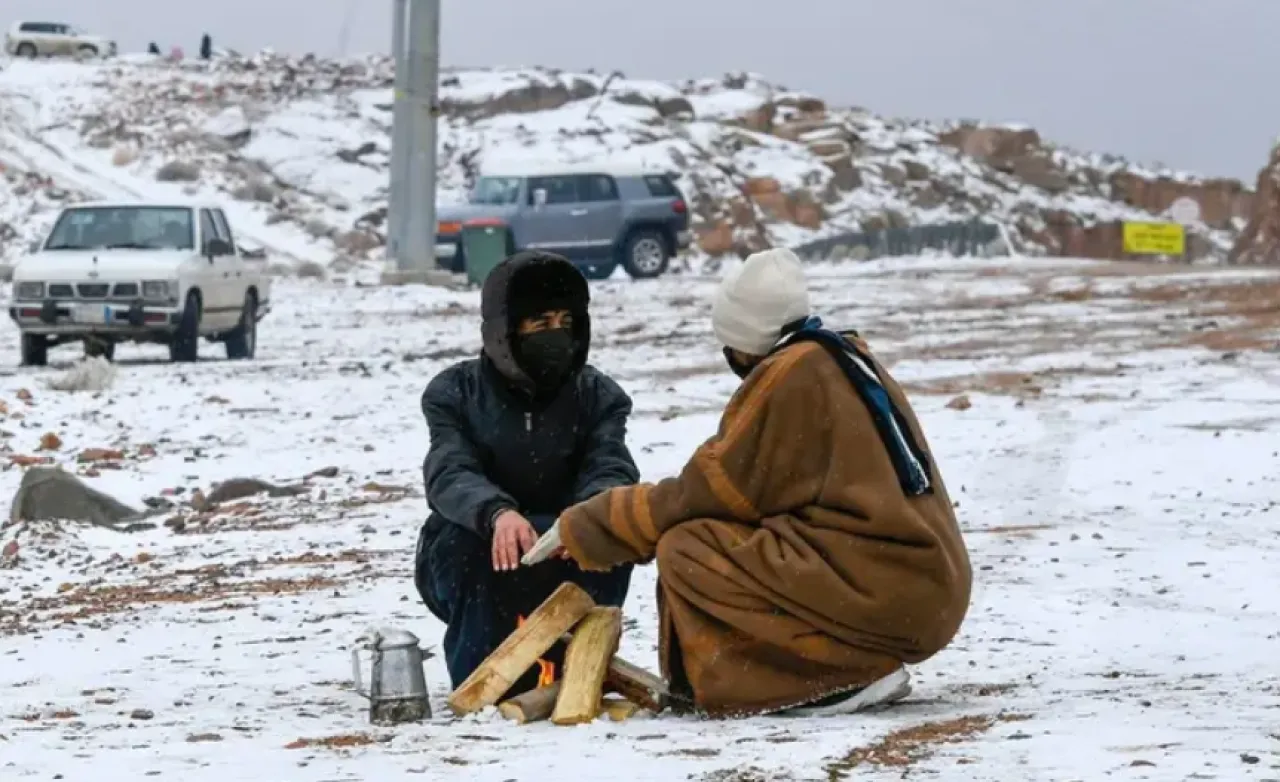
Khaberni - As the end of the year approaches and the beginnings of a new year, the atmosphere enters a winter stage described as the coldest, amid warnings of sharp drops in temperature, widespread frost, and potential effects of a polar air mass extending to large parts of the kingdom.
In this context, the weather expert Dr. Khaled Al-Zaaq warned of the entry of what was formerly known as "Blue Chill," calling for early preparation and doubling of protective measures, in the face of rapid weather changes and official alerts from local and regional authorities.
An exceptional winter phase
Al-Zaaq clarified, through his official account on the "X" platform, that this week marks the beginning of the first days of the third and last star of Al-Murabbaia, a winter period that lasts 40 days, divided into three stars: Al-Iklil, Al-Qalb, and Al-Shoola, with about 13 days remaining until the "February" season, a season historically known for its wind changes.
He pointed out that the ancients described this phase with popular sayings that reflect the severity of its weather, such as: «February rattles the doors» and«February cuts the ties», referring to the fluctuating winds, and what is known as«the cold farewell», and that the last three days of the calendar year, and the first three days of the new year, are considered the coldest periods of winter altogether.
This phase actually begins after the sun moves from the southern to the northern side, which was traditionally expressed by saying: «No cold except after the farewell».
The longest nights and the harshest cold
Al-Zaaq indicated, in a video clip, that this period coincides with the longest nights of the year and the shortest days, increasing the feeling of coldness, and explained that «Blue Chill» is the term that the ancestors coined for this harsh weather, as «bodies turn blue from the extreme cold», in a description that reflects its severity and direct impact on humans and the environment.
Al-Zaaq offered a set of tips on dealing with these conditions, stressing the importance of doubling heating means and wearing more than one layer of clothing, saying in his usual style that those who wear a coat, it's best to «double the coats», and those who rely on fur should make it «two furs», and those satisfied with one fur should add a winter blanket, especially during the late night and early morning hours, also emphasizing the importance of warming livestock using straw and carpets to minimize the effects of severe cold and protect animal wealth.
Official warnings and weather fluctuations
These warnings come at a time when wide areas of Saudi Arabia are experiencing weather fluctuations, marked by the possibility of frost formation, concurrent with sharp weather changes. The National Meteorology Center has issued a series of alerts affecting several regions, warning of a decrease in visibility range, varying intensity of rains, and active winds.
The alerts included areas of Riyadh and Al-Qassim, where light to moderate rain is expected, accompanied by active winds, and reduced or almost no visibility, with the possibility of lightning strikes and hail. The center also issued a red alert for the Hail region due to dense fog leading to visibility of one kilometer or less.
In the Eastern Region and the Northern Borders, the center warned of the formation of light to dense fog, with a noticeable decline in visibility, especially on highways and open areas, while experts noted that these conditions create an ideal environment for the formation of nightly frost, particularly in exposed agricultural areas.
Polar air mass and dust-raising winds
In the same context, the Arab Climate Center has alerted to the extension of a very cold polar air mass from Bilad Al-Sham towards the kingdom, with potential effects including Iraq, Kuwait, Bahrain, Qatar, and the UAE, raising the likelihood of a sharp drop in temperatures and frost during the night and early morning hours.
Additionally, the National Meteorology Center warned of the continuation of high-speed winds in parts of Tabuk, Al-Jouf, and the Northern Borders areas, which may cause dust storms and significantly reduced horizontal visibility, with the possibility of light rain in some areas.