Khaberni - The Food and Agriculture Organization of the United Nations (FAO) organized a concluding workshop for the pioneering project "Cost Reduction through Enhanced Efficiency of Floating Solar Energy Systems".
The floating photovoltaic solar energy project at King Talal Dam serves as a practical example of how to transform climate challenges and resource scarcity into innovative and sustainable opportunities, through a collaborative effort led by FAO’s Energy Team at the headquarters and the FAO Office in Jordan, in partnership with the Ministry of Water and Irrigation - Jordan Valley Authority, local consultants, and agricultural associations.
What is the Energy Reduction project?
This pilot project demonstrates that renewable energy and water management can be integrated into one solution, achieving an increase in energy production efficiency expected to range between 5% and 15%, while simultaneously reducing water loss due to evaporation by 30-90% by utilizing existing water bodies. The floating system enables higher resource use efficiency without taxing agricultural or natural lands, which is crucial in the context of Jordan.
The "Cost Reduction through Enhanced Efficiency of Floating Solar Energy Systems" project employs a system of solar panels that float directly on the dam's surface. The essence of innovation lies in the system's simplicity: the surrounding water naturally cools the panels.
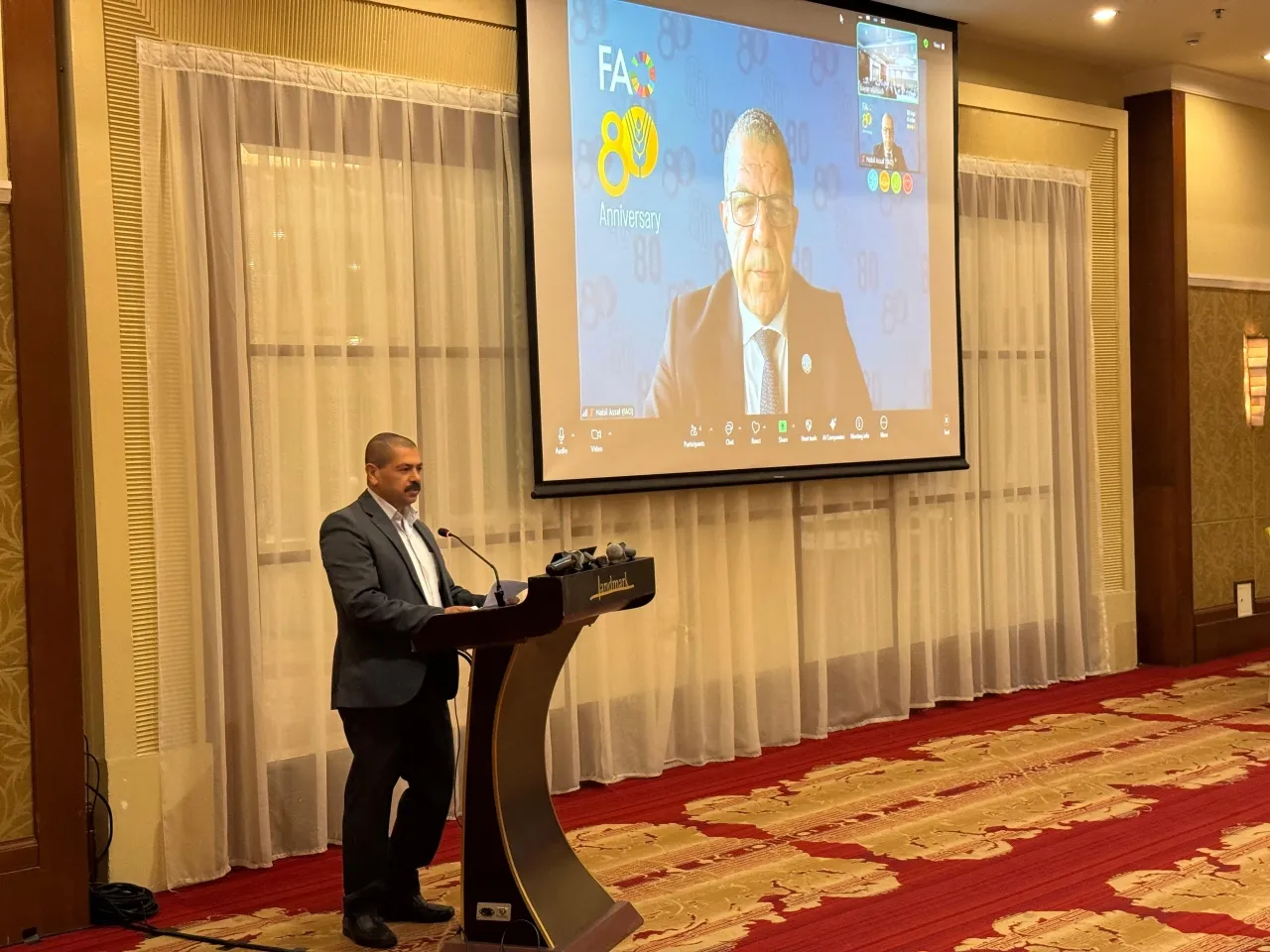
A representative from the FAO in Jordan, Engineer Nabil Assaf, said: "King Talal Dam was chosen as a pilot site for this project, as it offers ideal testing conditions: the high surrounding temperatures provide a perfect environment to demonstrate the benefits of cooling, benefiting from the dam’s large water volume and existing infrastructure. Most importantly, the connection to the onsite electricity grid
facilitates the integration process, and the surrounding agricultural communities make it an excellent site to showcase the direct impact of the technology on farmers, and for future awareness and training purposes.".
He highlighted that this project "underscores FAO’s steadfast commitment to supporting Jordan's national priorities in enhancing water and energy security, and effective adaptation to climate change, in addition to ensuring tangible benefits reach farmers and local communities who are at the heart of our work," emphasizing that the success of this project is the result of an active partnership that brought together national institutions, technical expertise, and international entities, and that this collaboration is "the real driver" that transforms paper innovation into sustainable impact on the ground.
In his part, the delegate from the Secretary General of the Jordan Valley Authority/Ministry of Water and Irrigation, Assistant Secretary-General for Technical Affairs Engineer Majed Khreisat said: "The water and energy sector in Jordan faces real challenges, foremost among them resource scarcity and high energy costs, making the search for innovative and effective solutions a national necessity, not just an option."
He added: "Thus, the importance of this project, which combines technical creativity, economic efficiency, and environmental conservation in an integrated model that reflects Jordan's ability to adopt unconventional solutions to face challenges."
He noted: "Through this project, floating solar energy systems have proven their ability to lower operation costs, improve energy production efficiency, and reduce evaporation losses from water bodies, offering multidimensional benefits that serve both the water and energy sectors simultaneously," pointing out that this aligns directly with the Jordan Valley Authority's strategy to achieve sustainability and optimize expenditures and institutional performance.
In conclusion, FAO reaffirms its commitment to continue working with its partners to promote integrated solutions that optimize the use of energy and water, and contribute to building more resilient and sustainable agricultural and food systems for future generations.