Khaberni - Recent research indicates that an ancient Brazilian herb may help alleviate debilitating knee pain caused by arthritis.
Exercise, weight management, and physical therapy are common methods recommended by doctors, but they often are not sufficient to control pain and stiffness.
However, current pain relief options are limited, short-lived, and often of little benefit.
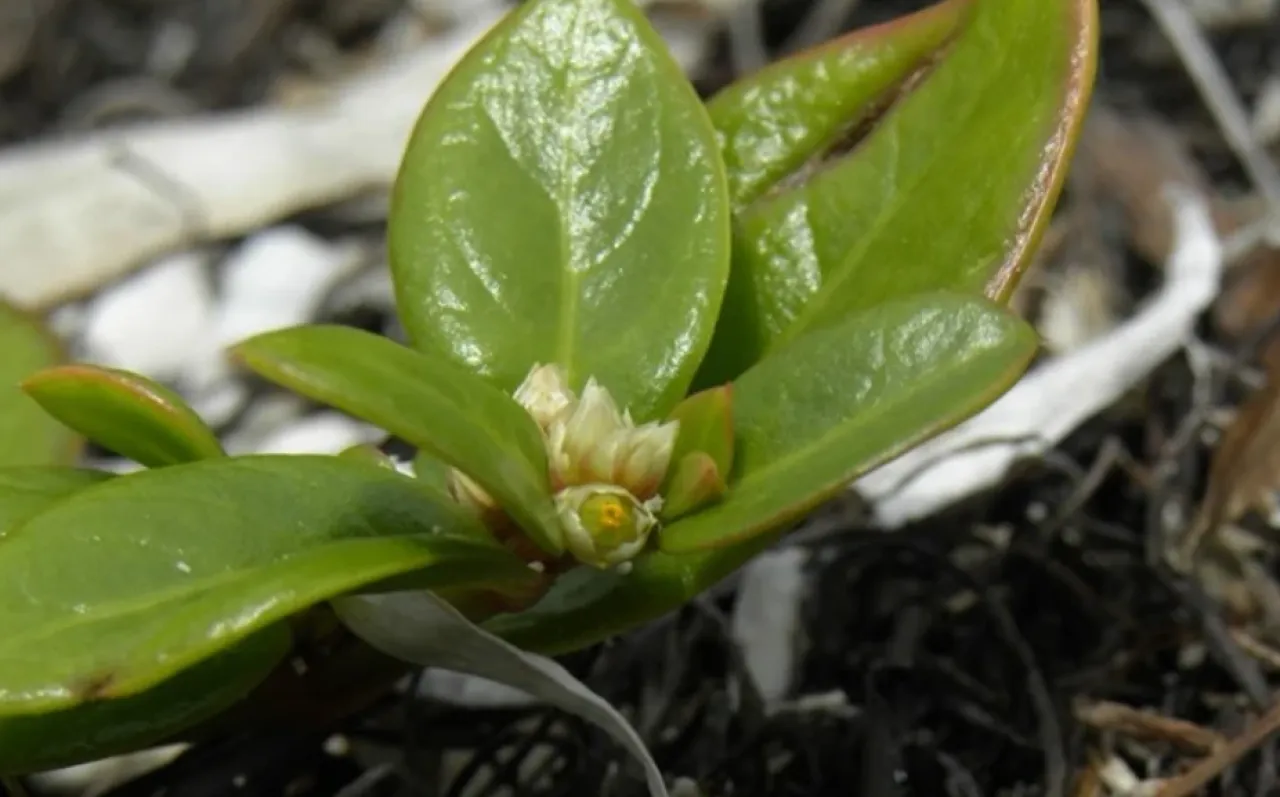
Now, according to "Daily Mail", in experiments conducted on mice, Brazilian researchers found that the medicinal plant Alternanthera maritima, known as "Joseph's Coat", could help reduce swelling, inflammation, pain, and stiffness in joints.
This species, native to Brazil, often grows in coastal areas of the country and has been used to help treat certain types of bacterial, fungal, and even parasitic infections.
So far, the lack of evidence on complementary methods has prevented healthcare professionals from recommending them.
But scientists said that although more clinical testing is still necessary to prove its benefits in treating arthritis, the study results are encouraging for eventual human use.
Alternanthera maritima plant
In a recent research paper, researchers at the Federal University in Grand Dourados mentioned that Alternanthera maritima showed "significant anti-inflammatory, pain-relieving, and anti-arthritis effects".
They added, "These results enhance the traditional use of Alternanthera maritima and confirm its potential as a safe and effective treatment for managing inflammatory conditions."
Degenerative arthritis, or arthritis resulting from wear, occurs when the protective cartilage at the end of bones erodes over time, causing pain, swelling, and difficulty in moving the joint due to the bones rubbing against each other.
The recent experiment
According to "Science Daily", in this study, scientists conducted chemical analyses of the plant to identify its biologically active compounds, which are natural substances that are not essential nutrients but have significant effects on living organisms.
Over a 28-day follow-up period, samples of blood and urine were collected to assess the plant's effect on the heart, lungs, kidneys, liver, spleen, and joints.
Researchers observed a decrease in edema (swelling) and improvements in joint indices and adjustment of inflammatory mediators, suggesting antioxidant and tissue-protective effects.
The results indicated that it may help protect joint tissues. However, they added, "While these results are promising, the precise molecular mechanisms remain unclear and require further research to isolate and identify the effective compounds involved."
Further research still requires "conducting a precise toxicological assessment which is crucial before any therapeutic consideration".
This discovery paves the way for new anti-inflammatory treatments based on plants.