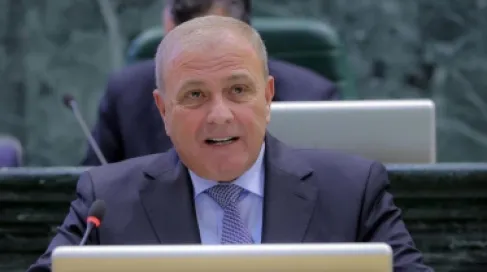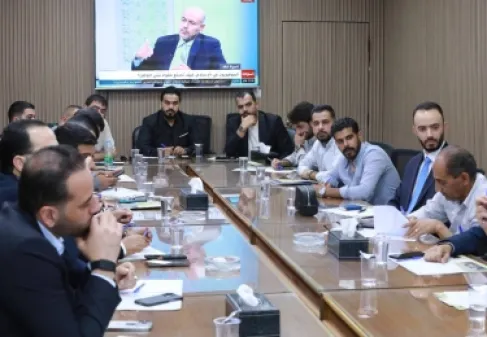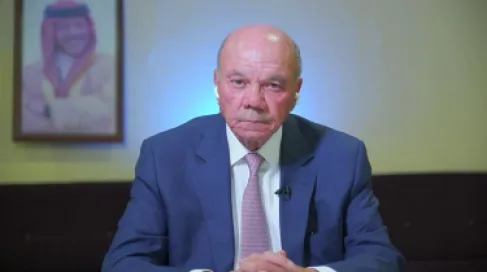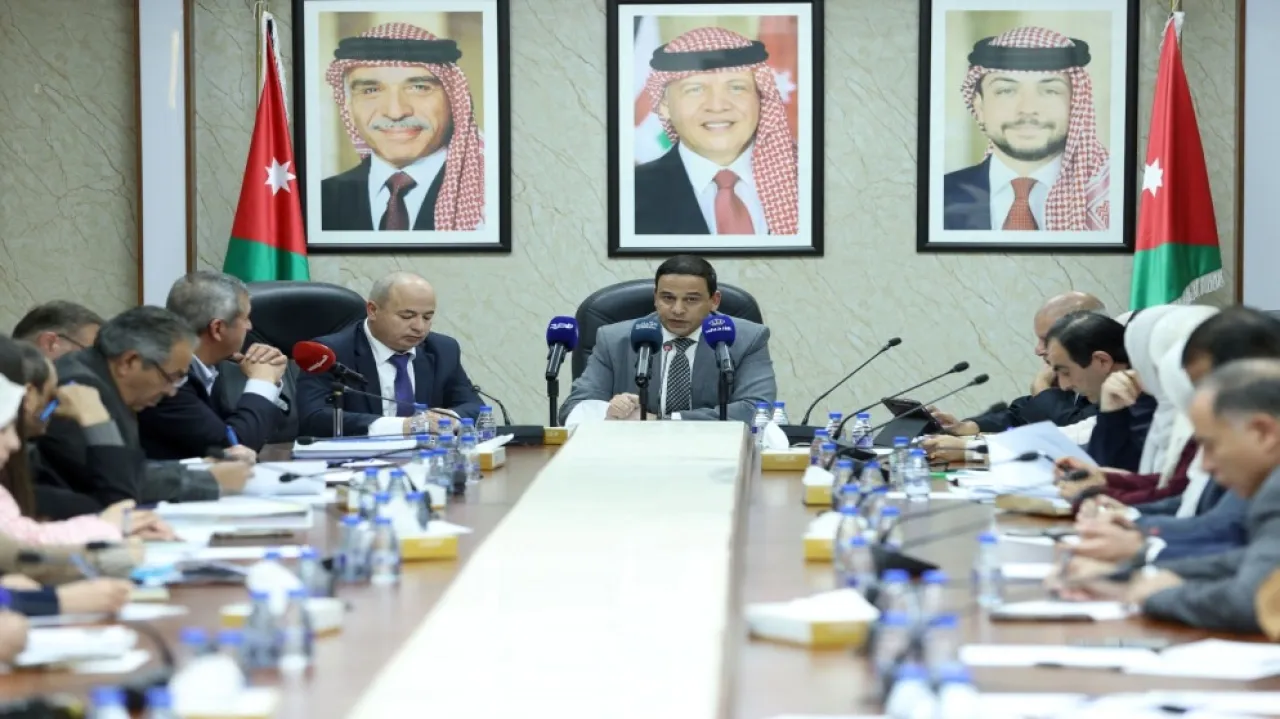
Khaberni - The Parliamentary Energy and Mineral Resources Committee, chaired by Ayman Abu Henieh, continued its meetings to discuss the draft law ratifying the executive agreement for the evaluation, development, and exploitation of copper and associated minerals in (Abu Khashiba area) between the Ministry of Energy and the Arab Valley Company for Minerals.
The meeting was attended by the Minister of Energy and Mineral Resources, Saleh Al-Kharabsheh, the President of the Legislation and Opinion Bureau, Khaled Al-Daghmi, the Jordanian Geologists Syndicate, Khaled Shawabkeh, Saleh Al-Ghawiri, head of the mining section in the Jordan Engineers Association, and Ayman Ayash, president of the National Mining Company, alongside several involved directors from the ministry.
Minister Al-Kharabsheh confirmed that the agreement comes as part of the government's commitment to the provisions of the Constitution and the current legislation, and in line with the economic modernization vision that places the mining sector among sectors with high added value, emphasizing the government's commitment to protecting public money and maximizing national returns.
The minister explained that the main goal of the agreement is to serve the national economy through attracting quality investments based on clear and transparent foundations, contributing to job creation, building real success stories in the mining sector, enhancing investors' confidence, and increasing local added value.
It was explained that the copper mining agreement in the Abu Khashiba area, covering only 48 square kilometers, went through clear legal and technical stages, beginning with a non-binding memorandum of understanding and concluding with an executive agreement subject to ratification by law according to the provisions of the Constitution, emphasizing that all procedures were carried out according to current legislation and the system of exploiting natural resources.
The minister clarified that the developing company is a Jordanian company registered officially and has complete financial solvency, as its financial and technical capabilities were verified by a specialized direct offer committee, and the required guarantees and documents were presented, along with economic feasibility studies and reserve estimates prepared according to accepted global standards.
In response to inquiries from the deputies, Al-Kharabsheh mentioned that the agreement explicitly obliges the developer to process all minerals associated with copper, and not just to extract copper ore, ensuring maximization of economic returns and no waste of any accompanying mineral resources.
He pointed out that the agreement ensures the state's rights through a clear system of returns that includes what he called "progressive royalties" linked to global copper prices, taxes, and unexpected profit tax, in addition to strict environmental commitments, which include environmental impact assessment studies, rehabilitation guarantees, and preventing any future burdens on the state.
The minister stressed that the Jordanian law is the governing reference for the agreement, including arbitration procedures, emphasizing the government's commitment to achieving a real balance between attracting quality investment and protecting public money and national resources, in line with the economic modernization vision and maximizing the added value for the mining sector.
The minister also presented official documents before the committee proving the financial solvency of the company, which had previously been submitted to the direct offer committee, which, in turn, studied the company's technical capabilities and financial capacities before recommending to proceed with the agreement procedures.
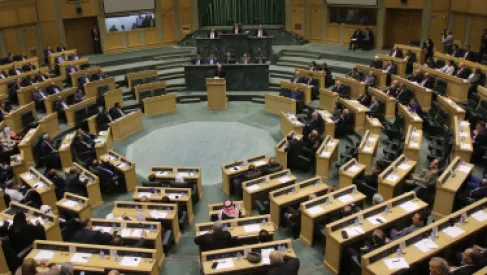
At the beginning of the meeting attended by a large number of deputies, Abu Henieh confirmed that this meeting completes the series of committee meetings on the agreement, within a clear institutional approach based on professional scrutiny and balancing between encouraging investment and protecting the state's right to its natural resources.
Abu Henieh stated that the committee appreciates the clarifying response issued by the Ministry of Energy and Mineral Resources, which included a legal, technical, and financial presentation that elucidated the course of the agreement, enriched the parliamental debate, and aided in building a more comprehensive and deeper approach towards the project.
He explained that the essence of the discussion is not centered around the principle of investment per se, but is concerned with the nature of the implementing entity, its ownership, and its technical and financial capabilities to manage a sovereign project linked to a non-renewable national wealth, emphasizing that these questions form the basis for any responsible assessment of such agreements.
Abu Henieh emphasized the importance of full transparency regarding the commercial registry of the DEVELOPING company, the names of the real owners and shareholders, ownership percentages, and any direct or indirect links to foreign companies, confirming that clarity of ownership is a fundamental element of trust in any project linked to economic sovereignty and public money, and not merely a formal procedure.
The chairman also stressed that transitioning from the exploration phase to the commercial mining phase requires high technical competency and clear financial capacity, emphasizing the need to prove the executing company's experience, the efficiency of its technical teams, and its technical partners, if any, along with clarity of funding sources and financial solvency, to ensure the project's implementation without setbacks or imposing future risks on the state.
In the context of maximizing national returns and enhancing community partnership, Abu Henieh called for establishing a clear, time-bound pathway towards establishing a Jordanian public joint-stock company, allowing public subscription for Jordanian citizens and institutions up to 49%, ensuring Jordanians' participation in their national wealth, enhancing community monitoring, and expanding the base of economic benefits.
He affirmed that this approach does not weaken the project, but rather enhances its sustainability, increases its public legitimacy, and contributes to building real trust between the state and the citizen, emphasizing that involving Jordanians in such strategic projects constitutes an added economic and community value at the same time.
In his intervention, Al-Daghmi said that the legal framework regulating such agreements is clear and specified, noting that there are instructions issued in accordance with (the system of projects for the exploitation of petroleum, oil shale, coal, and strategic minerals) that subject any direct offer to precise legal, technical, and financial scrutiny.
Al-Daghmi clarified that these instructions require verifying the financial solvency of the applying companies, ensuring their technical competencies and the necessary expertise before proceeding with any agreement, guaranteeing the protection of state rights.
On his part, Shawabkeh emphasized the importance of moving forward in exploiting national natural resources, noting that this file has been a strategic issue long advocated by the Geologists Syndicate, and the work on it took a long time and effort until reaching this advanced stage.
Shawabkeh explained that he has reviewed the copper mining agreement under discussion, carefully studied it and read its clauses several times, confirming that it is one of the best agreements in this field, especially when compared to similar agreements applied in very advanced countries in the mining sector.
He highlighted that these comparisons showed that the percentages of government revenues, royalties, and financial returns contained in the agreement exceed those adopted in many other countries, ensuring a significant economic return for the state and reflecting the concerned parties' commitment to protecting the national interest.
Shawabkeh also emphasized the importance of clarifying and refining some clauses and phrasing them with greater precision, enhancing the agreement's efficiency, ensuring proper implementation, and achieving the economic and developmental goals intended from it, according to the best global practices in natural resources management.
Meanwhile, Al-Ghawiri pointed out that the syndicate has long called for the need to exploit natural resources in Jordan, considering them a crucial pillar for economic development.
Al-Ghawiri noted that the general reaction from experts was predominantly positive, emphasizing at the same time the importance of intensifying the explanation of the agreement clauses to the public and the deputies, contributing to eliminating concerns and creating a deeper understanding of the project's nature and dimensions.
Ayash stressed the importance of organized investment in natural resources and the necessity of applying the best global practices in the mining sector, pointing out that Jordan lies within the Arab Shield region, which provides it with a real opportunity to be an active player in this sector.
Ayash explained that proper management of these projects would position Jordan on the global mining map, attracting quality investments that support the national economy.
Throughout the meeting, the attending deputies presented a series of interventions and inquiries focused on the clauses of the agreement from legal, economic, and technical aspects, and the extent of the developer's commitment to processing the minerals accompanying copper, emphasizing that discussing the draft law should be based on a comprehensive reading that goes beyond general phrases to scrutinize the details that establish long-term commitments for the state.
The deputies inquired about the duration of the agreement and the methodology of its offer procedures, registration mechanisms, and its termination or modification, and the adopted arbitration conditions, questioning the judicial or arbitral authority in case a dispute arises, and the extent to which these mechanisms protect the state's legislative and financial sovereignty.
The deputies also focused their inquiries on the economic feasibility studies on which the project is based, the realism and accuracy of these studies, demanding access to the assumptions adopted in calculating the reserves, costs, and returns, stressing the need to ensure that the expected return on the treasury matches the magnitude of the invested wealth and the nature of the risks.
The deputies also questioned the financial and technical competency of the Arab Valley Company for Minerals, its previous experience in similar projects, and its capacity to implement the project according to the highest technical and environmental standards, including its actual contribution percentage, its financial structure, and guarantees of commitment to implementing the project within the specified timelines.
Regarding environmental impact, the deputies emphasized that protecting the environment and local communities is a priority no less important than economic feasibility, demanding clear and enforceable guarantees regarding water management, waste treatment, continuous environmental monitoring, and preventing the state from bearing any future burdens resulting from environmental damage.
Several deputies expressed their concerns about the project repeating some previous agreements that did not meet national aspirations or imposed financial and legal commitments on the state without achieving the anticipated returns, emphasizing at the same time that this concern stems from a commitment to the supreme national interest, and not from a stance opposing investment or maximizing the role of the mining sector.
The deputies confirmed their support for any agreement that enhances the national economy, opens new avenues for investment, creates job opportunities, and increases local added value, provided that it is based on clear and transparent foundations, free of legal or financial loopholes, and preserves the rights of the state and future generations.
At the end of the meeting, Abu Henieh reiterated the committee's support for serious investment and the development of the mining sector to be a genuine national economic lifter, emphasizing that clear ownership, technical and financial competence, and involving Jordanians through public subscription represent positive lines that protect the project and do not hinder it, forming the basis for building a strong agreement and successful investment and sustainable trust between the state and the citizen.