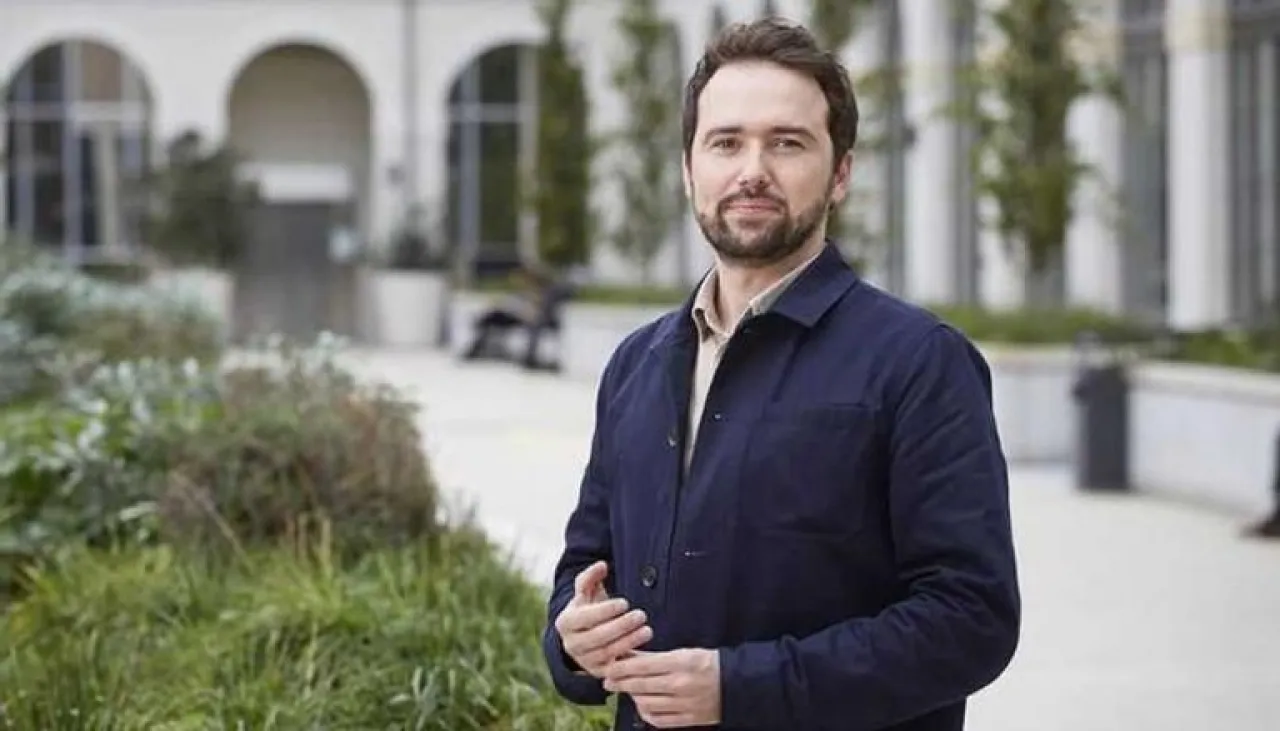
Professor of Economics at the Paris School of Economics, Dr. Lucas Sanchel, confirmed that lifting Caesar's Law for the benefit of Syria could have substantial implications on the Lebanese economy, but not necessarily all positive.
Sanchel said that lifting the sanctions frees the Syrian economy from restrictions that impaired its role in regional trade, paving the way for the return of trade flows and foreign investments into Damascus.
He explained that this could naturally revitalize some of the economic activity in the region, including Lebanon which has long been economically linked with Syria.
After Caesar's Law was temporarily suspended twice this year, the law is now close to completely disappearing following the approval by the U.S. Congress (House of Representatives and Senate) on December 17, within the framework of adopting the new defense budget for 2026.
The final cancellation of the sanctions stated in this law is still linked to the ratification by U.S. President Donald Trump, which is only considered a formal procedure at this stage.
More than a year after the fall of Bashar al-Assad's regime, which had been targeted by the sanctions since December 2019 and extended in December 2024, the Senate vote indicated a new horizon for cooperation and partnership between Syria and the rest of the world.
According to reports, companies involved in cross-border trade, logistics and transportation activities, the re-export of basic goods, and services are likely to be among the first to benefit from lifting these sanctions, which could enhance trade movement and economic activity in Lebanon and the region.
The French economic expert added that opportunities include revitalizing cross-border trade, improving the movement of logistical goods, and new potentials for the Lebanese ports as logistic centers with Syria and the Arab world.
Sanchel explained that the Lebanese Lira exchange rate is internally affected by various factors, including foreign reserves, confidence in the banking system, and capital movements. He added, "Lifting the sanctions on Syria might reduce some of the pressures on the Lebanese market in the medium term, as it would allow for the return of part of the business and financial activity that had been disrupted, thereby easing pressure on the demand for dollars in the parallel market."
He continued, "However, this effect is not automatic, and depends on Lebanon's ability to actually engage in trade with Syria and manage financial transfers without legal or banking obstacles."
Sanchel noted that the benefits for Lebanon can only be realized if mutual trust is built between the trading parties and investors, and clear regulatory frameworks are established.
He stated, "Historically, Lebanon's relations with the former Syrian regime were complicated, and the sanctions added additional restrictions on Lebanese companies' dealings with Syrian markets. Lifting the sanctions might remove some of these barriers, but there remains a need for reforms in the structure of the Lebanese economy itself to attract real investments."
The French economic expert pointed out that the Lebanese banking sector has been suffering from a liquidity crisis and structural problems for years, adding: "The financial market might see some relief in pressures if international confidence gradually returns, but this requires radical reforms in monetary policy, and restoring confidence in the banking apparatus, which has not yet been achieved."
He continued, "It is possible that capital movement could see some activity if investment opportunities in the region appear more attractive."
The French expert said, "But in reality, the Lebanese investor remains cautious due to the risks of domestic policies and political instability, as well as the previous experiences with exchange rates and inflation, making the return of funds contingent on providing real guarantees and incentives."
He saw that lifting "Caesar's Law" opens a new horizon in economic relations between Syria, Lebanon, and the external world, but it is not a magical solution to Lebanon's economic crises, clarifying: "The opportunities are there but the political and economic conditions in Lebanon must change to actually benefit from this shift and the challenges are significant, and cannot be addressed with short-term policies."