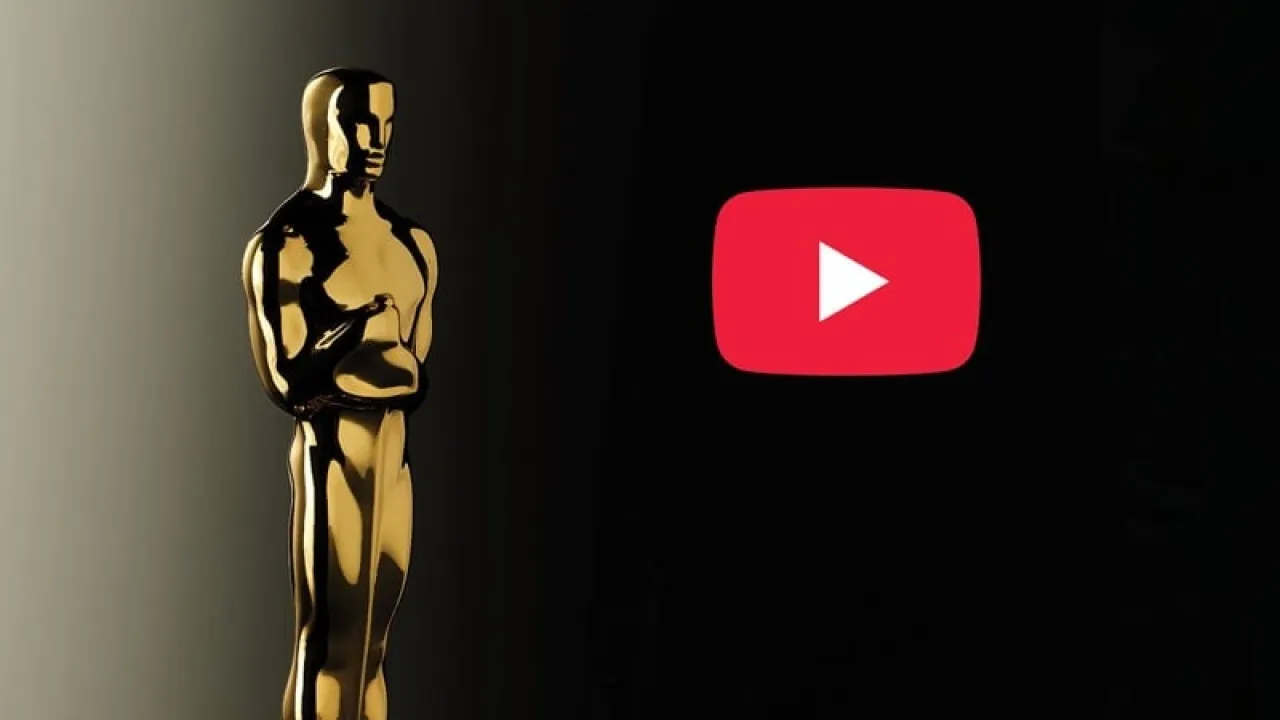
The Academy of Motion Picture Arts and Sciences has signed a multi-year agreement that grants YouTube global exclusive broadcasting rights for the Oscar Awards Ceremony starting from the year 2029 with the 101st event, continuing until 2033.
End of an Era for ABC Network
Under the agreement, the Oscar ceremony will move from the ABC network, which has broadcast the significant event in the movie industry for many decades. ABC will still hold broadcasting rights until 2028, including the centennial celebration of the ceremony.
In addition to red carpet coverage, behind-the-scenes actions, and the Governors Ball, the Oscar ceremony will be available for live and free streaming on YouTube to viewers around the world, as well as to YouTube TV subscribers in the United States. According to sources, commercials will still be a part of the broadcast on the platform.
The organizers of the agreement confirmed that the move to YouTube aims to expand the global reach of the Oscars, through features like closed captioning and multilanguage audio tracks, to serve the growing international audience of the Academy.
Bill Kramer, CEO of the Academy, and Lynette Howell Taylor, President of the Academy, said in a joint statement that they are pleased with the new partnership with YouTube as the Oscars’ and the Academy’s future home throughout the year, emphasizing that the Academy is an international institution, and this step will allow access to their work to the largest possible global audience, which will benefit its members and the film industry at large. They added that the collaboration would leverage YouTube's broad reach, offering innovative interaction opportunities while preserving the Oscar's legacy and inspiring new generations of filmmakers, making film history available on an unprecedented scale.
Meanwhile, Neal Mohan, CEO of YouTube, described the Oscars as "one of the fundamental cultural institutions," affirming that the partnership with the Academy will bring this celebration of art and storytelling to a broad global audience, preserving the event's historical legacy.
The Academy had been looking for a new broadcasting rights deal for most of the year 2025, with negotiations seeing traditional and non-traditional entities competing, including Netflix and NBC Universal.
Live Production Challenges on a Non-Traditional Platform
According to informed sources, YouTube presented an offer exceeding hundreds of millions of dollars, thus outbidding high offers from Disney/ABC and NBC Universal Group. According to the previous contract, Disney was paying about $100 million annually for the broadcasting rights of the Oscars, although declining viewership, according to media reports, prompted the network to seek to reduce the licensing fees.
Some executives at Disney expressed their surprise at YouTube winning the rights, particularly since YouTube is a purely digital streaming platform, and not an entity combining both linear and digital broadcasting as expected in case NBC Universal had won. The outcome of the Oscars ending up on YouTube was not widely anticipated.
Partly, this is because YouTube lacks a production infrastructure specifically designed for live events, like those developed by major streaming platforms like Netflix and Amazon. However, YouTube will have a full three years to form a production team, and it is not ruled out that the Academy specifically chose YouTube to give it the chance to take full production of the ceremony.
For a long time, the relationship between the Academy and Disney/ABC has seen disputes over various issues, including the ceremony duration, the number of awards presented, and the choice of host. With the move to an unrestricted time broadcasting platform, the Academy will be able to present the ceremony in any duration it wishes, with almost full freedom in its crafting. One insider commented sarcastically, "They could present a six-hour long Oscars ceremony, even with MrBeast as the host."
Despite this, many questions remain unanswered, including the fate of international distribution agreements that provided the Academy with additional advertising revenue, and whether the new financial compensation will offset these losses. Additionally, measuring viewership on YouTube remains a question, in the absence of traditional television broadcasting metrics, along with concerns about the audience's ability to maintain focus given the platform's nature.
This shift comes at a time when Oscar ratings have not been achieving the levels they once did. Despite the incident in 2022 where Will Smith slapped Chris Rock, the viewership at that time did not exceed 16.6 million viewers, making it the second-lowest figure in the ceremony's history, following the 2021 edition affected by the coronavirus pandemic. This year's edition registered 18.1 million viewers, a relatively good number compared to the overall decline in linear TV viewing, but not comparable to the 1998 peak of 57 million viewers amid the popularity of "Titanic."
Disney Downplays the Impact of Losing the Oscars
For officials at Disney/ABC network, the transfer of Oscar broadcasting rights to YouTube is deemed less impactful than if it had gone to a direct competitor like NBC Universal Group, particularly as the company continues to focus on live streaming. Disney recently acquired broadcasting rights for the Grammy Awards and confirms that it will combine broadcasting the Super Bowl, the Oscars, and the Grammys in one year by 2027.
The company stated in an official statement that "ABC has been the primary home for the Oscar Awards ceremony for more than half a century," expressing its anticipation to broadcast the next three editions, including the centennial celebration in 2028, and wishing the Academy continued success.
Nevertheless, the decision raises questions about the future of this venerable event after its centennial celebration, and its ability to maintain its cultural impact when transitioning to a platform primarily known for content creators, more than its association with traditional film productions.
This transition comes at a time when the film industry is going through a delicate phase, with increasing questions about the future of film distribution and cinema exhibition windows, amid ongoing debate about the future of major screenings. On the other hand, some watchers believe that the move to YouTube might be a logical choice at this stage, considering it to be the most watched platform globally, with expectations for its influence to grow in the coming years.
Observers liken this step to a previous pivotal shift in the industry when the Fox network acquired broadcasting rights for the NFL in 1994 despite lacking a comprehensive sports infrastructure at the time, before later establishing Fox Sports. YouTube is already a major player in the media landscape, but the Oscars’ move to it sends a clearer signal of its status as an influential force that cannot be ignored.