Khaberni - The Justice Center for Legal Aid announced today, Tuesday, the completion of the activities of the "Alternative Pathways" project, which focused on improving mechanisms for dealing with juveniles and youth involved in drug-related cases. The project, which lasted over two years, was supported by the French Embassy in Amman in partnership and cooperation with a wide range of national governmental and non-governmental institutions, achieving its objectives and a range of important national achievements in this field.
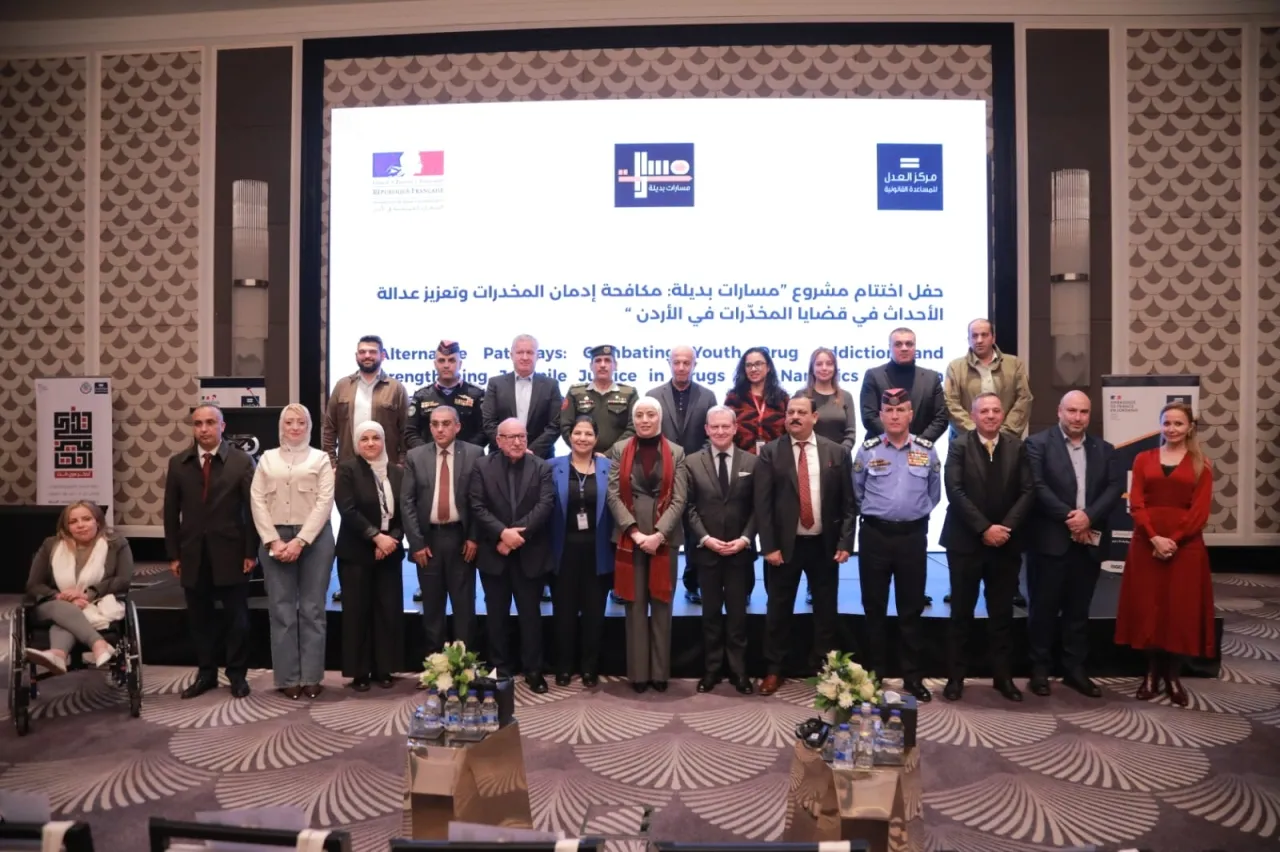
During the project's closing ceremony held at the St. Regis Hotel – Amman in the presence of key partners, supporters, and representatives of relevant national institutions, the center showcased the project's main accomplishments and phases, and presented its initial vision for a plan to sustain national efforts aimed at drug prevention and improving mechanisms for dealing with at-risk juveniles and youth.
In her opening session speech, the Minister of Social Development, attorney Wafaa Bani Mustafa, highlighted the achievements of the project within the scope of her ministry's expertise, praising the qualitative results that included the development of a guide for operating procedures in juvenile centers and a manual for accrediting institutions implementing alternative measures ordered by juvenile courts.
Bani Mustafa also emphasized in her speech the importance of supporting and developing the Juvenile Rehabilitation and Behavioral Modification Center involved in drug-related cases, which the project targeted to develop work protocols through coordination and partnership with the Al Rashid Hospital Center, considered a specialist in this field, announcing the ministry's intention to open a similar center for female juveniles involved in drug-related cases.
The minister expressed pride in the partnership with the Justice Center for Legal Aid, pointing to the importance of collaboration between state institutions and civil society organizations in achieving national development goals.
In turn, Deputy Director of the Drug Enforcement Administration, Colonel Raad Tabtab, thanked all implementing and supporting entities of the project, affirming that genuine partnership leads to real change.
Colonel Tabtab expressed appreciation for all sincere efforts made by national institutions and the commitment and cooperation they demonstrated in the project's implementation, expressing his hope that the project's outputs would significantly contribute to national efforts aimed at protecting our youth and nation from the dangers of drugs.
Colonel Tabtab confirmed that the General Security Directorate, under the guidance of its director, General Dr. Obeidallah Al Maaytah, would continue to build and expand such initiatives based on His Majesty The King's vision of enhancing the rule of law, protecting human rights, and bolstering community security system.
The French ambassador in Amman, Franck Gellet, praised the significant efforts made in this project, confirming that its achievements reaffirm Jordan's seriousness in reforms and protection of the youth and national dialogue.
Embassy Gellet discussed the partnership between the French government and the Justice Center in implementing this project, which began in 2023, part of France's commitment to supporting the Hashemite Kingdom of Jordan in combating drugs.
Gellet also highlighted the alignment of Jordanian and French visions in the field of combating drugs, noting that while the content of France's 1986 drug prevention campaign emphasized rejecting drugs and respecting human dignity, the slogan of the Justice Center's 2025 campaign was aligned with the same path centered on human dignity ("Remember who you are"), praising the campaign's great success reaching over 12 million viewers nationwide.
On her part, Hadeel Abdul Aziz, the executive director of the Justice Center for Legal Aid, called for the continuation of collective and collaborative work on a national level to ensure the sustainability of national efforts aimed at combating drugs and minimizing their societal impact.
In this regard, Abdul Aziz pointed to the importance of continuing the work to establish a national center for the treatment of addiction in children and adolescents, alongside the behavioral modification center that was established and supported in this project, emphasizing the need to focus on supporting the Ministry of Social Development in achieving its goals, and directing more national support and assistance to the efforts of the General Security Directorate burdened with heavy responsibilities in drug enforcement, from police duties to national awareness and treatment areas.
At the conclusion of the closing ceremony, the Justice Center honored the partners and supporters who played a key and central role in the success of the project and the achievement of its goals.
The event was attended by the Minister of Social Development and the Assistant Director of General Security for Judicial Affairs, the Deputy Director of Drug Enforcement, the Director of Family and Juvenile Protection Department, the Director of Transparency and Human Rights Office at the General Security Directorate, several members of the House of Senators, and representatives of partnering and grantee institutions and key implementation partners.