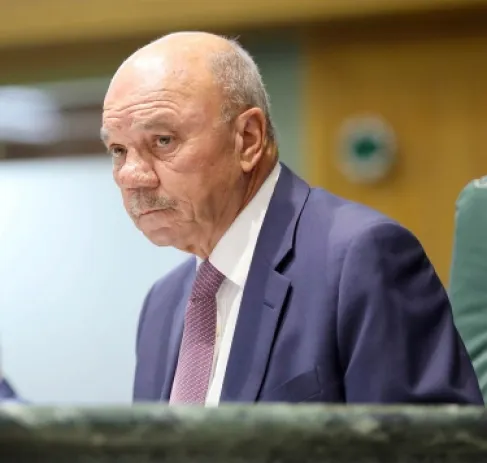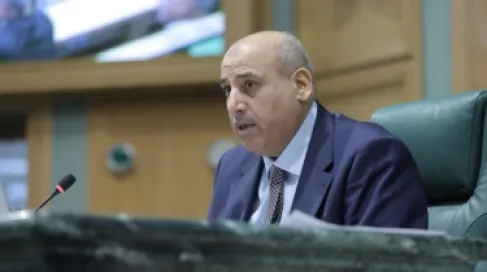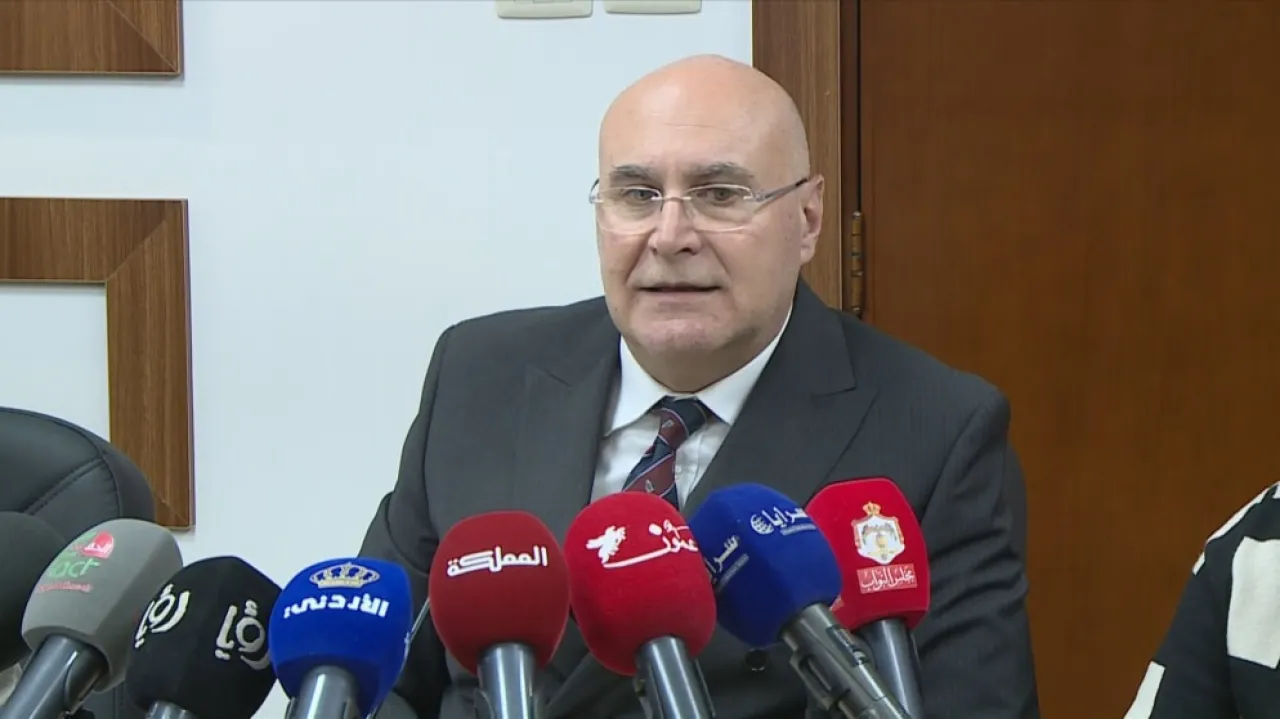
Khaberni - Mohannad Shahadeh, the head of the government's economic team and the state minister for economic affairs, confirmed that the government's economic team continues to work according to the supreme commissioning book and the royal economic vision, asserting that its main goal is to make real economic decisions that contribute to achieving sustainable economic growth.
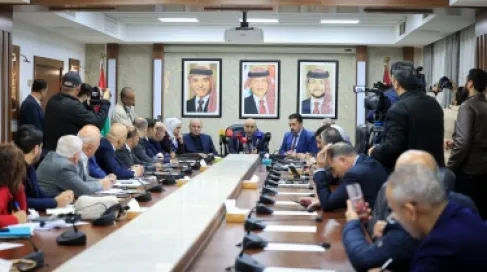
Shahadeh, during a meeting of the economic team with the parliamentary financial committee to discuss the general budget project for the fiscal year 2026, stated, "Economic growth will not be achieved unless the gross domestic product is expanded, which is a cornerstone in creating job opportunities and providing the necessary space for the Ministry of Finance to implement capital expenditure."
He added that expanding the gross domestic product will also contribute to finding solutions for some issues related to public debt, explaining that the governmental economic team has taken 220 solid economic decisions in the past 444 days; all aimed at improving the investment environment and revitalizing productive sectors.
He noted that the government is looking forward to achieving better growth during the fourth quarter of this year, indicating that the economic decisions made so far have clearly contributed to enhancing economic growth in all sectors, including non-service sectors, which reflects that the government is moving in the right direction.
He highlighted that the government is working on promoting major projects that contribute to stimulating the economy, confirming that the expansion of the gross domestic product has positively affected the economic future of Jordan.
Shahadeh mentioned that the government continues to make ongoing economic decisions, including launching new investment projects, with an outlook to achieve an economic growth of 3 – 3.2% next year.
He confirmed that the government is working according to clear and ambitious goals, striving to achieve tangible economic progress that benefits the citizens and enhances the stability of the Jordanian economy, pointing out that the government has initiated a review and reduction of customs duties on a number of items, in addition to exempting from penalties for customs cases, and expanding the scope of work of the committees dealing with tax cases.
The government has also approved the creation of new developmental, industrial, and agricultural zones, in addition to continuing to grant a 75% exemption on agricultural goods duties, and introducing incentives that include reductions in electricity and land prices to support new projects.
Shahadeh also mentioned that the government has also worked on amending the discount policy on land prices in King Abdullah II Industrial City, issuing new instructions for granting nationality to investors under specific conditions, besides adjusting the value of bank deposits required for residencies, and updating the regulatory frameworks for establishing investment funds and setting the income calculation mechanisms for them, in addition to approving a package of projects related to green hydrogen and ammonia.
He pointed out that the decisions also included amending the taxes imposed on cars and setting new specifications for them, exempting financially distressed students from university fees, and paying part of the outstanding financial arrears, including providing support to the King Hussein Cancer Center worth 100 million dinars.
The government has also exempted from penalties due on cases by up to 99%, extended exemptions granted to the services sector, which are essential levers for economic growth, and allowed Libyan brothers to enter the kingdom to enhance medical tourism, and forming a royal lineage to support this vital sector.
He added that the government has also extended exemptions related to agricultural reclaiming, supported Jordanian exports, and adopted a package of tax benefits aimed at stimulating investment and enhancing the competitiveness of the national economy.
Shahadeh noted that these decisions have positively reflected on the performance of Jordanian exports, which grew by approximately 9%, driven by improvements in several sectors; where pharmaceutical exports increased by 5.9%, and the apparel sector by 2.9%.
Exports to Syria saw a significant increase to 400 million dinars, the highest value since 2011, while exports to Iraq are expected to approach 1 billion dinars, and exports to the United States exceeded 5.2 billion dinars.
The government also began implementing the new Omran project, which is scheduled to start during the first quarter of this year, aiming to enhance the production capacity and create new investment opportunities, aligning with the economic policies aimed at supporting growth and improving the business environment.