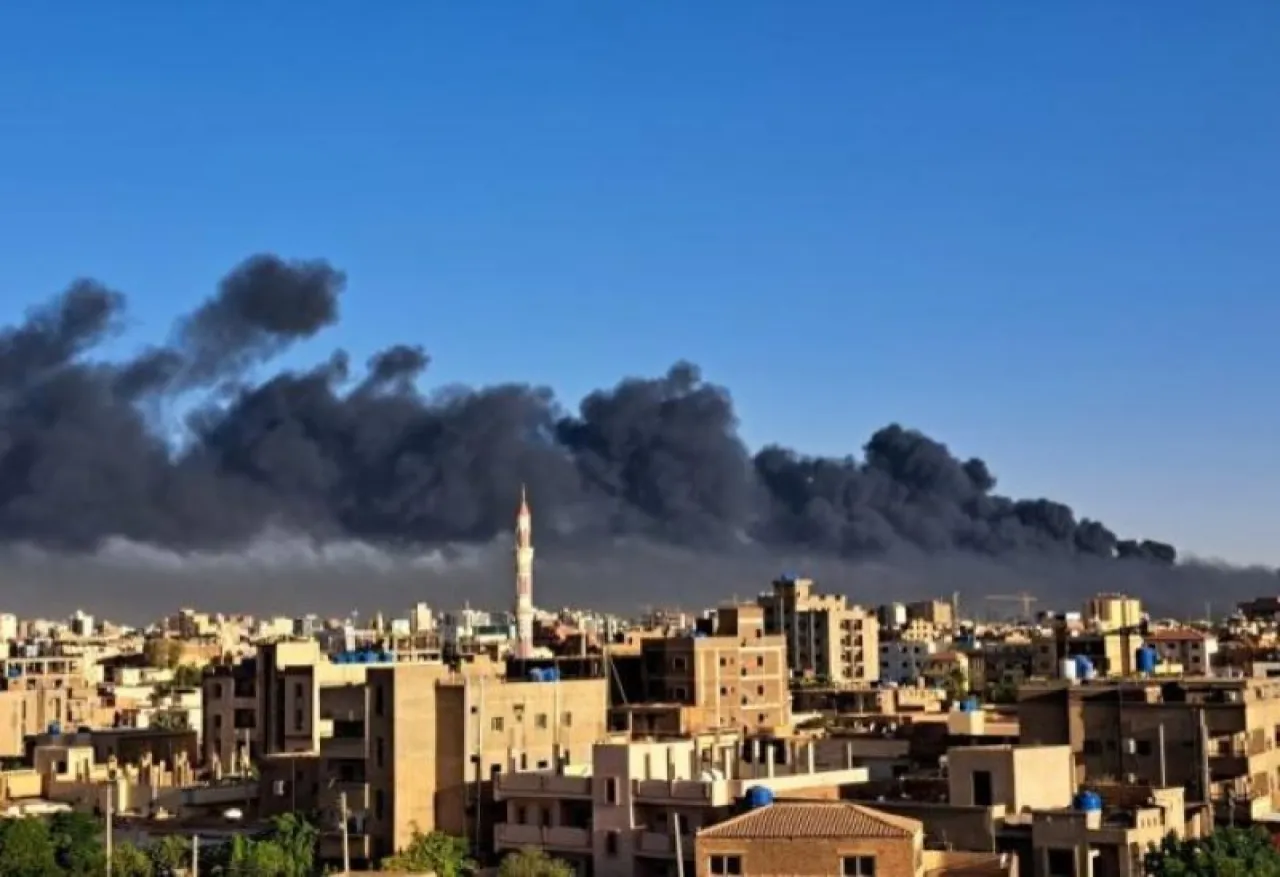
Khaberni - A new assessment conducted by two international organizations reveals poor conditions in Khartoum State, showing that 97% of families suffer from food insecurity, forcing them to adopt negative adaptations including child labor and early marriage.
The "Norwegian Church Aid" and "International Medical Corps" organizations published on Wednesday the findings of an assessment conducted in 70 health facilities, interviewing 1250 families, field observations, and discussion groups.
The assessment stated that "97% of the families in Khartoum suffer from food insecurity, with the caloric intake being 1800 calories for 74% of the families."
It explained that families were forced to adopt adaptations including borrowing food, skipping meals, child labor, and begging, noting that 16% of the families have a stable income, while the rest depend on unstable daily labor, selling assets, receiving remittances, and social support.
It reported that 35% of families in Khartoum are female-headed.
The assessment also revealed an increase in child marriages from 9% before the conflict to 24%, where minors are married off to relieve economic burdens, with 17% reporting that they had practiced sex in exchange for money, food, or other forms of assistance as a forced coping mechanism related to food insecurity and the absence of income.
It pointed out that 43% of health facilities are operational out of 70, with 13% providing inpatient services and 14% conducting safe deliveries.
The report mentioned that as of September 2025, fewer than 250 primary care centers are operational in Khartoum State out of 600 working before the war.
It reported that the average number of workers per health facility has decreased from 11.2 to 7.8 workers, with 62% working without salaries, and that government funding covers less than 10% of the operating costs of the active facilities, with the rest of the funding coming from volunteers and local communities.
It noted that 70% of health facilities lack antibiotics, 85% have a shortage of malaria drugs, and only 15% have effective vaccine refrigeration, registering a vaccine spoilage rate of 23%.
It also highlighted that 45% of the facilities have a water source, but only 27% receive a continuous supply. Facilities without running water have a cholera infection rate 2.8 times higher.
According to the same source, the situation worsens in East Nile where 80% of the families rely on unsafe shallow well water.
The assessment noted that 18% of the families in Khartoum use improved toilets, while 31% practice open defecation, a rate increasing to 46% in the outskirts of Omdurman.
It also revealed that waste collection rates decreased from 68% before the war to 9% currently, leading to epidemics, mosquito proliferation, and pollution.
More than one million people have returned to Khartoum from a total of 3.7 million who left their homes after the conflict erupted in April 2023.
The decision to return to Khartoum has put the Sudanese citizen in a difficult test, as this crucial decision is tied to visible and hidden challenges and obstacles, making its cost harsh both morally and materially.
Major challenges
The government's return to Khartoum comes amid major challenges including ongoing military operations, an economic decline, and mass displacement of the population.
Observers believe that the performance of the committee responsible for preparing the environment for the return of citizens and government institutions to Khartoum is still slow, as many Sudanese returned to their homes but most found no essential services like water and electricity, forcing them to return to the places they came from.
Observers differ on the motives behind the government's return to Khartoum, with some viewing it as a bid for political gain.
Meanwhile, the Chairman of the Sovereignty Council of Sudan, Abdel Fattah al-Burhan, rejected on Monday any initiative or political solution that does not include dismantling the "Rapid Support Forces" and disarming them.
Al-Burhan stated that the options are limited and that, in his view, the only solution is to dismantle the "Rapid Support Forces," even though the latter announced a three-month truce and agreed to form an international monitoring mechanism in response to international efforts.
The "Rapid Support Forces" accused the Sudanese army of violating the humanitarian truce they declared on November 24th eight times, stating that it continued systematic attacks against their positions and against civilians in several states, using warplanes, drones, and heavy artillery in a clear violation of the terms of the truce and international humanitarian law.
The spokesperson for the Rapid Support Forces stated on Wednesday that despite their clear commitment and restraining from any offensive operations, limiting themselves to legitimate defense when necessary, the army forces continued to execute systematic attacks against their positions.
He added that according to field data and official reports, 8 major breaches were documented over six days from November 24 to 30, 2025.
The "Rapid Support Forces" held the army fully responsible for the killing of civilians, including children and students, bombing educational institutions and residential areas, hindering humanitarian aid access, threatening civil peace, and escalating violence.
They confirmed that this escalation undermines peace opportunities and places international responsibilities on the global community.
The "Rapid Support Forces" urged the Quad (USA, Saudi Arabia, UAE, and Egypt) to take effective steps to stop the attacks and ensure respect for the truce.
They also called on the United Nations and international human rights organizations to document the crimes and violations, particularly the Komo massacre, ensure that the perpetrators do not escape punishment, pressure for the opening of safe humanitarian corridors, and support a serious peace process that curtails the power of extreme groups within the army and ensures the protection of civilians.