Khaberni - Archaeologists have found a rare archaeological discovery in Sudan that shows a mysterious and previously unknown funeral ritual practiced about 4000 years ago in the ancient Nubian Kingdom of Kerma.
In a secluded tomb discovered in the Bayuda Desert in northeast Sudan, archaeologists found a pottery vessel filled with burned remains of plants, wood, animal bones, and insects, believed to be the remains of food from an ancient funeral feast.
Archaeologist involved in the study, Henrik Banner, said: "We do not know of any similar case to this discovery, which makes it mysterious and unique."
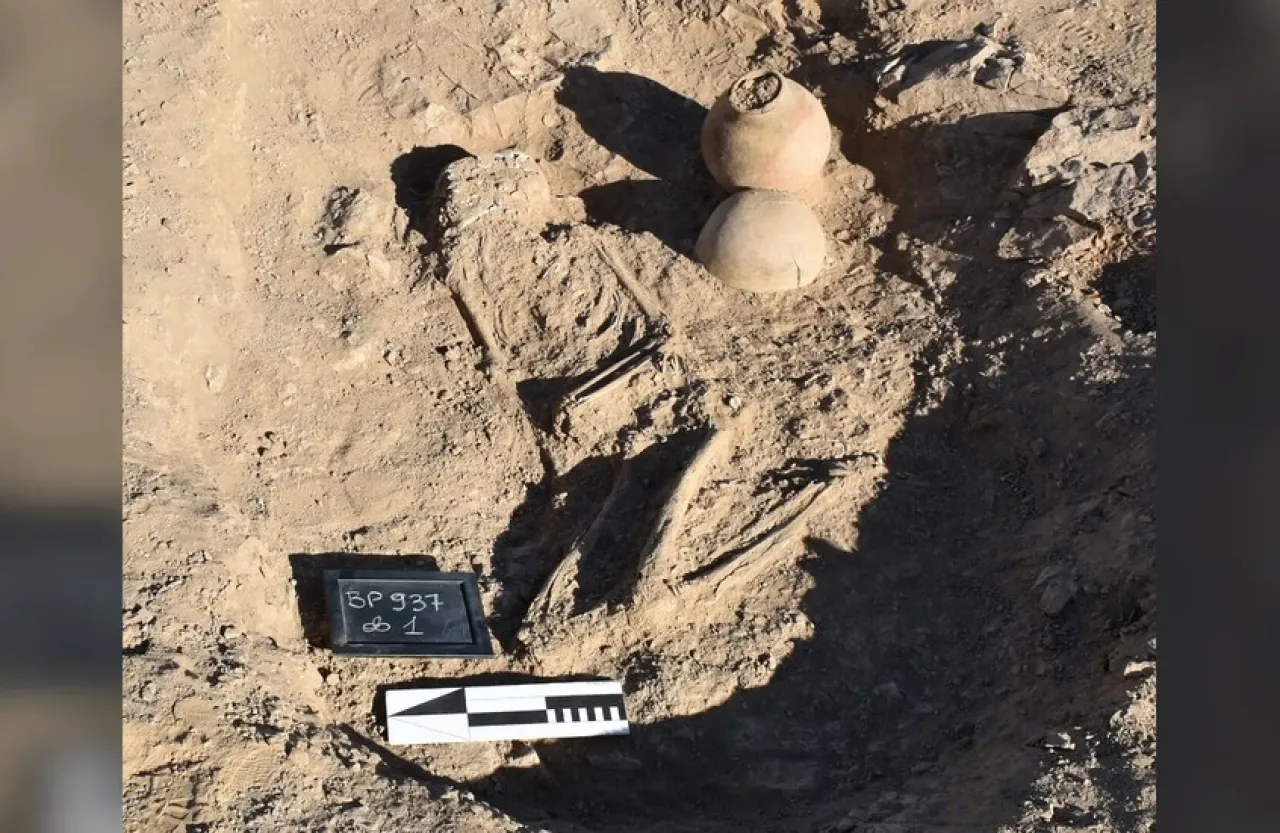
The tomb, dating back to the period between 2050 and 1750 BC, contained the skeleton of a middle-aged man, with two pottery vessels behind his head and 82 blue beads around his neck.
Although these items are common and indicate that the man was not of high social status, the contents of one of the vessels were exceptional. Inside the pottery jar, scientists found a variety of burned remains, containing grains, lentils, beans, and wood from Acacia trees, as well as animal bones, fossilized feces, and some small insects.
The vessel itself shows no signs of fire, meaning that these materials were added to it after being burned.
The scientists believe that these remains belong to food consumed during a funeral feast, with some of the remains thrown into the fire as part of the funeral ritual.
The study also revealed that the area was greener and more humid in the past, as the plant remains suggest an environment similar to the savannah, unlike the current dry desert.
This tomb is the first evidence of a funeral ritual from the Kingdom of Kerma, opening a new window into understanding life and traditions in this ancient African civilization.