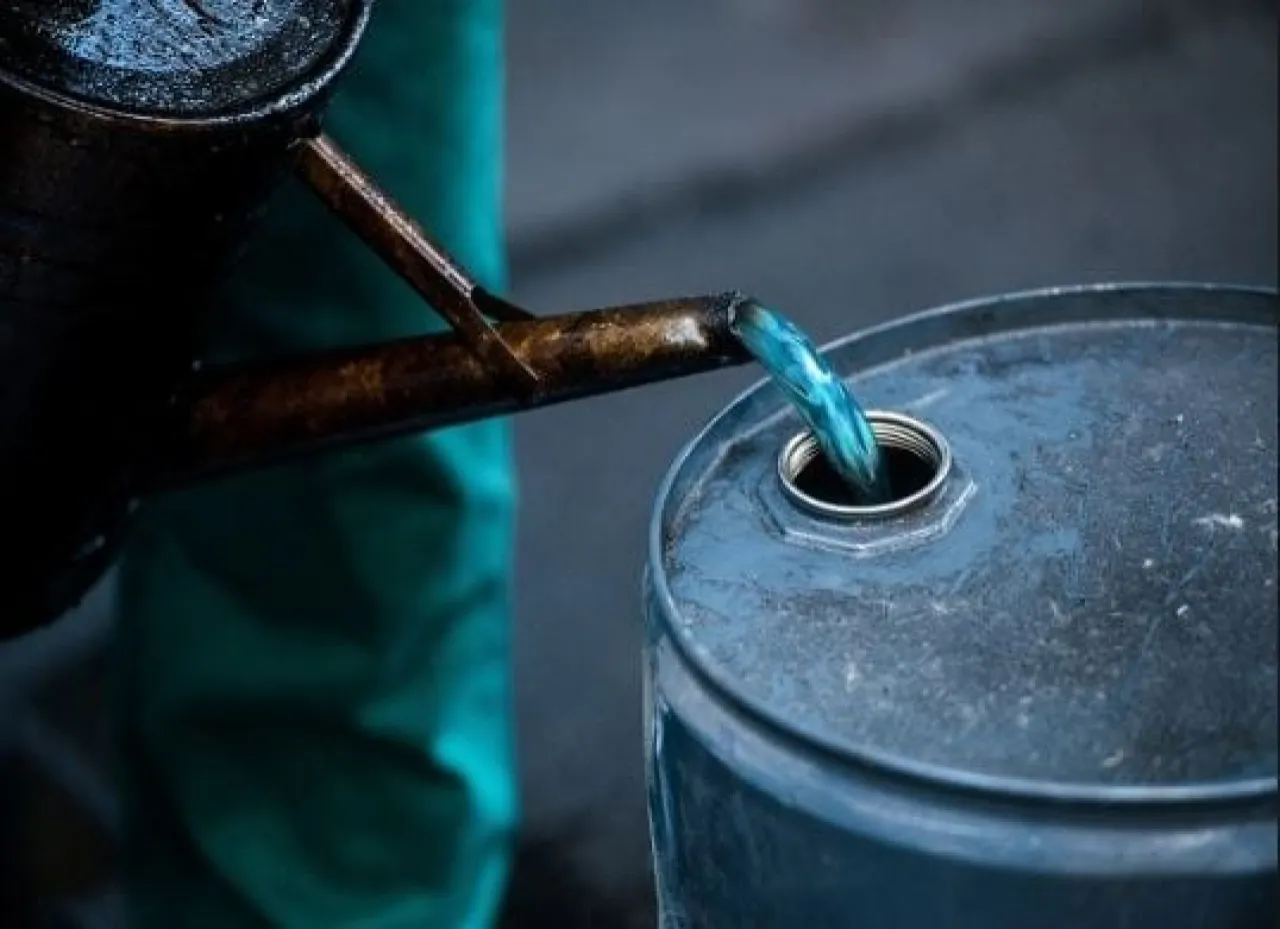
Khaberni - The Energy and Minerals Regulatory Commission announced the addition of a detectable coloring substance to kerosene, resulting in its transformation to blue. The commission assured that the coloring substance does not affect the quality or operational efficiency of the kerosene, nor does it alter its technical specifications or safety of use. It detailed that the application of this addition was subject to specialized technical studies and was implemented within precise percentages that ensure its full compliance with the technical rules and the standard specification approved for kerosene, in technical cooperation with the Ministry of Energy and Mineral Resources and the Jordan Standards and Metrology Organization.
The commission clarified that the use of the detectable coloring substance provides an immediate tool for the regulatory teams, enabling them to detect any attempts at blending or tampering, including mixing with water or with diesel and diesel oil, in addition to providing a visual indicator that helps the consumer in some cases to notice any abnormal change in the kerosene. This development comes in the context of continuous measures to enhance control tools and increase the technical system's readiness to ensure the safety of petroleum derivatives at all stages of their handling and to protect the consumer.
The commission added that the actual implementation had commenced by the Jordan Petroleum Refinery Company, which has begun providing "Blue Kerosene" at all Jopetrol stations. The commission confirmed that the scope of providing Blue Kerosene will expand to include stations belonging to other marketing companies (Manaseer Company and Total Company), starting from the beginning of next month, to ensure its availability to citizens in various regions of the kingdom, with full commitment to the highest standards of quality and the approved technical basis.
The commission continues, in coordination with the Standards and Metrology Organization, to carry out intensive regulatory and inspection rounds at fuel stations, filling centers, and operating warehouses across all regions of the kingdom, to ensure compliance with standards, prices, and general safety conditions, and to maintain the continuity of supplying kerosene and other petroleum derivatives in all regions, especially with the anticipated increase in demand during the winter season.