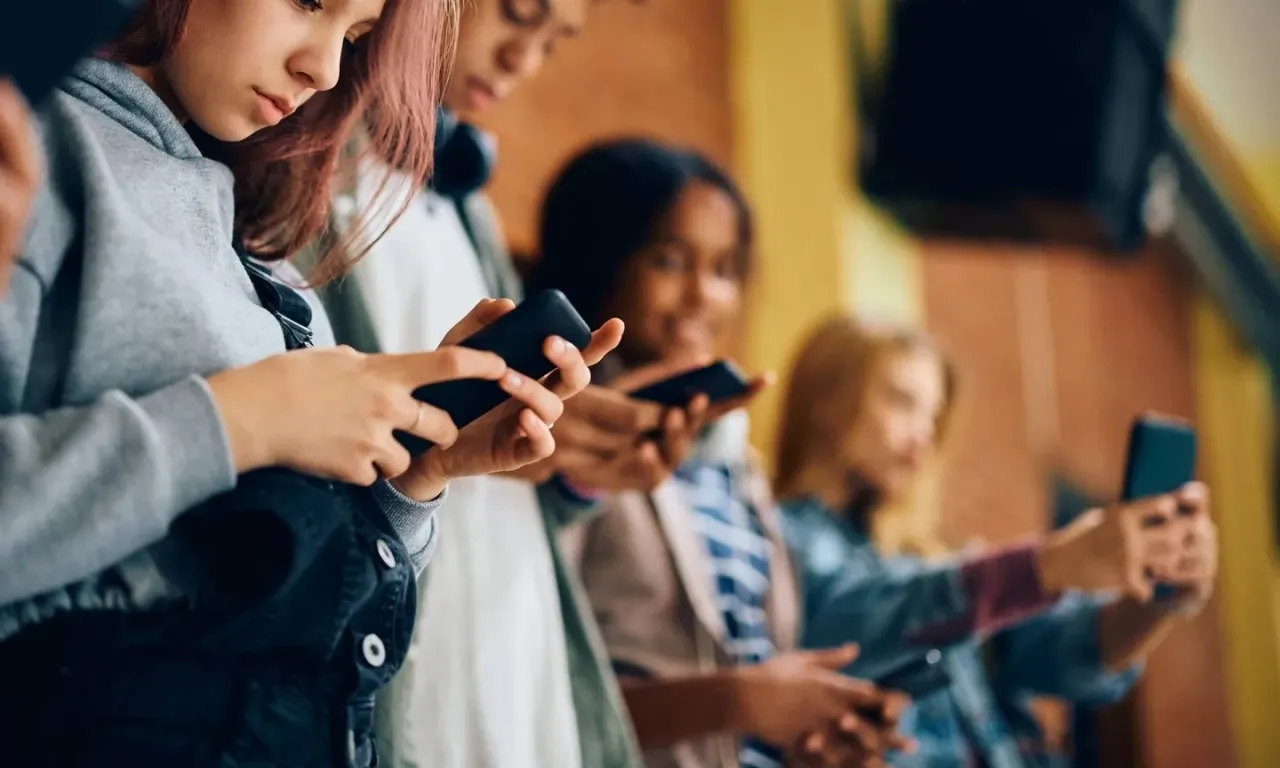
Khaberni - The parliament in Chile has approved a bill that bans the use of mobile phones in primary and secondary schools, thus joining an increasing number of countries that regulate the use of smartphones in educational institutions.
The House of Representatives overwhelmingly approved the project supported by Prime Minister Gabriel Boric, with the decision entering into effect from March in both primary and secondary stages across all schools, public and private, according to the text.
The Minister of Education, Nicolas Cataldo, sees the use of mobile phones inside classrooms as an "out-of-control scourge," considering it "one of the main epidemics that affects our children." On her part, Deputy Marcia Rafael clarified that the ban is not "against technology," but aims to enhance "focus, performance, community life, and emotional health" among students.
The law allows the use of phones in exceptional cases, including special educational needs of the student or if they suffer from a medical condition that requires monitoring through the device, or in emergency situations.
Chile was not alone in taking such measures, as several countries have taken similar steps to reduce the impact of smartphones on mental health and learning. In January, Brazilian President Luiz Inácio Lula da Silva issued a law banning smartphones in schools, both inside classrooms and in playgrounds. In Finland, a similar law came into effect in August, and South Korea, Italy, and France have imposed similar restrictions.