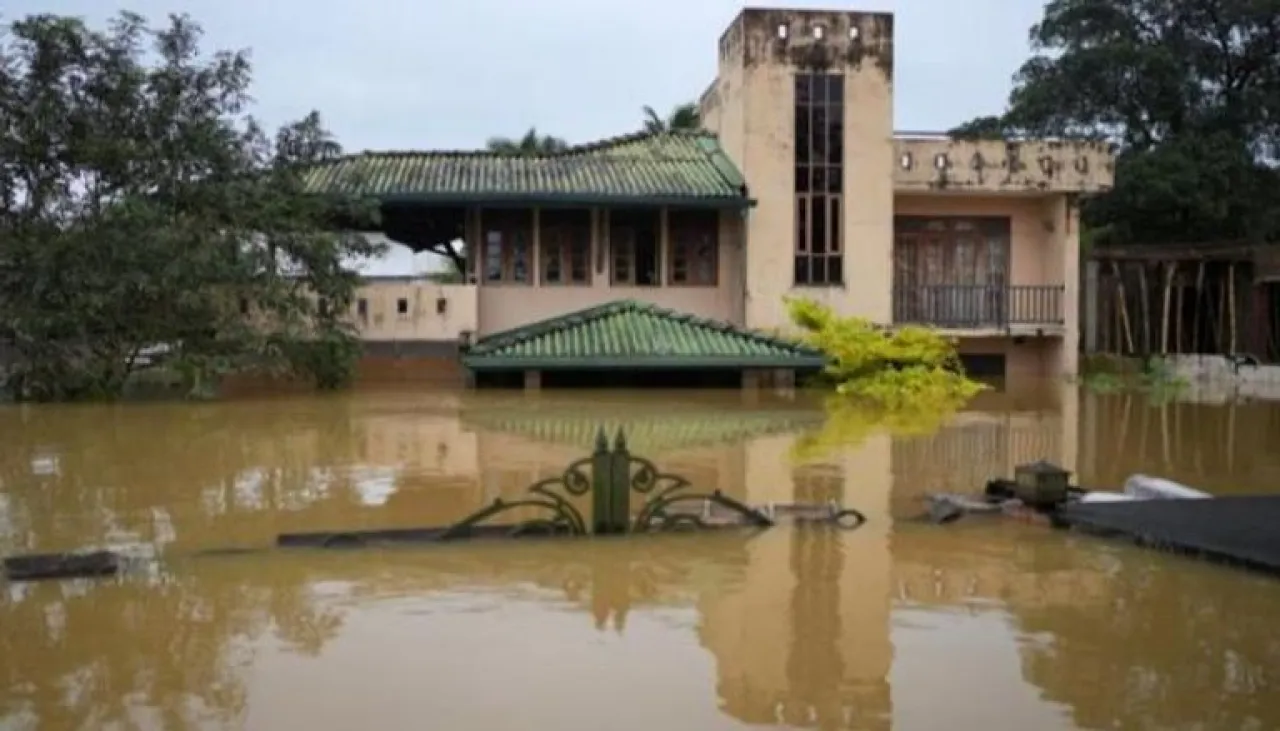
Khaberni - In the mountains of Sri Lanka, rescuers continue to recover bodies from the muddy ground, on Tuesday, following the hurricane that hit the island last week.
The hurricane was the worst natural disaster the country, known for its tea production, has seen in more than two decades.
At least 465 people died because of the hurricane, while 366 are still missing, according to disaster management officials.
The Sri Lankan Air Force is combing the area that experienced a landslide to assess the damage and deliver food and other essential supplies to the affected residents.
The area, known for its tea cultivation, experienced complete destruction, where landslides flattened much of the town and wiped out everything in their path, including roads and the vehicles on them.
The rooftops of some homes were visible in the mud, while the landslides caused by the hurricane "Detoah" swept away what remained of other homes.
In the midst of the devastation in the region, where only a few green patches remain, there is no longer any sign of human life.
In the Wilimada area in the center of the country, where large vehicles can no longer reach, rescuers recovered 11 bodies from under the mud on Monday and requested help searching for dozens of other bodies.
In some places, the ground was completely swept away, leaving dirt patches amid lush vegetation.
The extent of the damage to the tea gardens, factories, and leaf pickers has not yet been determined, but local media report significant damage.
What was once a dense cover of tea plants has now turned into vast channels of mud and debris.
Landslides have engulfed the main road, which is now submerged in mud, rock, and uprooted vegetation. Only small, passable sections remain, indicating its previous existence.
The authorities confirm that the priority is to enable overland access to the area, which still receives its supplies by air.
Helicopters from neighboring India and Pakistan were dispatched to the affected area to evacuate tourists and patients.
In the rescue operation, seats were removed from the "VVIP Bell-412" aircraft to make room for food and other essential supplies.
It transported water and dry food rations to residents stranded in Nuwara Eliya in central Sri Lanka, approximately a hundred kilometers east of the capital, Colombo.
Rescuers expect the death toll to rise as teams reach areas that have been without electricity and cellular network for several days.
This hurricane is the deadliest since the earthquake followed by a tsunami that struck the coast of Sri Lanka on 26 December 2004.
This time, no area in the country was spared from the natural disaster; every region either experienced landslides or floods.
President Anura Kumara Dissanayake declared a state of emergency, calling for international aid.