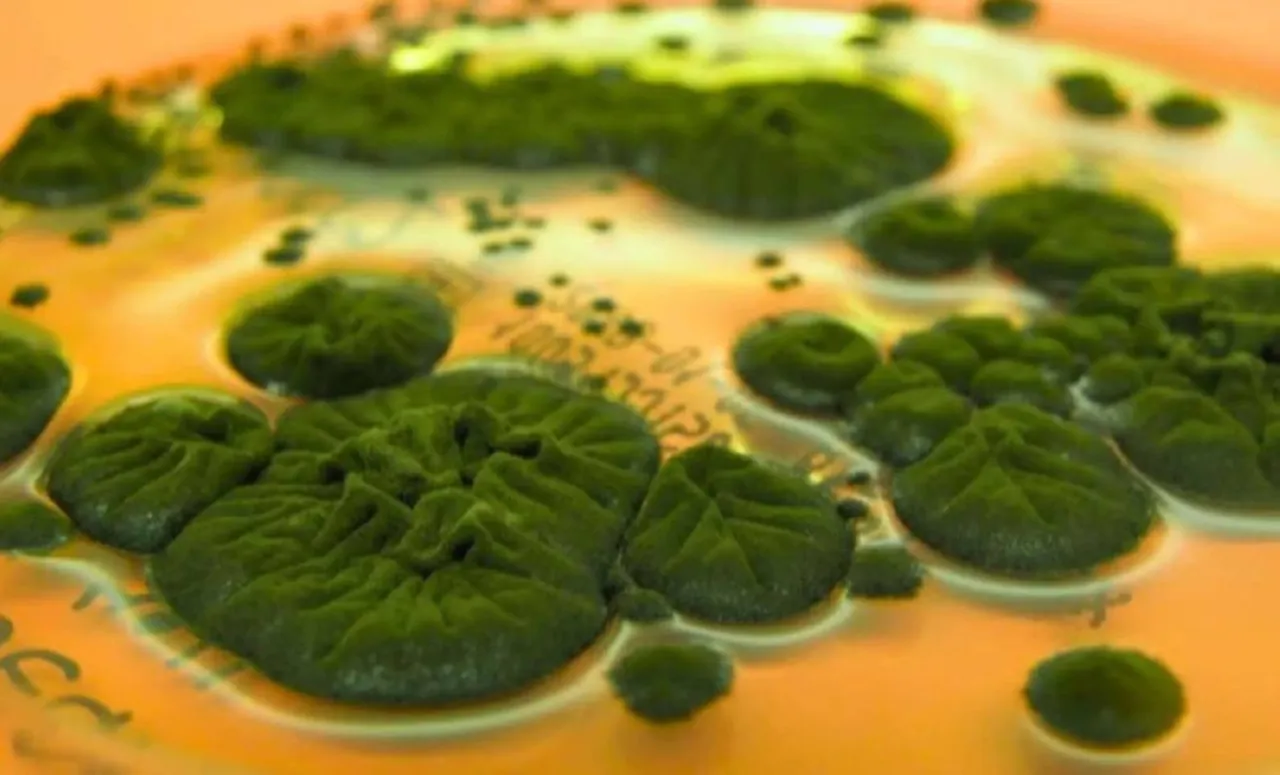
Khaberni - A team of scientists has discovered a mysterious black fungus capable of surviving and thriving under the conditions of intense ionizing radiation inside the Chernobyl nuclear plant, potentially opening new avenues for using radiation as an energy source and developing vital space protection technologies.
The fungus, scientifically known as Cladosporium sphaerospermum, was first discovered in the late 1990s on the walls of Reactor No. 4, an area still saturated with radiation since the disaster in 1986.
According to a study published in 2000, the fungus not only survived but also thrived at high radiation levels, forming dense colonies within the station's internal structures.
Subsequent studies expanded to test the fungus in the laboratory, where experiments showed that C. sphaerospermum grew faster when exposed to radiation compared to normal conditions, raising questions about the possibility of using radiation as an energy source, according to sciencealert.
In this context, a 2007 study suggested that the melanin pigment found in the fungus cells could convert radiation into chemical energy in a process similar to photosynthesis, in what was coined "radiosynthesis."
Research took a new dimension when the fungus was sent to the International Space Station in 2020, where it was exposed to continuous cosmic radiation.
The results showed a slight but noticeable decrease in radiation levels under the fungus growth area compared to other samples, indicating the fungus’s capability for radiation protection and remaining active in very harsh environments.
Experts highlight that this ability is not a general trait of all melanin-producing fungi, as some other species show limited improvement under radiation, while others do not grow faster despite producing more melanin, reflecting the unique adaptations acquired by C. sphaerospermum in the Chernobyl environment.
This discovery provides important indicators for future applications in space sciences. The fungus is lightweight, capable of growing on simple media, and reproduces itself, making it a candidate for developing biological shields to protect astronauts from radiation on long-duration missions to the Moon and Mars, in addition to exploring its use in other high-radiation environments, such as under the Martian surface or the icy crusts of outer planets.
The exact biological mechanism that enables the fungus to convert radiation into energy remains unclear since the fixation of carbon or production of cellular energy (ATP) has not been proven; however, there is increasing evidence that the fungus interacts with radiation in a way that goes beyond mere survival, making it one of the most vital and mysterious organisms in astrobiology research.
This discovery is a significant step in understanding life's ability to adapt to harsh environments and opens new horizons for scientific research in the field of bioenergy and space engineering, possibly providing a model for future living organisms that will assist humans in living beyond Earth.