Khaberni - After the shock of launching Chat GPT in 2022, Google seemed to have lost the initiative in the AI race.
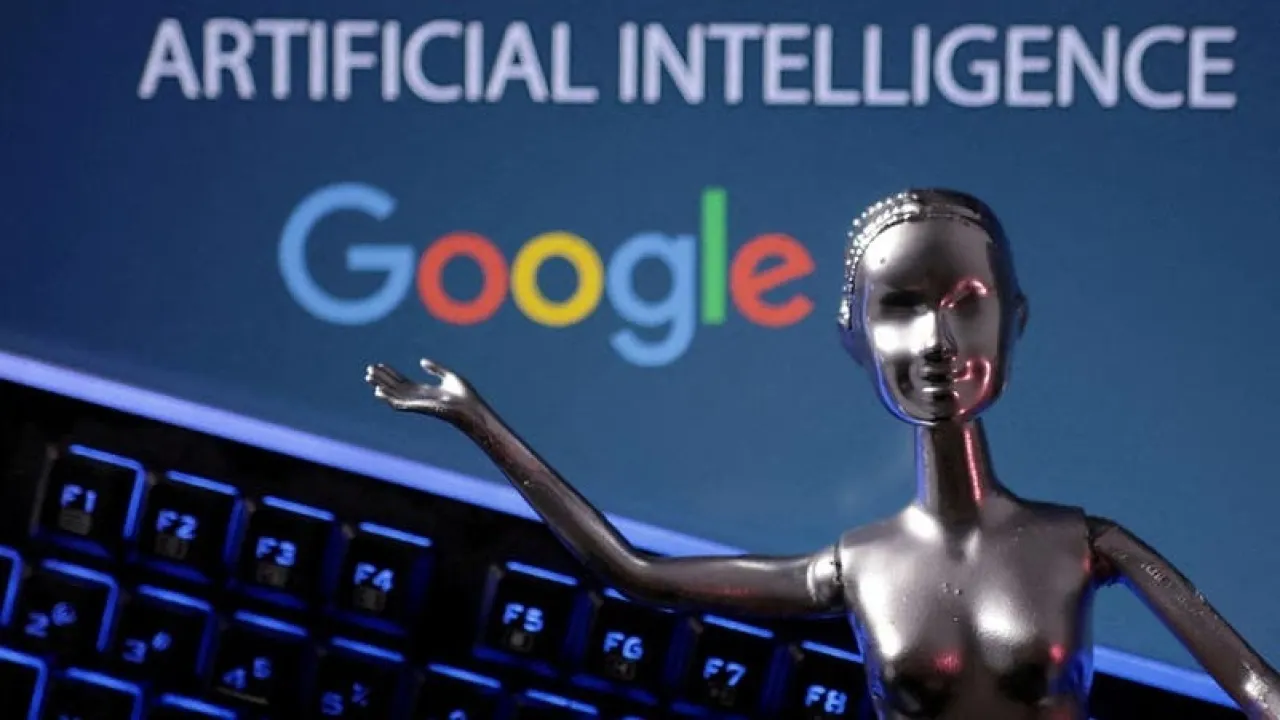
However, the past weeks have seen what can be described as a strong comeback for the company, thanks to the launch of the Gemini 3 model and its new Ironwood processor, which attracted expert attention and notably raised Alphabet's stock.
Google kicked off November by unveiling the Ironwood processor, the seventh generation of TPU processors, which the company says are now capable of running the largest and most data-intensive models.
A few days later, they announced Gemini 3, which offers more accurate responses and requires fewer instructions, according to a report published by CNBC and reviewed by "Arabia Business".
Salesforce CEO Marc Benioff described the experience as a crazy leap, confirming that he used Chat GPT daily for three years but would not return to it after only two hours of trying Gemini 3.
Google’s status changes
Alphabet's stocks jumped more than 5% at the beginning of the week, after gains that exceeded 8% last week.
Recent financial filings revealed that Warren Buffet’s Berkshire Hathaway now owns a $4.3 billion stake in the company.
Alphabet's stock has risen about 70% since the beginning of the year, outpacing "Meta" by more than 50 points, and last week the company surpassed "Microsoft" in market value.
Despite "Nvidia" announcing strong quarterly results, analysts at "Mellius Research" said the real concern is Google’s strong comeback in AI.
From stumbling to assembling
According to Michael Nathanson of "MoffettNathanson", CEO Sundar Pichai has finally succeeded in piecing together a comprehensive AI ecosystem that serves both consumers and businesses at the same time.
Despite many setbacks such as the long withdrawal of the Imagen 2 model after generation issues, and the scandal of incorrect responses from AI Overviews, the company has regained its ability to execute quickly.
After launching Gemini 2.5 in the spring, Gemini 3 followed quickly, then came the Nano Banana Pro version which enhanced visual and audio generation capabilities.
Google benefits from a unique advantage: YouTube, a massive database of videos that gives it a significant edge in training image and video models, which companies like "OpenAI" and "Anthropic" do not possess.
Google confirmed that Ironwood is about 30 times more efficient than the first TPU processor released in 2018.
And with huge deals with companies like "Anthropic," Google's processors have become a strategic element in the chip race.
Even reports of the possibility of "Meta" using Google's processors caused Nvidia's stock to drop by 3%.
The great advantage of Google, according to analysts, is that it owns the entire chain:
The model, the software, the cloud infrastructure, and the chip designed specifically for it.
Fierce competition with no single winner
Despite the momentum, experts believe the competition remains fierce, and the advantage can still shift within days.
- "Anthropic" launched the competing model Opus 4.5.
- "OpenAI" pushed new updates for GPT-5 to make it warmer and smoother.
- "Nvidia" still controls more than 90% of the AI chip market.
While Google has 650 million monthly users for the Gemini app and 2 billion users for AI Overviews, "OpenAI" reported that Chat GPT gathers 700 million users weekly.
A race that requires massive spending
Major tech companies have raised their capital expenditure to more than $380 billion this year, with expectations that winning may not be absolute, but AI might become a "commodity" shared by several companies.
According to Google managers, the company will need to double its capacity every six months to meet increasing demand.
This has helped Google strongly regain its balance, but the battle is not yet decided.
As one analyst said: "Yes, Google has regained its activity… but that doesn’t mean it has won."