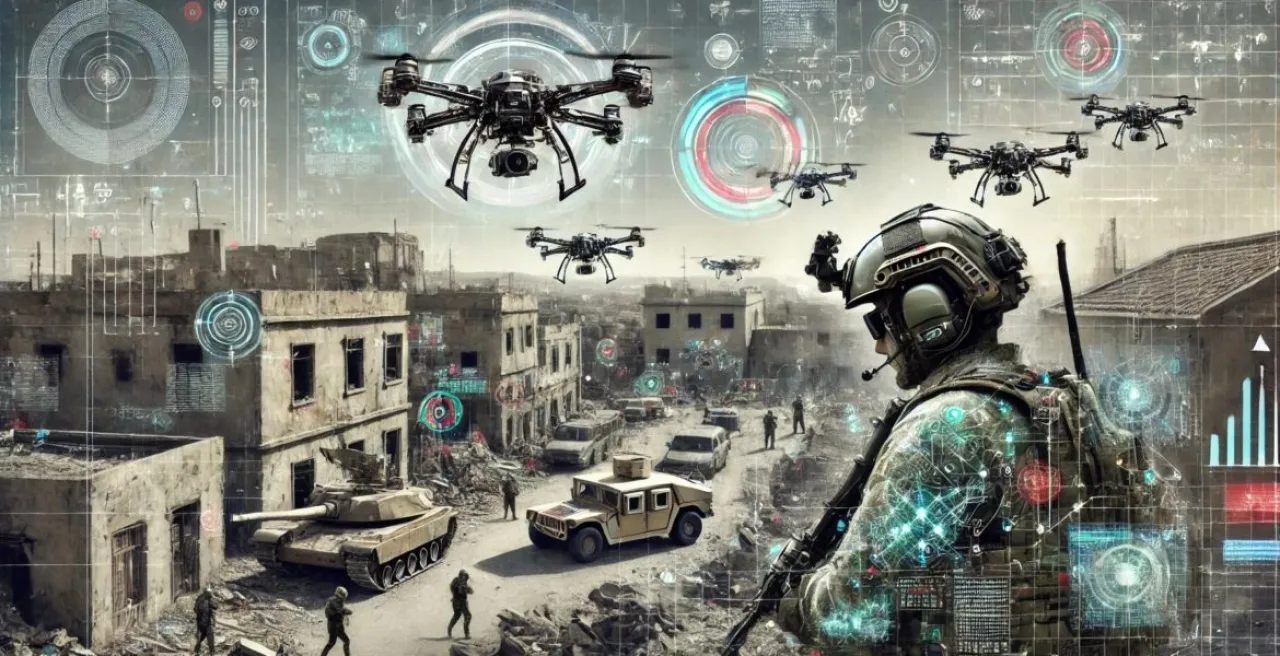
Khaberni - Artificial intelligence has become capable of reading military images and extracting precise information from them more quickly than human capabilities, especially with the increased use of satellites and drones in conflict areas.
The volume of images captured daily has become massive to a point that is difficult for humans to analyze entirely, making artificial intelligence an indispensable tool for understanding what is happening on the ground. This technology has become an important tool for military researchers, security analysts, and media to understand what is happening on battlefields.
Unprecedented speed
Artificial intelligence technologies rely on advanced software that can scan thousands of images very quickly, where smart systems scan the images and identify important elements such as military vehicles or signs of destruction or unusual movements, instead of analysts examining each image manually.
This rapid analysis allows for identifying changes happening in conflict areas within hours or even minutes, which helps relevant entities to follow developments more accurately.
Hidden details
The role of artificial intelligence goes beyond speeding up the analysis process; it also extends to discovering details that may be difficult for the human eye to notice. Thanks to machine learning technologies, intelligent systems can recognize certain patterns in the images, such as tracks of vehicles on dirt roads or minor changes in buildings.
These systems are also capable of comparing images taken at different times to determine whether there are new military movements or changes in military sites.
Supporting journalism
Artificial intelligence has also become an important tool for journalists and research centers working on documenting conflicts. Through the analysis of satellite images, it is possible to verify certain claims related to military events or assess the scale of destruction in specific areas.
These tools have contributed to supporting open-source investigations that rely on analyzing images and data available to the public to understand what is happening on the ground.
Ethical and technical challenges
Despite the significant benefits of this technology, its use raises a number of challenges, as the results of the analysis depend heavily on the quality of the data used in training the systems, meaning that errors or biases could lead to inaccurate conclusions.
The increasing reliance on artificial intelligence in analyzing war images also raises questions about privacy and the possibility of using these technologies for widespread surveillance purposes.
While this technology opens new horizons in information analysis, the challenge remains in using it responsibly, balancing technical benefits with ethical considerations.