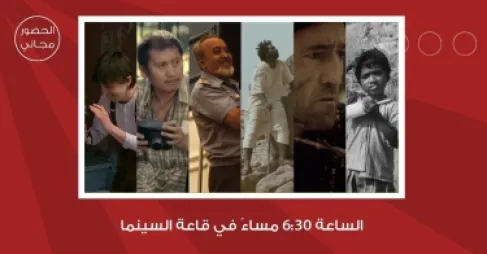
Khaberni - The cinema committee at the Abdul Hameed Shoman Foundation will show the German film "The Kaiser's Lackey" directed by Wolfgang Staudte tomorrow, Tuesday, at six thirty PM, at the cinema hall in the foundation's headquarters in Jabal Amman.
The film "The Kaiser's Lackey," adapted from Heinrich Mann's satirical novel published in 1918, is a significant work in the history of German cinema, produced in the early 1950s, just six years after the collapse of the Nazi regime. Staudte saw in Mann's novel an opportunity to explore the historical roots of German despotism, which culminated in National Socialism, offering a critical perspective on the nature of power and the complexities of human behavior in the face of despotism.
The events of the film take place under the German Empire, specifically in the year 1888 during the reign of Kaiser Wilhelm II - the German Emperor of the Second Reich. The film follows the life of Diederich Hessling, from his fear-filled childhood to his rise as a powerful industrialist in the fictional city of Netzig during Kaiser Wilhelm II's era. The narrative tracks Hessling's psychological development as he internalizes the "authoritarian principles" of his society: learning to bow to those above him while ruthlessly exploiting and crushing those below. The story begins with Hessling as a shy child who discovers pleasure in authoritarian structure when he decorates his teacher's cane, and feels contentment during punishment, early indicators of the "sadomasochistic personality" that would define his relationship with authority in adulthood.
As an adult, Hessling runs his own paper mill with a blend of hypocrisy and harsh ambition. He presents himself as a patriot who supports militarism and anti-socialism, yet he insists on flouting these declared values by dodging military service through deceit, slandering his business rivals, and even collaborating with democratic socialists when it serves his interests. The plot culminates in a crucial closing scene, with the unveiling of a memorial to Kaiser Wilhelm I in front of the city's leading figures, where Hessling delivers an impassioned nationalistic speech, mimicking Hitler's rhetorical style, asserting that Germany could not prosper in peace, but could only achieve glory on the battlefield. As a storm erupts, scattering the attendees, he continues his speech, fist raised towards the sky. As he bows before the statue before leaving, the background music changes. The image fades, and the statue stands gloriously amidst the ruins of the city destroyed after World War II bombing. Hessling's final words about the need for war are heard; the narrator declares that so he said then, and many others after him - to this day.
The film "The Kaiser's Lackey" stands out as a significant achievement in political cinema through its use of a sharply satirical approach, characterized by a bold confrontation of disturbing historical truths. The film's visual style is another important strength, as its eloquent visual language reveals the psychological mechanisms that enable authoritarian regimes to thrive.