Khaberni - Former Jordanian Ambassador Dr. Adel Al-Odaila stated that Jordanian diplomacy has achieved prominent accomplishments in enhancing Jordan's regional and international presence, through building balanced relations with countries worldwide, and contributing to the mobilization of international support for national and nationalistic causes, and establishing Jordan's image as a responsible actor in the international system.
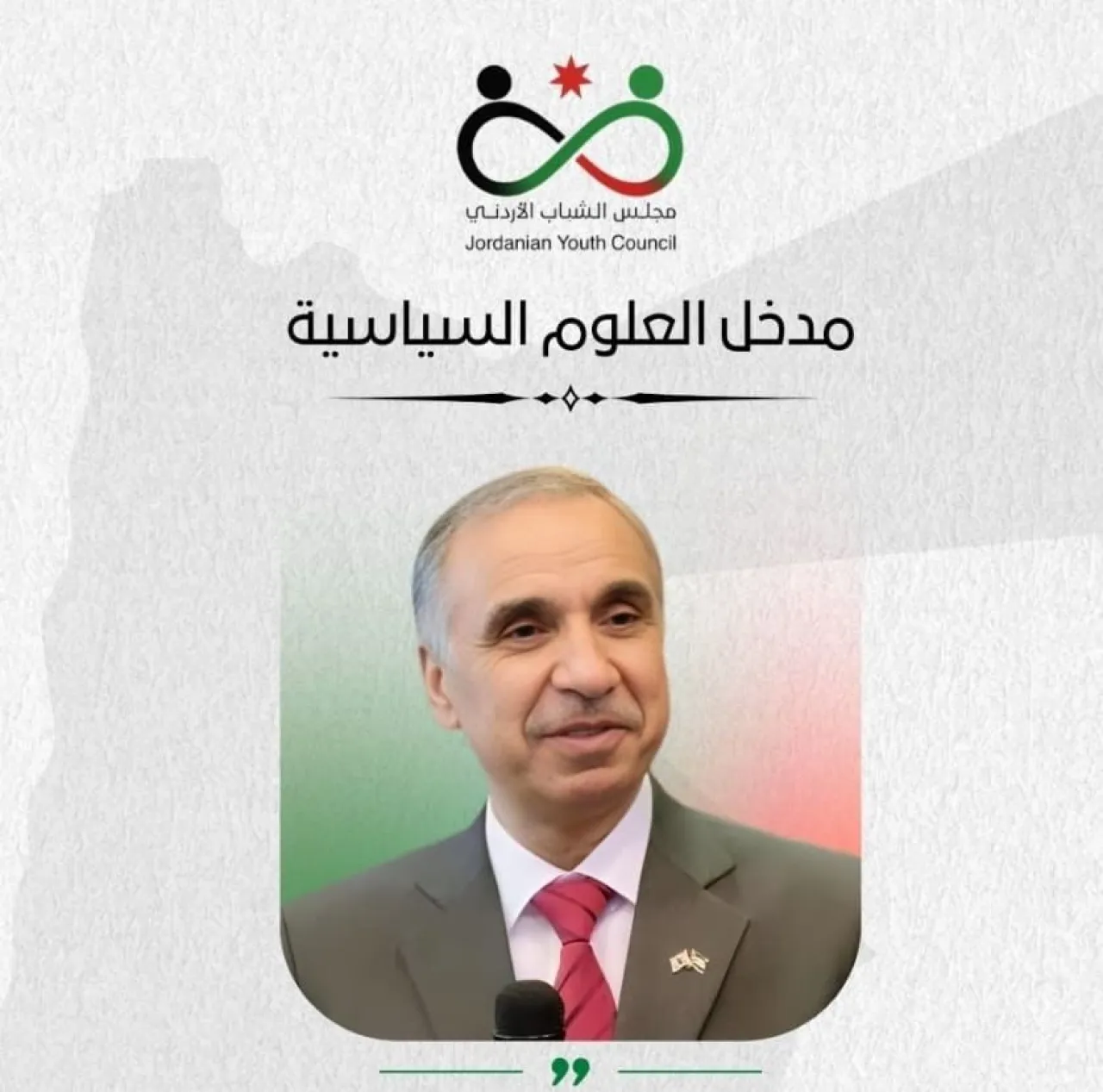
This was stated during a high-level political session held by the Jordanian Youth Council within the “Introduction to Political Science” program, in which former Jordanian ambassador Adel Al-Odaila provided one of the clearest and most frank readings of the international and regional scenes, in a discussion that carried the tone of extensive decades-long experience in the realms of politics and diplomacy.
The session, chaired by the president of the Jordanian Youth Council Suleiman Al-Saqqar, demonstrated the prowess of Jordanian diplomacy. Al-Odaila outlined the features of global transformation, pausing at what he termed “the stage of competitive multipolarity” which emerged with the rise of international powers alongside more intense Russian moves, while the American influence maintained its traditional weight.
Al-Odaila affirmed that Jordan, despite its limited resources, was able to establish a stable position for itself thanks to a pragmatic approach in its foreign policy and its refusal to align with any axes, maintaining profound strategic relationships with the United States and the West, alongside a calm and studied openness towards China and Russia, making Jordan's foreign policy capable of dealing with changes without abandoning its principles or national interests.
In the file of the Palestinian issue, which Al-Odaila described as “one of the determinants of Jordanian foreign policy”, he emphasized Jordan's steadfastness towards a two-state solution, asserting that the Hashemite custodianship of the holy sites represents the last line of defense, preventing the occupation from seizing control of the Al-Aqsa Mosque, warning that Jordan abandoning this role would immediately create a dangerous vacuum that would be filled by the Israeli religious institution without hesitation.
Al-Odaila also commented on the war on Gaza, praising Jordan’s role which he described as "the most present and influential" at the level of the international narrative, where Jordan - through intensive diplomatic efforts - succeeded in changing the public mood in several Western capitals that initially adopted the Israeli narrative, before their positions shifted due to political and humanitarian pressures led by His Majesty King Abdullah II bin Al-Hussein, in cooperation and coordination with Egypt and Saudi Arabia.
In response to a question about “Who is the victor? Hamas or Israel?”, Al-Odaila provided a decisive and direct answer saying that the concept of victory in modern wars is no longer measured by territorial control alone, but by the ability to alter the strategic environment. He explained that Israel – despite its military strength – emerged from the war deeply damaged in its international image, and faced an unprecedented internal shake-up, while Hamas succeeded in imposing a long-standing resilience equation, yet paid a catastrophic humanitarian price in Gaza. Al-Odaila observed that the victory did not go entirely to any side, and that the biggest loser is regional stability, while the Palestinian issue has returned to the center of the global scene in a way that Israel could not prevent.
Speaking of Arab relations, Al-Odaila explained that the Arab system is no longer what it was, and that the project of Arab unity is no longer possible due to differing priorities among Arab regions. However, he affirmed that Arab integration and coordination are possible and indeed necessary, and that the Jordanian–Gulf relationship represents a pivotal foundation for Jordan and the region, amid deep political, security, and economic coordination.
Regarding Jordan's potential membership in the Gulf Cooperation Council, he confirmed that the idea was seriously proposed, but there are reservations from some Council states due to demographic and economic differences. He emphasized that these reservations do not diminish the depth of the relationship between Jordan and the Gulf states, nor Jordan’s status with Saudi Arabia, UAE, Kuwait, Qatar, Oman, and Bahrain.
In addressing the most sensitive axis, Al-Odaila went straight to the heart of the regional scene, asserting that a clash between Iran and the occupying entity “is inevitable” but not imminent, attributing this to the diminished capability of Iran for direct military adventurism following the fall of the Assad regime and the reduced influence of its proxies, and Hezbollah receiving painful blows that changed many of its calculations.
He pointed to the rise of the Kingdom of Saudi Arabia as a central regional player, possessing significant political, economic, and religious weight that is difficult to overlook, alongside Turkey and Iran.
In his assessment of the challenges facing Jordan. Al-Odaila stressed that Jordan faces a mix of economic challenges including high rates of poverty and unemployment, water scarcity alongside refugees, terrorism, drug smuggling, and instability in its neighborhood. However, he confirmed that Jordanian diplomacy has succeeded historically in turning these challenges into opportunities, based on a stable international reputation and the image of a moderate state that keeps the “doors of the world open for the Jordanian diplomat wherever he goes”.
At the conclusion of the session, the Jordanian Youth Council expressed its appreciation for Ambassador Al-Odaila’s attendance and his deep analyses, confirming that such dialogues will continue as part of the council’s commitment to enhancing the political culture among youth, and establishing a national awareness capable of realistically reading the region and its transformations with responsibility.