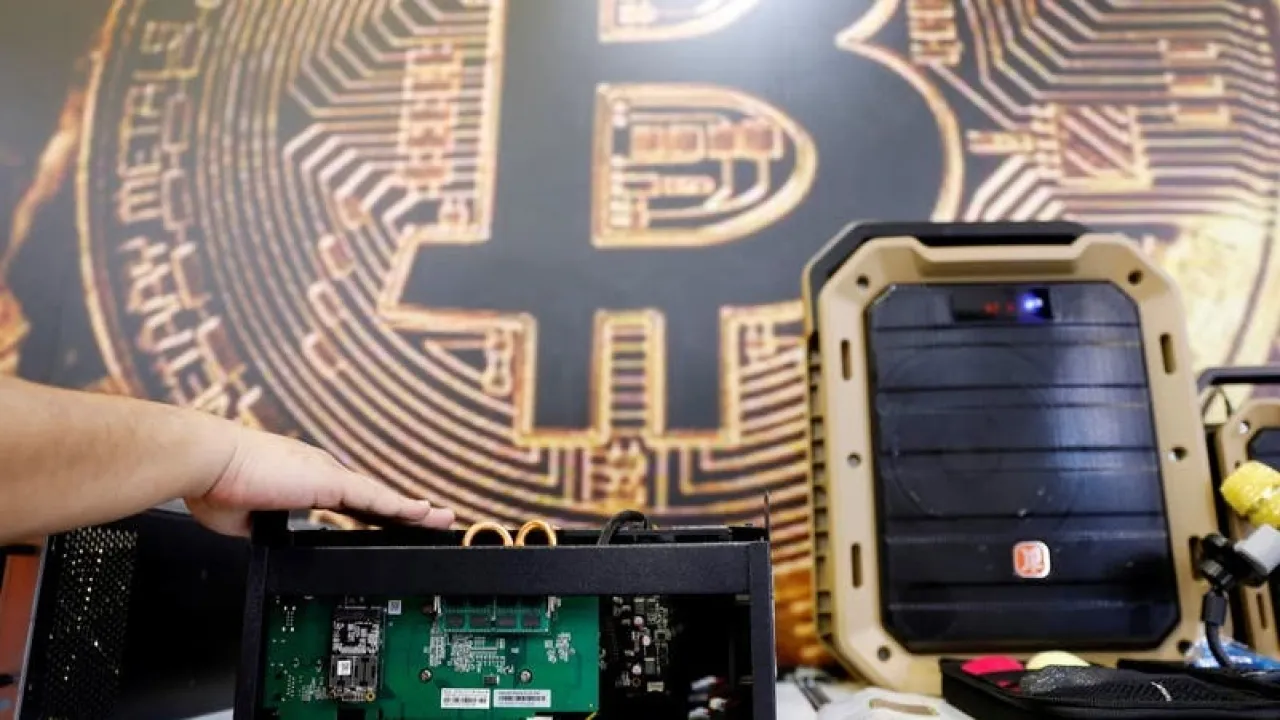
Khaberni - As the cold intensifies in America and electricity bills rise, Americans usually resort to traditional heating methods such as electric heaters, gas, and oil.
But a new phenomenon has started to appear in some states: using the heat generated from cryptocurrency mining, primarily Bitcoin, as a source of heating indoors and in stores.
Wasted heat turns into useful energy
Cryptocurrency mining depends on immense computing power that, in turn, generates substantial heat often wasted in the air.
According to the digital brokerage company K33, the Bitcoin mining sector alone produces about 100 terawatt-hours of heat annually, which is sufficient to heat an entire country like Finland.
This enormous amount of wasted heat has prompted entrepreneurs to look for ways to repurpose it for residential and commercial heating, especially during winter.
From mining rigs to home heaters
During the recent cold wave, the New York Times tested a device called HeatTrio, which is a home heater valued at $900 that also functions as a Bitcoin mining device.
Some users say they redirect the heat from their devices through their home ventilation systems to reduce heating bills.
Jill Ford, the CEO of Bitford Digital explains: "I've seen mining devices operating quietly in home attics, while the resulting heat is pumped back through the ventilation system to heat the house. It's a smart way to utilize energy that would otherwise be wasted."
Nevertheless, Ford asserts that the goal isn't always to completely reduce the electricity bill but to achieve a modest return from mining that might offset heating costs.
Expansive ideas.. from homes to large buildings
Experts like Andrew Sobko, founder of Argentum AI, believe the idea is more feasible in large environments such as data centers or high-density buildings, where computing heat can be directly channeled into heating systems.
He adds: "Instead of transferring heat, you can transfer computing to the place that actually needs this heat."
Other experiments indicate using mining heat for heating greenhouses or water systems in industrial facilities.
Persistent doubts: Is this model realistic?
Despite the enthusiasm, some believe the idea lacks realism.
Derek Mohr, a professor at the University of Rochester, asserts that home mining is no longer viable, as mining farms use specialized chips far beyond the capability of any home device.
He states: "Most mining-based heating devices are just electric heaters consuming the same amount of energy, offering no real efficiency in heating."
He also clarifies that the chances of success in home mining are almost nil, making any expected gain just "false hope" for users.
Other experts see a promising future
Conversely, Nicky Morris, the Executive Director of the Energy Institute at Texas Christian University, believes the idea is worth studying, especially since mining inherently produces heat that can be exploited with a potential for financial return.
She states: "Mining heat could be used to heat homes or warm water, enhancing energy efficiency."
She adds that integrating this concept within residential buildings or complexes could pave the way for a new model that combines energy production and digital profit.
Practical experiment in Idaho
In the town of Challis, Idaho, a company called Softwarm has actually begun implementing the idea.
Local shops use the company’s devices for Bitcoin mining and for heating car wash areas or industrial water tanks, significantly reducing heating bills.
Kid Peterson, the founder, says: "A car wash owner used to pay $25 a day for heating. Now, the mining devices heat the place and also generate money at the same time."
And Peterson himself has been heating his home for two and a half years using mining devices, and he believes this technology will become common soon.
Peterson says: "In a few years, you'll find in home improvement stores water heaters equipped with a data port, heating water via Bitcoin mining."