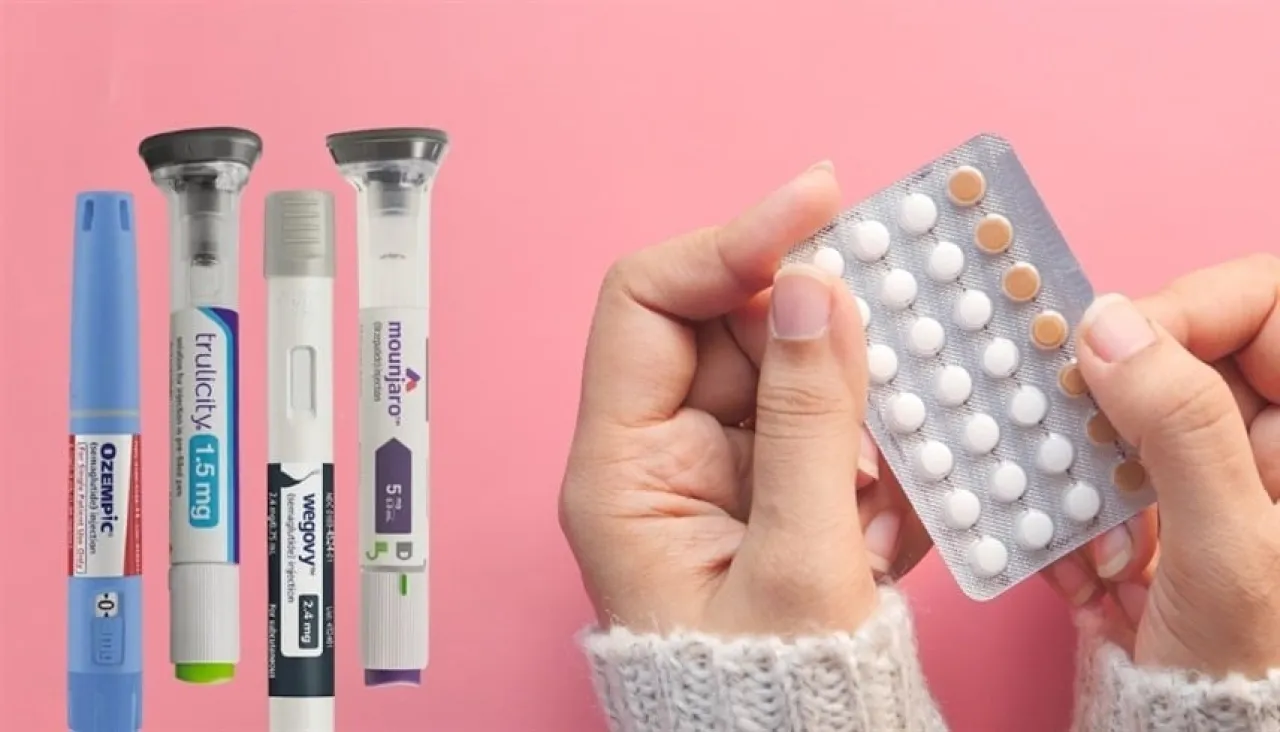
Khaberni - In a report on consumption data due to the "Ozempic Effect", "Walmart" stated that consumers who receive slimming injections from its pharmacies tend to buy less food than usual when they move to the food section, and in the same context, data indicates that sales of belts and smaller clothing sizes have increased.
In another form, the latest GLP-1 weight loss medications - available in injections and pills - have proven highly effective in weight loss, heralding a new era whether in treating obesity or in lifestyle itself, according to "CBC".
Weight Loss through Gene Therapy
Recently, a report by "CNN" mentioned a new approach being developed by researchers in the field of gene therapy, to make the body produce this appetite-suppressing hormone: GLP-1, which is famously provided by slimming injections.
GLP-1 is an abbreviation for "Glucagon-Like Peptide-1", a hormone produced by the body to help send signals to the brain and intestines that it is full and does not need to eat more.
The new weight loss medications, such as: Ozempic, Wegovy, Mounjaro, and Zeppond mimic this hormone's effect by increasing insulin secretion to lower blood sugar levels.
They also slow down the movement of food through the digestive system, which helps people feel fuller quicker and for longer periods, and work in the brain to reduce appetite.
In less than two years, the percentage of American adults using these medications to lose weight has almost doubled, rising from 5.8% to 12%, according to a recent report by the Gallup Foundation.
A Single Injection in the Future
But according to the researchers in the field of genetics, those looking to lose weight and lower blood sugar levels may one day be able to receive a single injection that transforms their cells into mini factories producing a protein that forms the active ingredient in Ozempic and related drugs.
According to "CNN", this is the ambition of two emerging biotech companies, Rainbio, based in New York, and Fractal Health in Massachusetts.
Both companies have completed initial tests demonstrating the effectiveness of their approaches, at least in mice, and have begun trials on larger animals - pigs and monkeys - to determine if their gene therapies are viable on larger animals.
Turning the Cell Into a Protein Factory for Weight Loss
Rachel Liberatori, the scientific director of Rainbio says: "Although the Rainbio treatment uses genetic technology, it is not a traditional gene therapy: the researchers are not trying to repair a disabled gene, but using the cell’s own mechanism to convert it into a protein factory."
She explains: "The DNA we inject, the plasmid DNA, does not interfere with your own DNA in any way. Therefore, it does not interfere with your chromosomes. It does not integrate. It is not something you will pass on to your children."
Weight Maintenance
But such a gene-dependent treatment is expected to provide a solution for the maintenance phase, because after using the slimming injections and losing weight, maintaining the new weight without regaining lost kilograms requires effort.
And the DNA-based treatment could provide a solution for this phase.
Since Ozempic started as an expensive injection for controlling diabetes and then became a trend for weight loss among celebrities, a sequence of slimming injections has been available in different dosages, and recently the oral version of Ozempic, Rybelsus, has become available, paving the way for further waves of weight loss treatments to tackle the global obesity epidemic that has swept the world in recent decades.