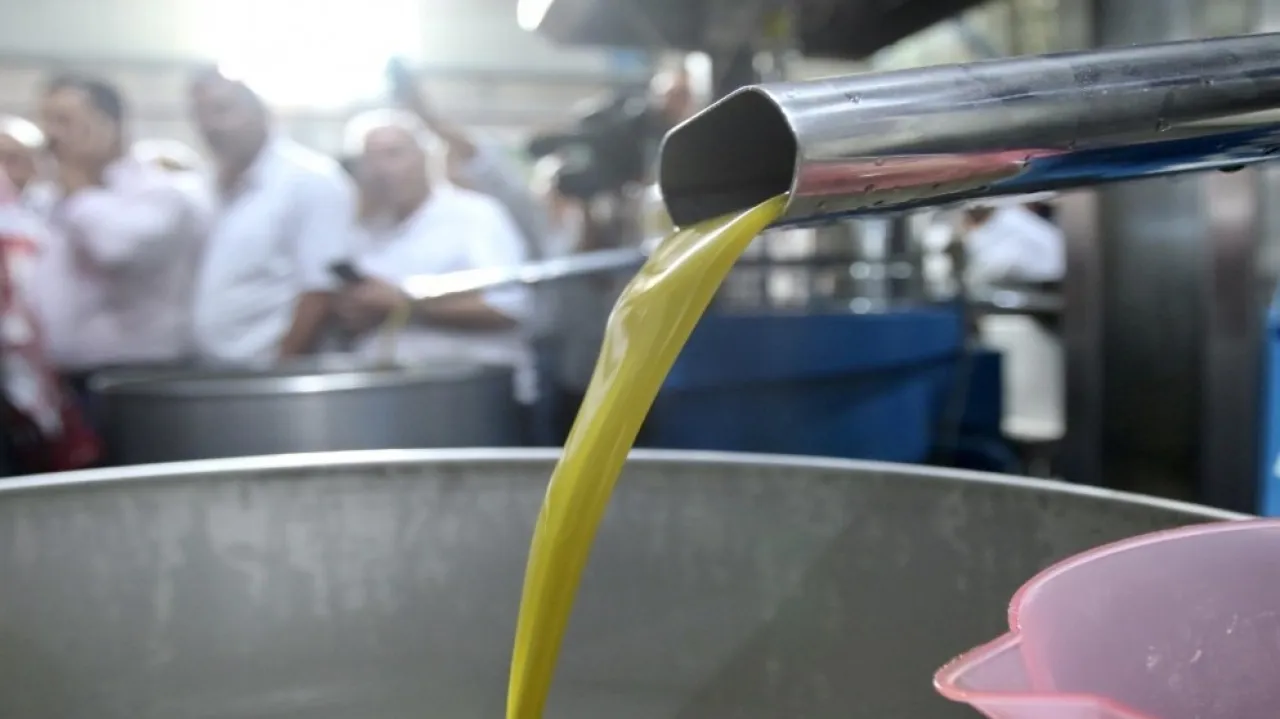
Khaberni - The Ministry of Agriculture will start receiving olive oil import requests on Sunday, aiming to secure sufficient quantities of the product in the local markets with the appropriate quality and price, due to the decrease in local oil production this season.
The ministry will continue to receive import requests for a period of 5 days, according to what was confirmed in a press statement, explaining that the import process will take place from the member countries of the International Olive Council only, in compliance with international standards and to ensure the quality of the imported product.
The Minister of Agriculture, Saeb Khresat, stated on Friday that the current season for olives has seen a decline due to the scarcity of rainfall and the drought that affected the kingdom, impacting this year's olive production.
He added that the ministry has monitored the quantities of fruits produced this year and the expected amounts of olive oil to be obtained, estimating that the production of olive oil this season will reach about 17 to 18 thousand tons, while the kingdom's annual consumption of olive oil is about 28 thousand tons, meaning there is a deficit of about 10 thousand tons.
Khresat explained that the ministry resorted to opening the olive oil import to bridge this gap and reduce the burdens on citizens, confirming that the prices will be affordable for everyone and will significantly decrease.
He pointed out that the prices of olive oil tanks range between 120 and 135 dinars, depending on the location, noting that these prices are higher than expected, as the 16-kilogram package was supposed to range between 100 and 110 dinars at most.
The ministry has invited companies and institutions interested in importing to submit their applications, attached with the required official documents, which include: the commercial register showing import and export purposes and trade and distribution of foodstuffs, the importer's card issued as per regulations, and the company or institution's social security statement for the years 2024 and 2025.
It indicated that this step comes as part of its efforts to provide the essential olive oil to consumers and to achieve balance between supply and demand in the local market, maintaining price stability and protecting consumers from any unjustified price hikes due to the decline in production this year.
The ministry confirmed its ongoing monitoring of the local olive season and the quantities produced from local presses, in addition to supporting farmers through its marketing and educational programs, in parallel with the measures aimed at ensuring the availability of both national and imported products according to the highest quality standards.
The ministry emphasized that a specialized team will carefully study the submitted applications to ensure the importers' compliance with the specified conditions and standards, stressing the importance of cooperation between the public and private sectors in maintaining the sustainability of the olive sector, which is a fundamental pillar of Jordan's food security and agricultural economy.
* Notable decrease in production
The Department of Statistics showed that the quantities of oil produced until the first of November this year amounted to 1,419 tons, and according to historical data, the average annual production during the same period of the season (2012–2025) was about 2,542 tons.
It explained that October's olive production this year accounted for only 55.8% of the general seasonal average, indicating a "weak performance" compared to previous seasons.
The results indicate that this year's olive oil production season will register a "notable decrease" in olive oil production and reflects a slowdown in production pace compared to previous seasons, with previous reports indicating that the average annual production of olive oil is about 25,000 tons, and that the production volume in the last season (2024) reached its historical peak at 35,828 tons.
The Department of Statistics highlighted its continued monitoring of the quantities of oil produced in olive presses until the end of the pressing season, through the annual field survey conducted in cooperation with the Ministry of Agriculture, aiming to provide accurate and comprehensive data to support appropriate agricultural decision-making and policies.