Khaberni - In a fortified vault with a door weighing more than 4 tons, Germany maintains the largest reserve of rare metals inside a facility considered a strategic treasure, amid the escalating European confusion in search of alternatives to Chinese supplies after the recent restrictions imposed by Beijing.
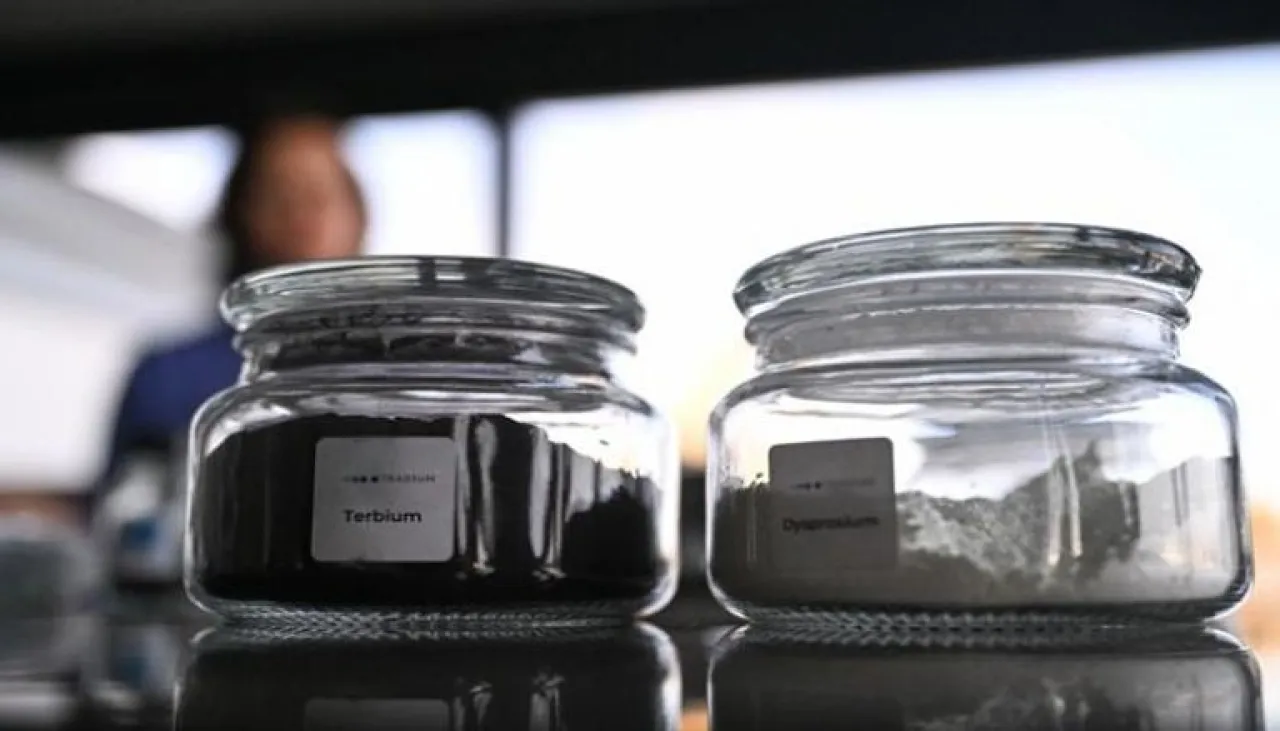
The German company "Tradium," specialized in trading of metals, stores thousands of barrels of dysprosium, terbium, and neodymium, which are essential materials used in the manufacturing of smartphones, electric vehicles, and wind turbines. China is often the main source of these metals globally.
In the midst of the trade war with Washington, Beijing, the world's largest producer of these materials, imposed strict restrictions on its exports since last April, requiring special licenses. China dominates over 60% of the mined metals globally and 92% of refining processes, according to the International Energy Agency.
This dominance includes rare earth magnets, which are a key component in the automotive industry, making Germany in a sensitive position given its heavy reliance on this sector.
Matthias Reith, president and founder of "Tradium," told Agence France-Presse: "Tension is rising among our clients around the world, which could lead to a complete halt in production, a very dramatic thing," adding that the Chinese exporters themselves "are not happy, but their hands are tied by the decisions of the Chinese government."
Reith explained that China's near-total monopoly on these metals has caused a significant shortage of raw materials and a sharp increase in prices amid uncertainty about the future of the market.
He noted that this dependence goes back for decades, explaining that since the 1990s, the Chinese governments have viewed these resources as strategic assets comparable in value to oil reserves in the Middle East.
Martin Erdmann from the Federal Institute for Geosciences and Natural Resources (BGR), stated that Europe has never developed a competing mining industry, preferring to rely on imports from countries with less stringent environmental standards. He added that the United States, which had been a leader in this field until the 1990s, abandoned production for cost and environmental reasons, paving the way for Chinese dominance in the market.
Although President Donald Trump announced that his recent agreement with his Chinese counterpart Xi Jinping includes some relaxation of restrictions related to rare metals, the reality indicates their continuation. Erdmann explained that the restrictions imposed since last April are still in effect, and Beijing requires issuing licenses that involve disclosing trade secrets and ensuring the materials will not be used in defense industries, conditions that only a few European companies can meet.
This was not the first crisis of its kind, as Japan faced a similar situation fifteen years ago due to complications in supply chains with China, which pushed it to diversify its sources, particularly through cooperation with Australia, and to establish strategic reserves.
Erdmann believes that Europe should learn the same lesson and invest heavily to reduce its dependence on China. In 2024, the European Union enacted new legislation aimed at ensuring its supplies of 17 strategic raw materials, through what is known as the Important Raw Material Act, which sets a goal for 2030 aiming to extract at least 10% of the rare minerals within Europe, process 40% of them, and recycle 25% of the local consumption.
However, achieving this goal remains complicated due to Chinese pricing policies that intentionally keep prices low to prevent the development of profitable industries outside its borders.
Reith said: "Our modern lives are completely dependent on these materials, but finding alternatives when they become rare is extremely difficult," adding that Europe, despite its awareness of the seriousness of the situation, may have reached a late stage of confrontation, concluding his speech by saying: "It seems that it is already too late."