Khaberni - European Commission spokesperson Anwar Al-Anouni confirmed that the EU's High Representative for Foreign Affairs and Security Policy, Kaya Kalas, is in constant communication with all parties involved in the Iranian nuclear file, including Iran, emphasizing that the European Union's stance is clear that Iran cannot possess or develop a nuclear weapon.
Al-Anouni stated on "Al Arabiya/Al Hadath" today, Monday, that the European Union's stance is clear, as Iran should neither own nor develop nuclear weapons, and it must fulfill its legal obligations related to nuclear safeguards under the Treaty on the Non-Proliferation of Nuclear Weapons, and cooperate fully and without delay with the International Atomic Energy Agency.
He also emphasized that "the European Union affirms that the solution can only be through negotiation and diplomacy, and will continue to contribute in this direction, and will remain engaged with all parties, including Iran, to find a negotiated solution that is in line with the reactivated United Nations Security Council resolutions."
Iranian President Masoud Bazishkian had announced that his country would rebuild its nuclear facilities "with greater strength," stating that "the knowledge is present in the minds of our scientists." Bazishkian considered that the destruction of buildings and facilities would not pose a problem against the rebuilding process.
"We do not seek a nuclear weapon"
He also added during a visit yesterday, Sunday, to the headquarters of the Nuclear Energy Organization in Tehran, that his country "does not aspire to possess a nuclear weapon." He said, "The expansion of the nuclear industry aims to serve our people and enhance national welfare, not to produce weapons."
The Iranian authorities have consistently emphasized over the years that their nuclear program is peaceful, stressing that it is for civilian purposes.
Despite the fact that the International Atomic Energy Agency had previously announced that uranium enrichment in Iran had reached 60%, which brings it close to a nuclear bomb.
However, the Director-General of the atomic agency announced last Wednesday in an interview with "Associated Press," that Tehran does not appear to be enriching uranium currently, but he pointed out that there have been renewed movements at the Iranian nuclear sites recently.
Grossi said that although the agency's inspectors have not been able to access Iranian nuclear sites, they have not seen any activity through satellite imagery that indicates that Tehran has accelerated its production of enriched uranium beyond what it had accumulated before the 12-day war with Israel last June. It is noted that the fate of the enriched nuclear materials at 60 percent that still remain in Iran is unknown, according to the international agency.
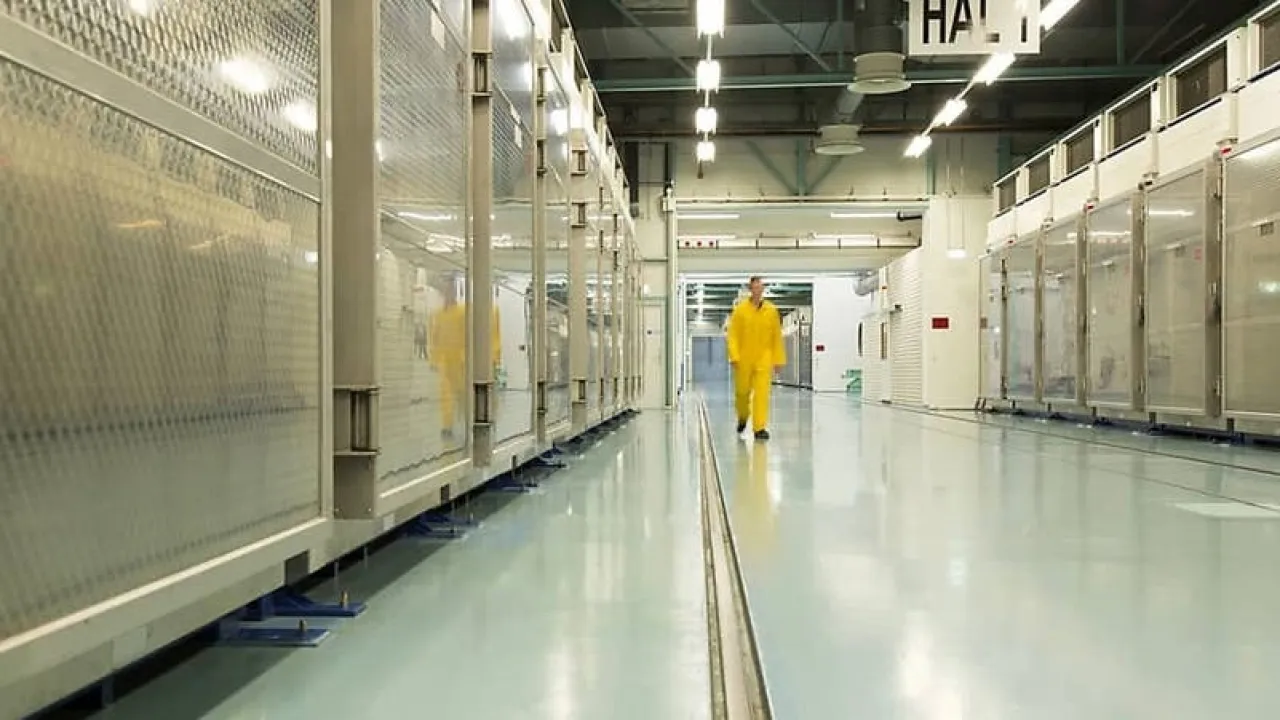
It is worth mentioning that the Israeli air strikes that hit inside Iran, in addition to the American attack last summer, targeted major nuclear facilities including Natanz and Fordow, but the extent of the damage sustained is still unknown.