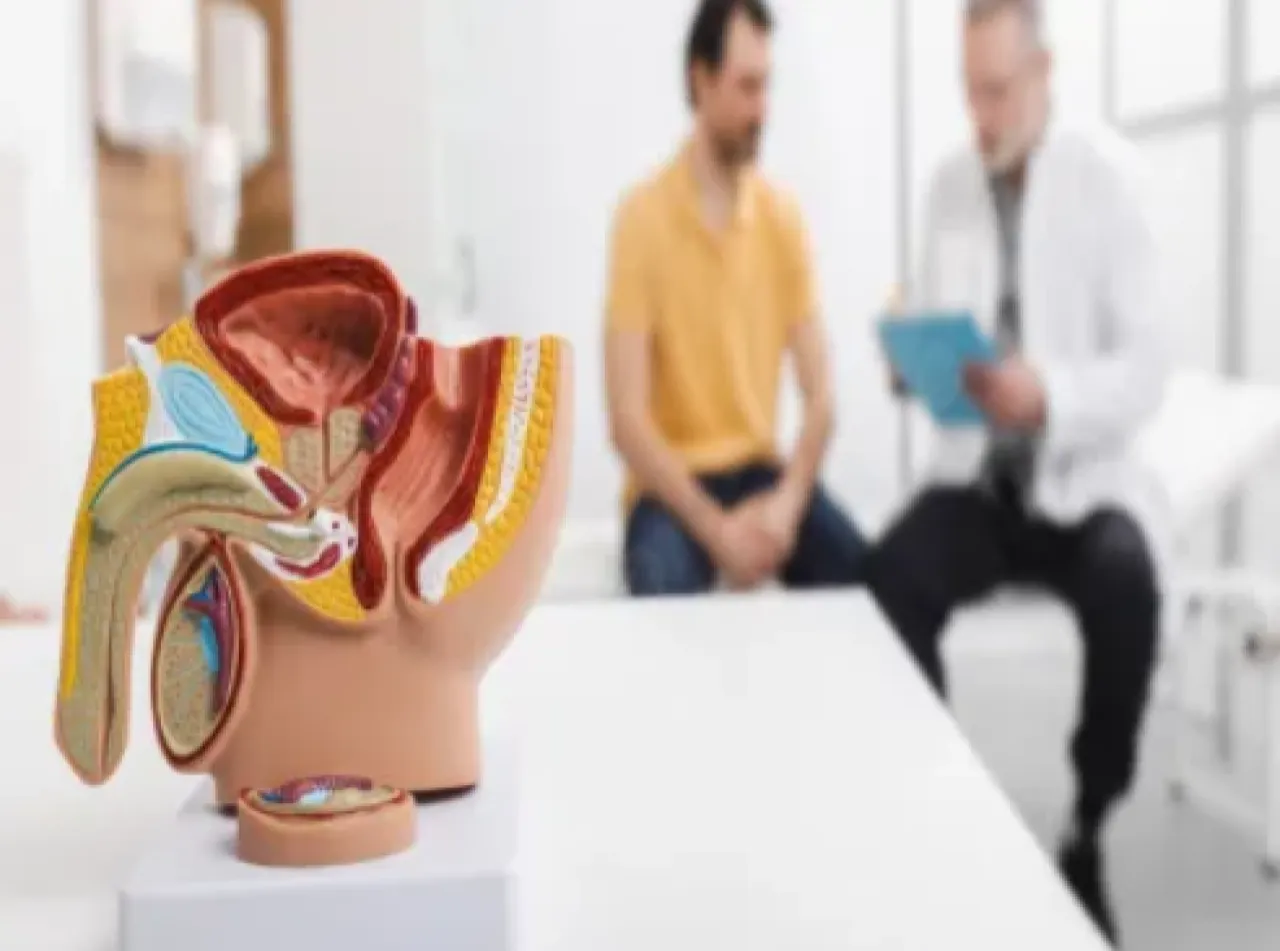
Khaberni - In a significant medical achievement, a large clinical study led by researchers from Cedars-Sinai Medical Center revealed that a new drug combination has succeeded in reducing the risk of death among patients with recurrent prostate cancer by up to 40%, compared to traditional treatment alone.
What is recurrent prostate cancer?
Recurrent prostate cancer is defined as the return of cancer after the patient has received initial treatment (such as surgery or radiation) aimed at complete cure.
It can occur for one of two main reasons:
Remaining small undetected cancer cells after the first treatment, which grow slowly and reappear after a period.
Or the cancer was in a more advanced stage than the doctors initially thought, where microscopic cells spread beyond the prostate (such as to lymph nodes or bones), and were not detected by the initial examinations.
In both cases, it is difficult to control the disease when it returns aggressively, necessitating the search for new treatments that can prolong the life of the patients and improve their quality of life.
Dual therapy: A new hope for patients with recurrent cancer
The study, published in The New England Journal of Medicine and presented at the European Society for Medical Oncology (ESMO) conference in Berlin, focused on a combination of traditional hormone therapy with a drug known as Enzalutamide.
The trial included over 1000 patients from 244 medical centers in 17 countries, all suffering from what is known as "high-risk recurrent prostate cancer," a type in which patients experience a rapid rise in prostate-specific antigen (PSA) levels after surgery or radiation, indicating a return of cancer activity and the possibility of its spread to bones or the spine.
Crucial trial results
The patients were randomly divided into 3 groups:
A group that received hormone therapy only.
A group that received only the drug Enzalutamide.
A third group that received the dual treatment.
After 8 years of follow-up, the results showed that the risk of death decreased by 40.3% for those who received the dual treatment compared to the other two groups, and the data showed a clear improvement in controlling the progression of the disease and preventing its spread to vital organs.
"A radical change" after 30 years
Dr. Steven Friedland, director of the Integrated Cancer and Lifestyle Research Center at Cedars-Sinai Cancer Center and the study's lead co-investigator, said: "After initial treatment, some patients see their prostate cancer return aggressively, and they are at risk of the disease spreading quickly."
He added: "Hormone therapy, which we have been offering to patients for 30 years, did not improve survival rates, nor did anything else do that. This is what makes these results a truly radical change.
Towards a new standard for treating recurrent prostate cancer
The research team clarified that the drug Enzalutamide had previously received approval from the US Food and Drug Administration (FDA) for use in certain cases of prostate cancer, but the new findings could pave the way for its official adoption as a standard dual therapy in cases of relapse after surgery or radiation.
In turn, Dr. Hyung Kim, head of the Department of Urology at Cedars-Sinai, said: "These significant findings define a treatment that prolongs the lives of men with aggressive prostate cancer, and will change the way we care for our patients."
These results represent an important step towards improving survival chances for thousands of men around the world who suffer from high-risk recurrent prostate cancer.