Khaberni - As the race to the moon begins, space scientists confirm that finding water there is not a matter of "whether it exists or not," but a matter of knowing the right place to look.
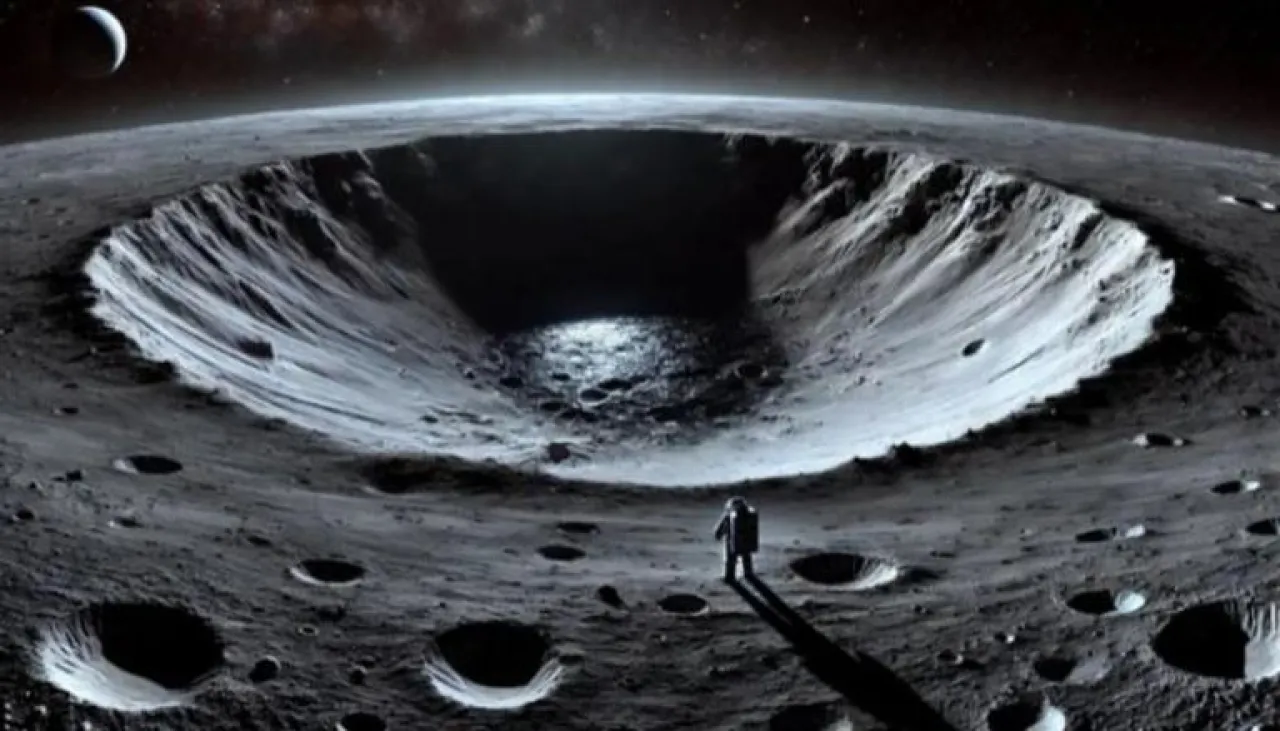
As space agencies around the world prepare to launch robotic and human missions to the moon's south pole, the picture is still incomplete regarding the locations of ice water, its amount, and its depth beneath the surface.
For this reason, international experts are meeting in Honolulu, Hawaii, from November 12 to 14 at the second international conference on Volatile Resources at the Lunar Poles, to review what we know, and what we do not know, about water and frozen gases in the permanently shadowed regions on the moon's surface.
Shaowai Li, a researcher at the University of Hawaii and coordinator of the conference, says the biggest challenge lies in the lack of precise data. He points to three main unanswered questions: Where exactly is the water ice within the permanently shadowed regions? How deep is this ice beneath the surface? And what is its source and how has it accumulated over time?
Despite observations confirming the presence of ice, scientists admit that the current evidence is incomplete and insufficient to build a clear exploration strategy.
The "LCROSS" mission by NASA in 2009 provided the first direct measurement of lunar ice, but it was at only one location and did not provide a comprehensive picture.
Meanwhile, samples returned by China's "Chang'e-5" and "Chang'e-6" missions have revealed the presence of water within lunar rocks, while the amount of surface ice and its extent remain largely unknown due to few landings in polar regions.
Despite the existence of scientific partnerships, the most notable being South Korea providing the "ShadowCam" highly sensitive camera for exploring shadow regions, scientists believe that the pace of international cooperation remains less than necessary, especially with the accelerating competition between the United States and China for leadership in exploiting lunar resources.
Researchers agree that lunar water is the backbone of any permanent human presence outside Earth, whether for use in drinking, oxygen production, or manufacturing rocket fuel for deeper space travel.
But before exploiting these "frozen treasures," scientists say the first step is to accurately locate them. They add, "Water is present, but we need to know where to look."