Khaberni - In the heart of Khao Yai National Park in Thailand, the "MYS Khao Yai" resort appears as an architectural masterpiece that merges luxury with nature, becoming a point of attraction for lovers of travel and architecture, but at the same time, it has sparked a widespread debate about the impact of such projects on the environment.
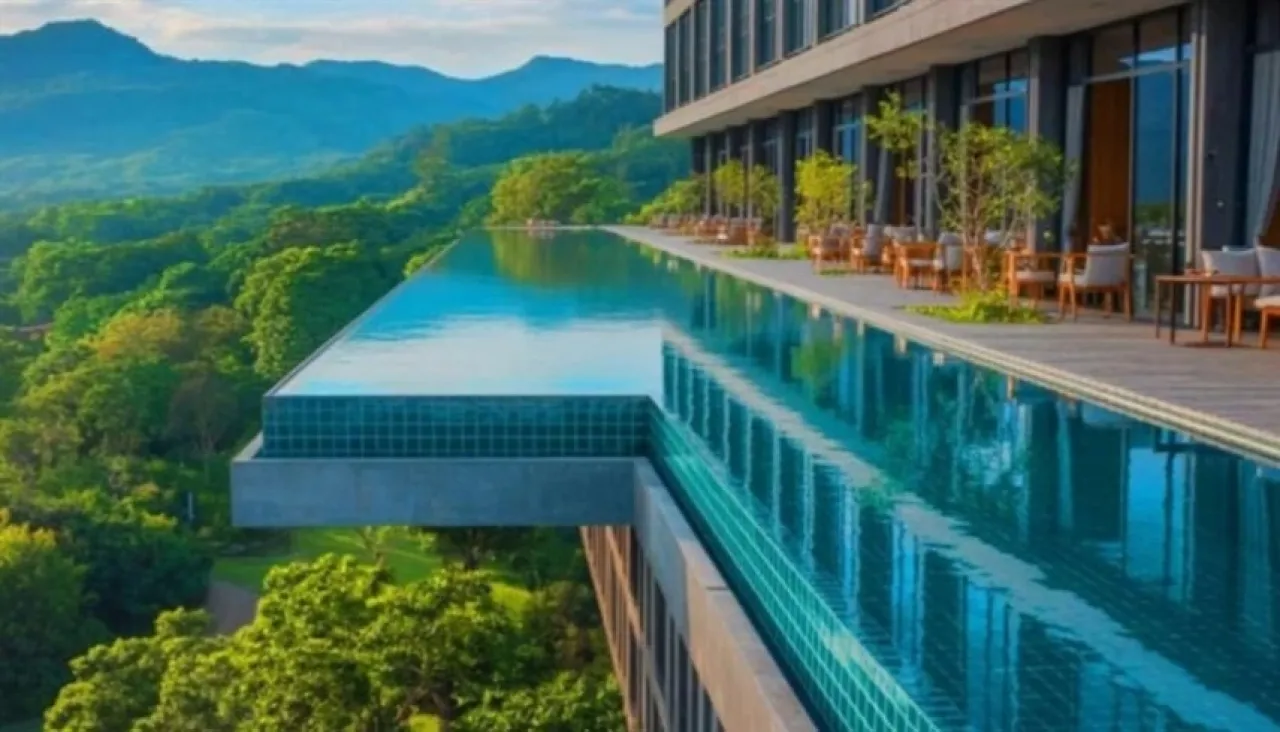
The resort, designed by Urban Praxis architects in Bangkok, features a transparent pool that is 30 feet long, offering visitors a unique feeling of swimming above the reception area as if they are floating in the sky. The pool, made from transparent acrylic supported by sloping wooden beams, adds an aesthetic touch to the design, making it more of an artistic element than just a swimming space. At sunset, the pool transforms into a captivating painting with calm blue lighting.
The resort combines Scandinavian style with contemporary luxury, featuring 16 rooms and six villas designed to give guests a sense of seclusion and tranquility through the concept of "elevated ground floors," with views overlooking the surrounding forests, as stated in "Sustainability Times."
Khao Yai National Park, Thailand’s first national park, spans 850 square miles of evergreen forests and hosts the country's largest diversity of wildlife, making it an ideal destination for nature lovers and wildlife watchers, offering walking trails and a variety of activities to enjoy nature.
However, with this architectural masterpiece, a broad debate has emerged about the balance between luxury and environmental protection. Some criticize the construction of such resorts amidst nature, considering that the project may represent an exploitation of natural reserves without a true positive impact, while others believe that such projects support tourism and provide job opportunities, contributing to keeping the reserves natural and economically thriving.
Yet, the question remains: Can excessive luxury coexist with environmental conservation? The expansion of such projects could lead to the destruction of natural spaces, displacement of wildlife, and increased pollution, posing a real challenge to the sustainability of natural parks.