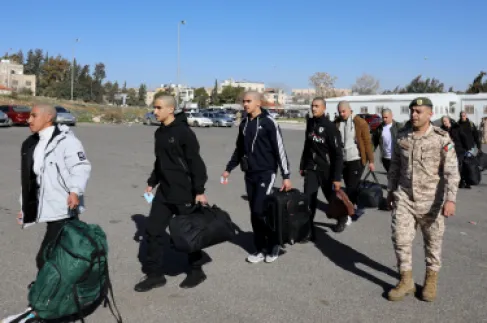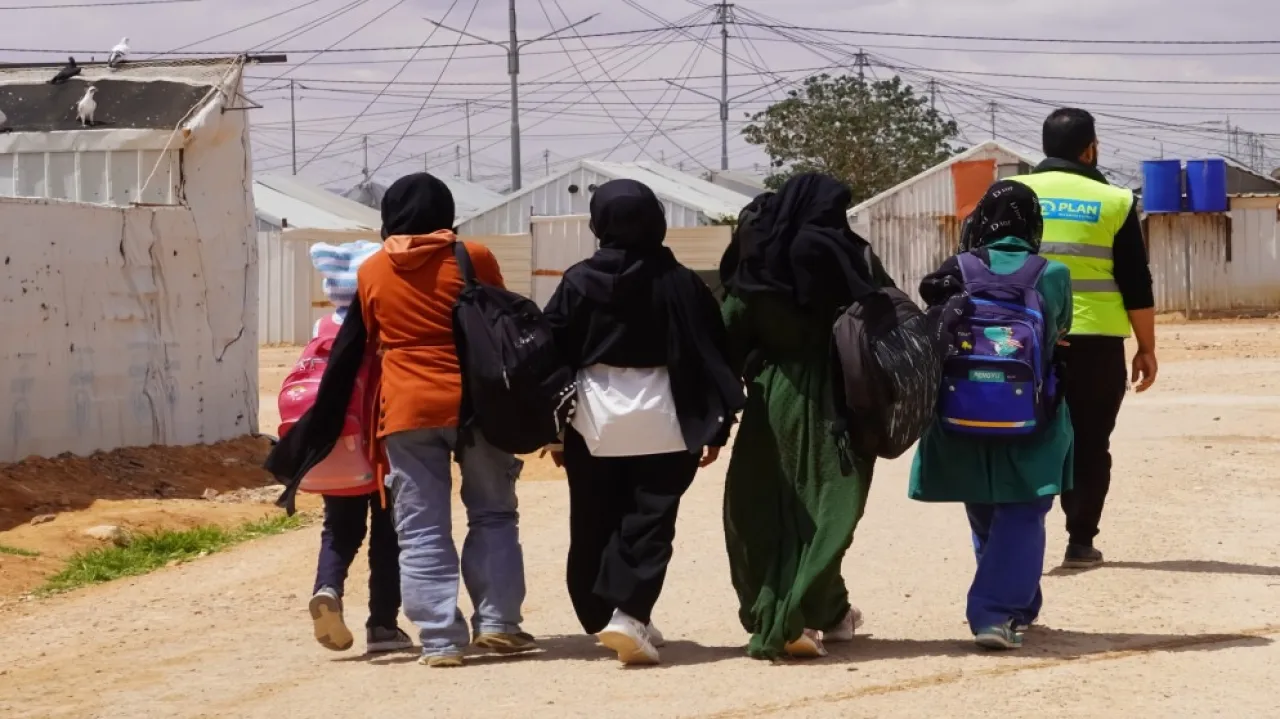
Khaberni - The number of Syrian refugees returning to their homeland from Jordan has been gradually increasing since the fall of Assad's regime to date, reflecting a new phase in the Syrian crisis that harbors a mix of hope and caution.
While the return of thousands of refugees indicates an increasing desire to regain life and stability within Syria, field, economic, and security challenges remain, making the return process risky and limited in scope so far.
According to the latest report by the United Nations High Commissioner for Refugees on Syrian asylum in the region, as of October 4th, more than 160,000 registered refugees have returned from Jordan to Syria since December 8th, 2024.
The demographic composition of the returnees has remained similar to previous weeks, with women and girls representing about 49% of the total returned refugees, and children approximately 43%, while males aged between 18 and 40 years old constitute about 19%.
The majority of refugees continue to return from host communities, especially from Amman and Irbid. According to statistics, 41% of them are from Daraa, 20% from Homs, and 11% from Rural Damascus.
At a time when the Commissioner anticipates a reduction in the number of Syrian refugees residing in Jordan to about 415,000 by the end of this year, amidst ongoing political and security developments in Syria.
It also indicates that this number will continue to decrease, reaching about 290,000 registered refugees by the end of 2026.
The Commissioner had expected at the beginning of this year that nearly 200,000 Syrian refugees would return to their homeland, a figure that was indeed achieved by mid-year, according to its official data.
It noted that the majority of refugees in Jordan will remain Syrian at 92%, with 8% from other nationalities. It also expected that the distribution of refugees residing in both camps and outside would remain stable, with about 18% living in camps, while the majority live outside.
The Commissioner confirmed that since the fall of Assad's regime, a large number of Syrian refugees residing in Jordan have expressed a desire to return to their homeland, albeit very cautiously.
While the Commissioner does not encourage widespread return given the current circumstances, it supports refugees who choose voluntary return after being informed about the conditions in their original or alternative areas within Syria.
It explained that a number of refugees have been contacting it to seek support and assistance in facilitating their voluntary return, whether through financial help or providing transportation. In response, the Commissioner is working on enhancing support programs to ensure that these returns are dignified and sustainable.
According to the Commissioner's data, the conditions of Syrian refugees in Jordan are still very fragile, as 67% of them live below the poverty line, while 9 out of every 10 refugees resort to borrowing to cover basic needs such as rent, food, and medicine.
It emphasized that continued donor support is crucial for maintaining the level of services provided to refugees, including their registration and documentation and ensuring their access to basic services, in addition to enabling humanitarian response partners to plan and deliver aid efficiently.
According to the latest survey conducted by the Commissioner in June, 80% of Syrian refugees residing in Jordan express their intention to return to their homeland someday, although the decision to return is still linked to multiple economic and security factors.
The survey revealed that 36% of the refugees who do not intend to return attribute their decision to the destruction and damage to their homes, while 23% cited the absence of job opportunities and sources of income, and 12% to concerns related to security and safety, while 9% said that a lack of financial resources prevents them from returning, and 7% mentioned the lack of adequate services in Syria.