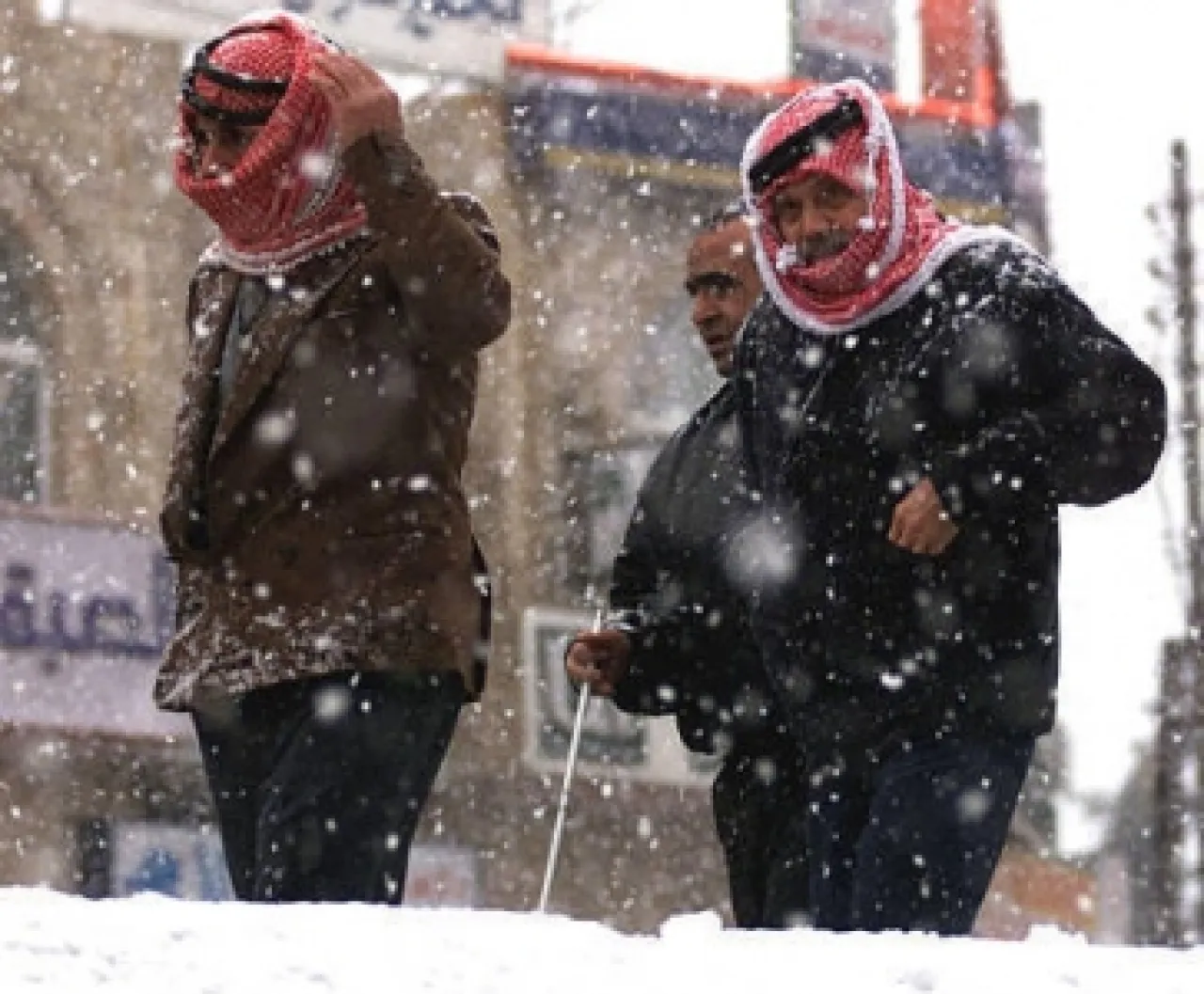
Khaberni - Since the beginning of October 2025, the Kingdom has not been impacted by any classified low-pressure systems, this is due to the focus of these systems and their main effects on the northern Levant, while the periphery effects in Jordan have been limited to some scattered rainfall in the north.
Some might wonder: Is this situation normal for Jordan's climate?
Looking back at Jordan's climate archive over the last 7 rainy seasons, it has been observed that the Kingdom was not affected by any officially classified low-pressure system in October, even at the lowest classification (first level), making the absence of low-pressure systems in October a natural and prevalent feature in the Kingdom's climate.
The first low-pressure systems in the last 7 rainy seasons occurred as follows:
Season 2018/2019: Low-pressure system November 23, 2018 (unclassified)
Season 2019/2020: First-level low-pressure system December 1/2, 2019
Season 2020/2021: Second-level low-pressure system November 4-5, 2020
Season 2021/2022: First-level low-pressure system September 23-24, 2021
Season 2022/2023: Second-level low-pressure system November 8-9, 2022
Season 2023/2024: Third-level low-pressure system November 18 and 19, 2023
Season 2024/2025: Third-level low-pressure system February 5-6, 2025
Despite the absence of classified low-pressure systems, the Kingdom has experienced episodes of atmospheric instability in previous years, which led to scattered and random thunderstorms, mainly concentrated in the south of the Kingdom.
Statistically, the impact of low-pressure systems on the Kingdom begins in November
According to the climate archive, the chances of the Kingdom being affected by low-pressure systems statistically increase in November, although this pattern may vary from year to year, depending on the path, center, and movement of the jet stream and its location.