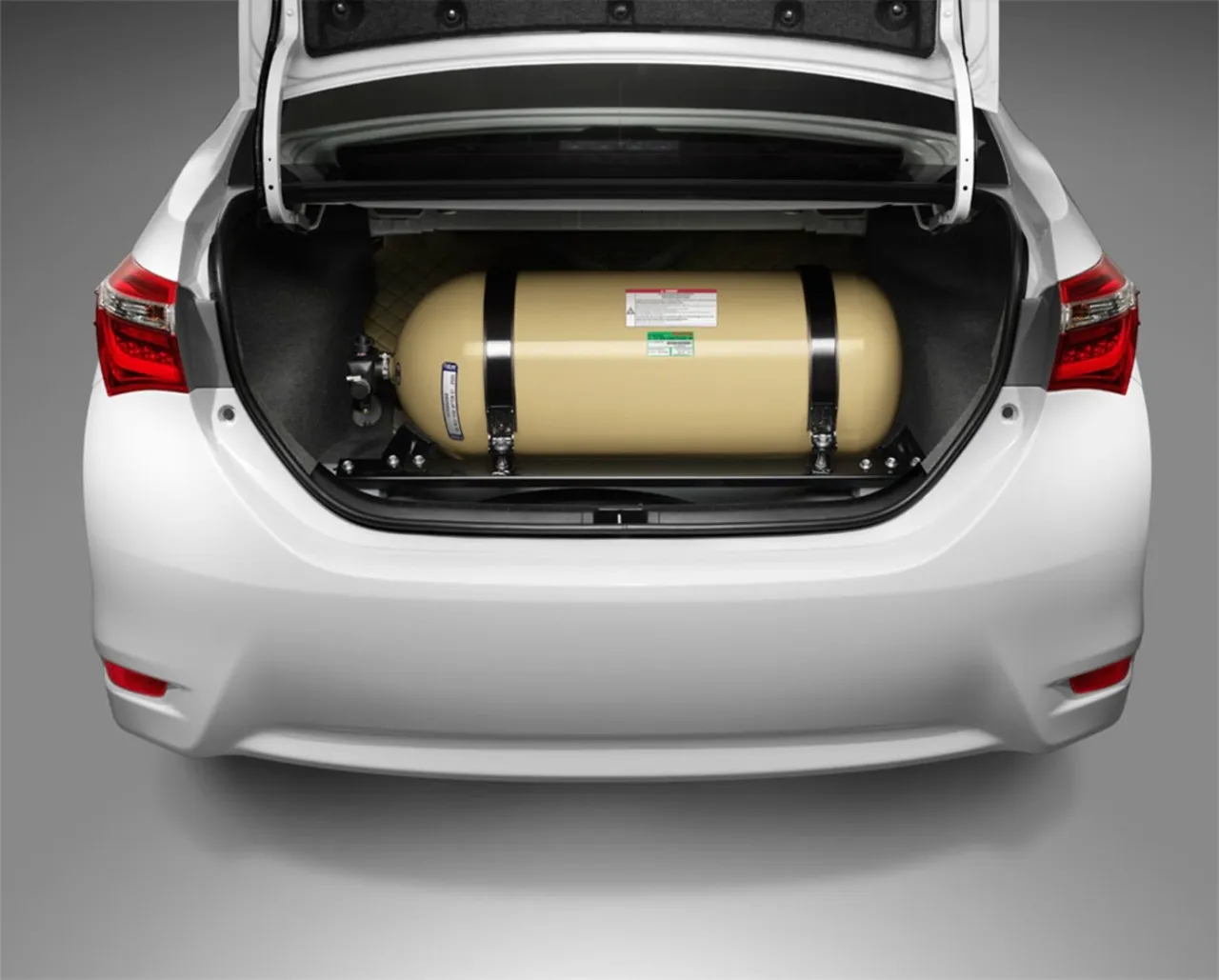
Khaberni - With the opening of the first station for compressed natural gas (CNG) dedicated to trucks and cars in Al-Moqab area, the vehicle sector in the Kingdom is set for a significant and new start in its transition from gasoline, diesel, and hybrid to gas.
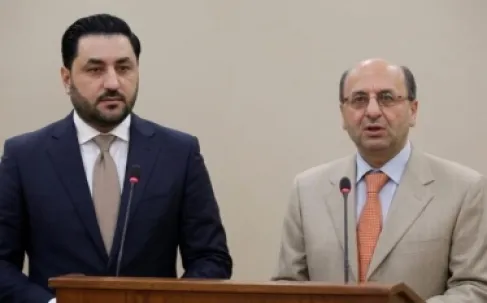
In this context, the Chairman of the Energy and Minerals Regulatory Commission, Engineer Ziad Al-Saaida, said over the air of "Ain FM" that the energy sector has been keeping up with every new technology and technique over the past years.
Saaida explained that the trucks transporting gas from the Risha field carry it in gas-operated tankers.
He reported that companies having tankers for gas transport have been allowed to operate on gas instead of diesel, noting that there are gas filling stations at the Risha field.
He confirmed that the start saw the use of three companies for these tankers, with a total of approximately fifty tankers, mentioning that the number is increasing.
He said that work is underway on placing instructions to allow their use by small and medium-sized vehicles running on natural gas.
He mentioned that the gas source is the Risha field, which has been upgraded resulting in an increase in daily production, considering that the Energy and Minerals Regulatory Commission has applications for licensing gas filling stations, which are being licensed.
He highlighted that these stations, when operational, would have Risha field as the priority for providing the gas, unless connecting to the Arab Gas Pipeline is less costly for the station.
He stated that Risha gas production reached up to eighty million cubic feet per day last week, compared to ten million cubic feet several years ago.
Regarding the pricing mechanism for vehicle gas, he clarified that the committee that prices oil derivatives would be responsible for setting the prices.
He affirmed that there is a team from government entities setting instructions and foundations for converting gasoline vehicles to gas, besides the possibility of vehicles running on gas and gasoline.
Regarding the time-related tariff, he said that the first group began work on it on the first of July two thousand and twenty-four with fifteen percent of consumers, while the second group was applied on the first of January two thousand and twenty-five with another fifteen percent of consumers.
He pointed out that those currently under the time-related tariff are thirty percent of consumers, expecting the smart meters project to conclude by the end of this year, which will lead to transitioning all sectors and consumers to the time-related tariff, including the residential sector.
He clarified that meters have been replaced with smart meters at a rate of eighty-five percent of the total, which reaches about two and a half million meters.
He confirmed that the project of replacing meters with smart meters will have a significant impact on the citizen through direct monitoring of their consumption.