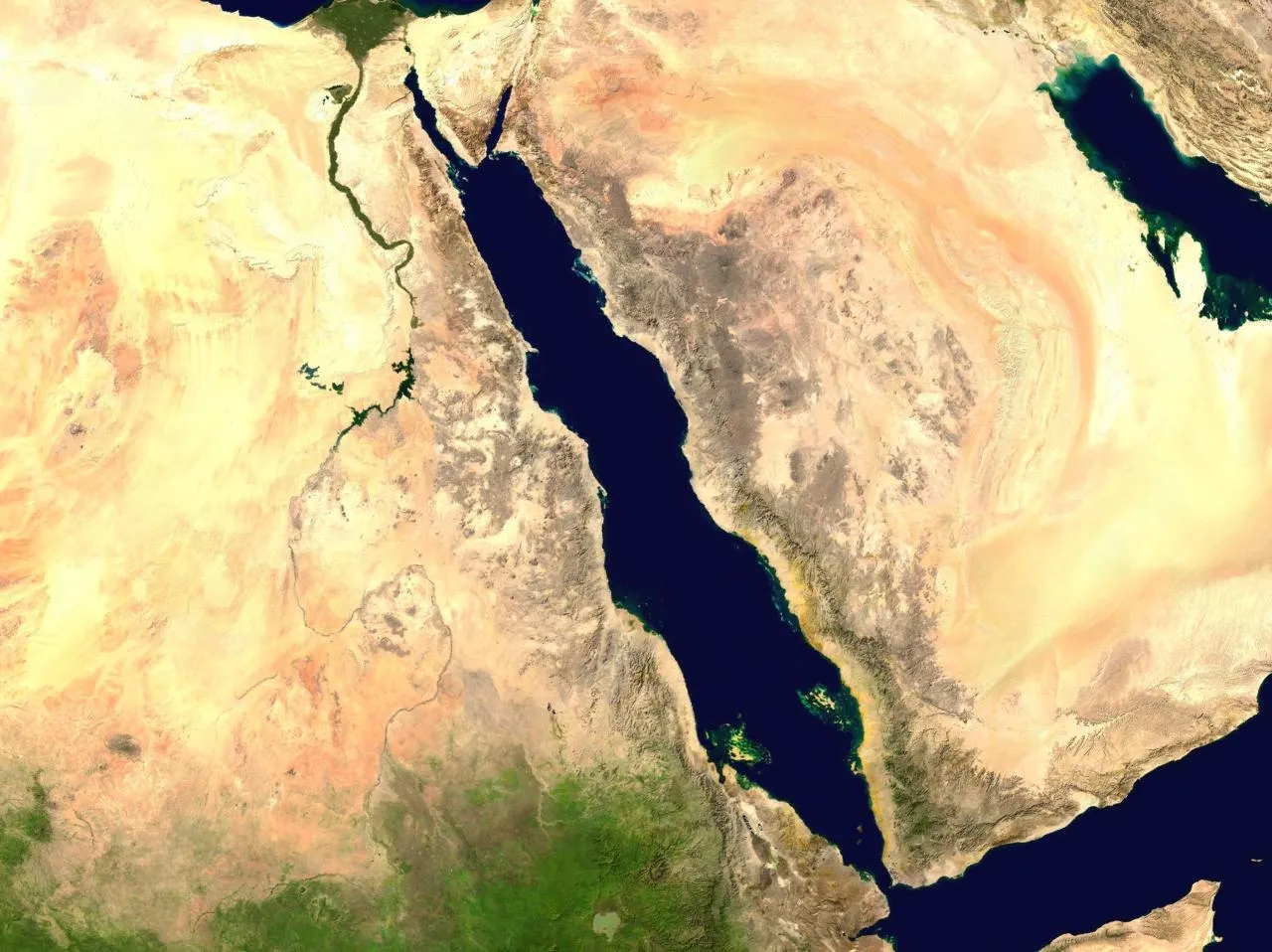
Khaberni - The Red Sea underwent a dramatic event 6.2 million years ago which led to its complete disappearance from the face of the Earth, turning it into a barren salty desert, until the Indian Ocean suddenly flooded it with its waters.
Researchers from King Abdullah University of Science and Technology confirmed that the Red Sea experienced a huge disturbance that entirely changed its marine life, according to Science Daily.
Dr. Tihana Bensa, the lead researcher at King Abdullah University of Science and Technology, said: "Our results show that the Red Sea basin experienced one of the most extreme environmental events on the face of the Earth, when it dried completely and was then suddenly re-flooded about 6.2 million years ago." She added: "This flood changed the basin, revived marine conditions, and established a permanent connection between the Red Sea and the Indian Ocean."
How did the Indian Ocean flood the Red Sea?
The Red Sea was initially connected to the Mediterranean Sea in the north via a shallow barrier, this connection was disrupted, leading to its drying and transformation into a barren salty desert.
In the south of the Red Sea, near the Hanish Islands, a volcanic chain separated the sea from the Indian Ocean, but about 6.2 million years ago, ocean waters from the Indian Ocean rushed over this barrier in a catastrophic flood.
The flood carved a submarine valley 320 kilometers long which is still visible today on the seabed, quickly refilling the basin, submerging the salt flats, and restoring normal marine conditions in less than 100,000 years. This event occurred nearly a million years before the famous Zanclean flood of the Mediterranean, giving the Red Sea a unique story of rebirth.
Why is the Red Sea important geologically?
The Red Sea was formed by the separation of the Arabian Plate from the African Plate 30 million years ago, initially, the sea was a narrow valley filled with lakes, then became a wider gulf when the waters of the Mediterranean Sea flooded it around 23 million years ago.
Marine life initially flourished, as evident from the fossil coral reefs along the northern coast near Dhiba and Umluj, however, increased evaporation and poor water circulation raised the salinity, leading to the extinction of marine life between 15 and 6 million years ago.
Catastrophic flood
In addition, the basin was filled with layers of salt and gypsum, leading to the complete drying of the Red Sea. The catastrophic flood from the Indian Ocean revived marine life in the Red Sea, which is still present in the coral reefs to this day.
The Red Sea is a natural laboratory for understanding how oceans form, the accumulation of giant salt rock formations, and how climate and tectonic forces interact over millions of years.
This discovery highlights the extent to which the history of the Red Sea is linked to global oceanic changes and shows that the region once experienced harsh environmental conditions but returned as a thriving marine ecosystem.
Professor Abdul Qadir Al-Afify, the co-author of the study from King Abdullah University of Science and Technology, said: "This study enriches our knowledge of the processes that shape and expand oceans on Earth. It also maintains the leading position of King Abdullah University of Science and Technology in Red Sea research."