Khaberni - Mohammad Taysir Al-Najdawi, the head of the Olive Press Owners and Producers Union, predicted on Tuesday that the local production quantity of olive oil will range between 18,000 and 20,000 tons, indicating that the season will open on October 15.
Al-Najdawi told "Al Mamlaka" that the production quantity usually ranges from 25,000 tons to 40,000 tons, pointing out that there is a shortage in this year’s production in the western regions due to climate changes affecting olive oil yield.
He added that the areas with irrigated olive systems should perform well.
He described this season as good, but less than previous ones, adding, "Such a season has not occurred for about 20 years due to the scarcity of rain."
He explained that this year's oil production from olives might be good, as olive oil tends to have good fluidity.
Regarding the prices of olive oil tins, Al-Najdawi confirmed that, after meeting with related parties, the union decided the price per tin would be between 100 to 110 dinars, close to last year’s prices, to prevent greed and with a focus on consumer interest. He noted that limited distribution and high-quality oil might cost slightly more.
He clarified that the union has maintained the price of olive pressing, as pressing a kilogram of olives costs 65 piastres, unchanged for years. The price of the coated metal containers for preserving oil has also remained unchanged, ranging from 1.5 dinars to 2 dinars. The union monitors the prices of the tins and issues violations to those who raise the price.
He called on consumers to delay buying olive oil and not to buy in large quantities at the beginning of the season, as olive oil will be available until the end of the year. Purchases should be based on quantity and need, waiting several weeks for the oil price to stabilize. He highlighted that there are several sizes of oil containers available, holding 3 kg, 5 kg, and 8 kg.
He warned of buying oil from adverts on social media at low and unreasonable prices, assuring that there is a sufficient supply for local consumers.
He also urged farmers to ensure the ripeness of olive fruits and not to rush harvesting, advising against collecting damaged fruits that fall to the ground but rather segregating them from healthy fruits still on the trees. Delayed harvesting until the fruit color changes leads to producing high-quality olive oil.
Regarding the export of olive oil, he predicted it would be lower than last year, asserting that the priority would be to secure the local market.
He also ruled out importing olive oil, confirming the shortage in olive fruit production in the Eastern Mediterranean region suffering due to climate change.
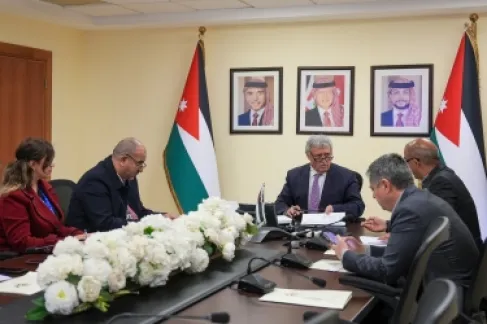
The Ministry of Agriculture, at its official headquarters, has launched a national campaign to educate citizens about buying olive oil from reliable sources. This took place during a coordination meeting chaired by Minister of Agriculture Saeb Khreisat, attended by representatives from regulatory and technical entities, along with partners from official institutions, professional associations, and community groups.
The campaign titled "Check the Olive Oil and Ensure It's Guaranteed" aims to protect Jordanian consumers from fraud and deception and to boost citizens' confidence in high-quality Jordanian olive oil, which is considered a pillar of national food security and agricultural identity.