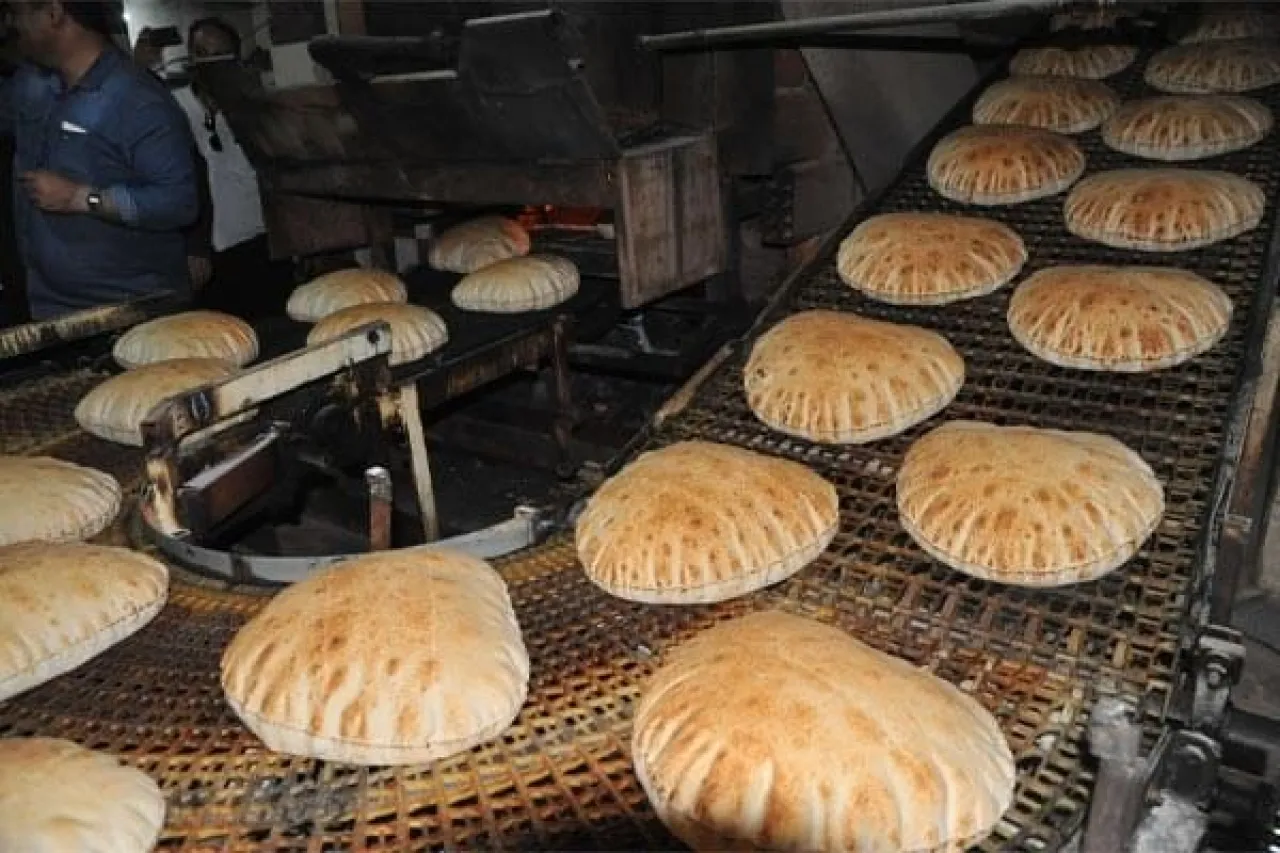
Khaberni - Advisor and media spokesman for the Ministry of Industry, Trade and Supply, Yinal Barmawi, said that the ministry imposes continuous surveillance on bakeries and mills to ensure compliance with providing bread to citizens at specified prices without any violations and in a manner that ensures proper usage of subsidized flour.
Barmawi added today, Thursday, that the goal of subsidizing wheat sold to bakeries for flour production is to stabilize the bread prices set by the government at 32 piasters for large bread "Kumaj," 35 piasters for split bread, and 40 piasters for small bread.
He emphasized that bakeries are obliged to provide large-sized bread until 8 PM, allowing them to produce other varieties with the choice left to the buyer.
He mentioned that the total sum allocated for wheat and fodder materials support "barley and bran" for this year amounts to about 228 million dinars, of which 139 million dinars are for stabilizing bread prices, 70 million for barley support, and 19 million for bran support, pointing out that the support allocated for stabilizing bread prices includes selling flour at subsidized prices to bakeries as well as direct financial allowances paid monthly to beneficiary stone bakeries, numbering 1050 bakeries, within specified controls and requirements including their withdrawals of subsidized flour.
He noted that the cost of a ton of wheat is currently 252 dinars and it is sold to mills for 139 dinars to stabilize bread prices, thus the subsidy difference per ton of wheat amounts to 113 dinars.
Barmawi further stated that during the first nine months of this year, over 100 violations by bakeries were detected due to continuous monitoring and inspection of their operations, and they were all referred to the judiciary, noting that the violations ranged from not providing large Arabic bread, selling at a higher price than the official set price, not displaying prices, not adhering to the displayed price, and violations of bakery establishment regulations.
He stated that the Industry and Trade law stipulates financial fines up to 3,000 dinars and imprisonment for up to 6 months or both penalties together in case of such violations.
He explained that the ban on issuing new bakery licenses stems from the large number of bakeries in the kingdom, exceeding 2100 bakeries both stone and industrial. In very specific cases, exceptions are granted to establish new bakeries particularly in remote areas where there are no bakeries, considering population density and distance from other bakeries.
He said that bakery allocations from subsidized flour are continuously reviewed to regulate their usage through physical inspections at bakeries and examining their specific electricity and water bills and other inputs, in addition to the residential density encompassing the bakery.
He pointed out that a bakery's license is canceled if it is found to have ceased operations for an unreasonable period, thereby not disbursing its flour allocations.
Regarding control over mills, Barmawi explained that the Mills Department at the Directorate of Inventory Management monitors the operation of the mills, numbering 17 mills distributed across the regions, through the presence of a ministry employee (inspector) at each mill to oversee the mill's operation, managing wheat quantities received by the mill through collecting shipment quantities and exiting on approved models and matching them with the computerized truck monitoring system, which must have a 100% matching rate.