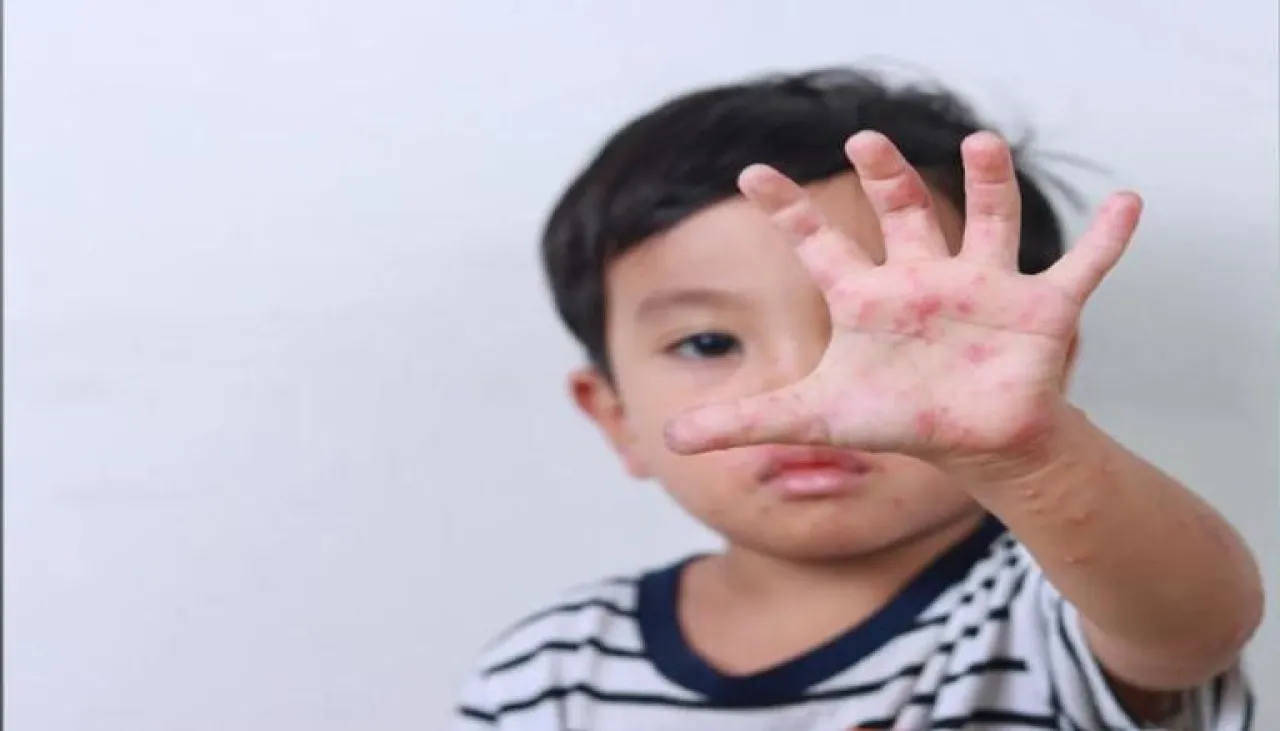
Khaberni - The administration of one of the international schools in Egypt announced the temporary closure of a classroom after confirmed cases of hand, foot, and mouth disease (HFMD) among a number of students.
A number of parents at the international school (A.L) located in the Saqqara area in Meryoutiya revealed that they received an official email from the school administration stating that a fifth grade classroom has been temporarily closed due to recording common viral infections among students.
The email, according to local Egyptian sources, stated that "the decision is part of precautionary steps to protect the health and safety of all students," noting that the classroom will be closed starting from Wednesday, October 1, until Sunday, with students returning to school on Monday, October 6.
Hand, foot, and mouth disease appears in an Egyptian school
The school administration confirmed in the same statement that a comprehensive sterilization process will be conducted inside the classroom to ensure the educational environment is disinfected of any viral residues. It also mentioned that the return of infected students is contingent upon obtaining a medical certificate proving their full recovery from the disease. The administration has directly communicated with the parents of the affected cases to coordinate the return after recovery.
The school mentioned that hand, foot, and mouth disease is one of the common viral diseases among children, characterized by symptoms of high temperature, sore throat, and the appearance of ulcers in the mouth, along with a skin rash or blisters on the hands, feet, and possibly the buttocks.
In this regard, Said Atiya, the director of the Directorate of Education in Giza Governorate, stated that four cases of the virus were detected among students showing skin disease-like symptoms, with blisters appearing on their hands. He pointed out that the school administration immediately implemented preventive measures and sterilized the affected classroom, thereby preserving the safety of the other students, while confirming that the directorate monitors the health situation daily and precisely to ensure no additional cases appear.
What is hand, foot, and mouth disease?
Hand, foot, and mouth disease (HFMD) typically spreads among infants and children under five years of age and is considered a highly contagious viral disease. Its name is derived from the blister-like skin rash that appears on the hands and feet, along with painful mouth ulcers. The rash may also extend to other body areas such as the arms, legs, chest, back, buttocks, and even the genitals.
Although young children are most susceptible, the infection can also spread to older children and adults. Due to the multiple viruses causing it, reinfection with the disease can occur several times during a person's life.
Stages and symptoms of hand, foot, and mouth disease
The disease progresses in two main stages, initially presenting flu-like symptoms including:
Mild fever.
Sore throat.
Runny nose.
Stomach pain.
Loss of appetite.
After a few days, skin and oral symptoms begin to appear, including:
Itchy skin rash on the hands, feet, knees, elbows, buttocks, or genitals.
Ulcers inside the mouth, especially on the tongue, starting as pink spots then turning into blisters.
Swollen lymph nodes in the neck.
Symptoms usually disappear within 7 to 10 days, but children under two years may require a longer time to recover.
Causes of hand, foot, and mouth disease
The virus causing the disease belongs to the families of Coxsackie virus and enteroviruses. These viruses typically reside in: the mouth, esophagus, stomach, small and large intestines, rectum, and anal opening.
Ways of transmission
Airborne droplets when coughing or sneezing.
Touching saliva, feces, or blisters then touching the face.
Kissing or direct physical contact.
Sharing personal items such as cups or towels.
Touching contaminated surfaces or toys.
Although blisters dry up within approximately 10 days, the virus may remain active in a child's feces for weeks.
Most susceptible groups and potential complications
Children under five years, especially in nurseries and schools. Complications are rare but may include: dehydration, temporary nail loss, or infections in the brain and meninges.
It usually does not cause significant problems for pregnant women, but it is advised that pregnant women notify their doctor immediately upon exposure to the virus.
Diagnosis and treatment
Diagnosis is based on clinical examination.
There is no specific treatment for the virus, and antibiotics are ineffective.
Home treatment includes:
Pain relievers such as paracetamol or ibuprofen.
Gargling with salt water (for those of appropriate age).
Mouthwash or spray to relieve pain.
Drinking cold fluids and avoiding acidic or spicy foods.
Hand, foot, and mouth disease
When can a child return to school?
A child can return to school in the following cases, after consulting the treating doctor:
Fever subsides.
Blisters dry.
General condition improves.
Prevention and hygiene measures
Wash hands thoroughly.
Cover the mouth and nose when sneezing or coughing.
Clean surfaces and toys.
Isolate the infected child until recovery.
Common questions about the virus
Many may have questions about this virus, including the following:
Can adults get infected? Yes, but the symptoms are usually mild.
Is it similar to foot-and-mouth disease? No, as foot-and-mouth disease only affects animals.
What is the difference with monkeypox? The viral cause is different despite similar symptoms.
What is the difference with herpangina? Herpangina causes only oral ulcers without a skin rash.
Finally, the disease usually resolves spontaneously, and caring for and isolating the child are the most important steps for prevention. Hygiene and avoiding sharing personal items are among the most effective protection measures.