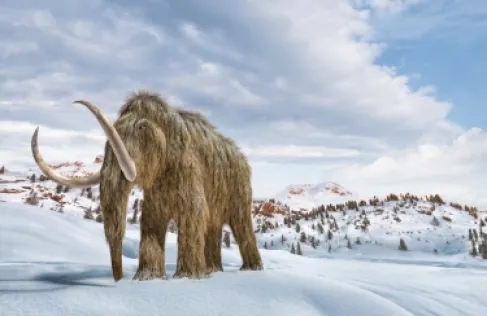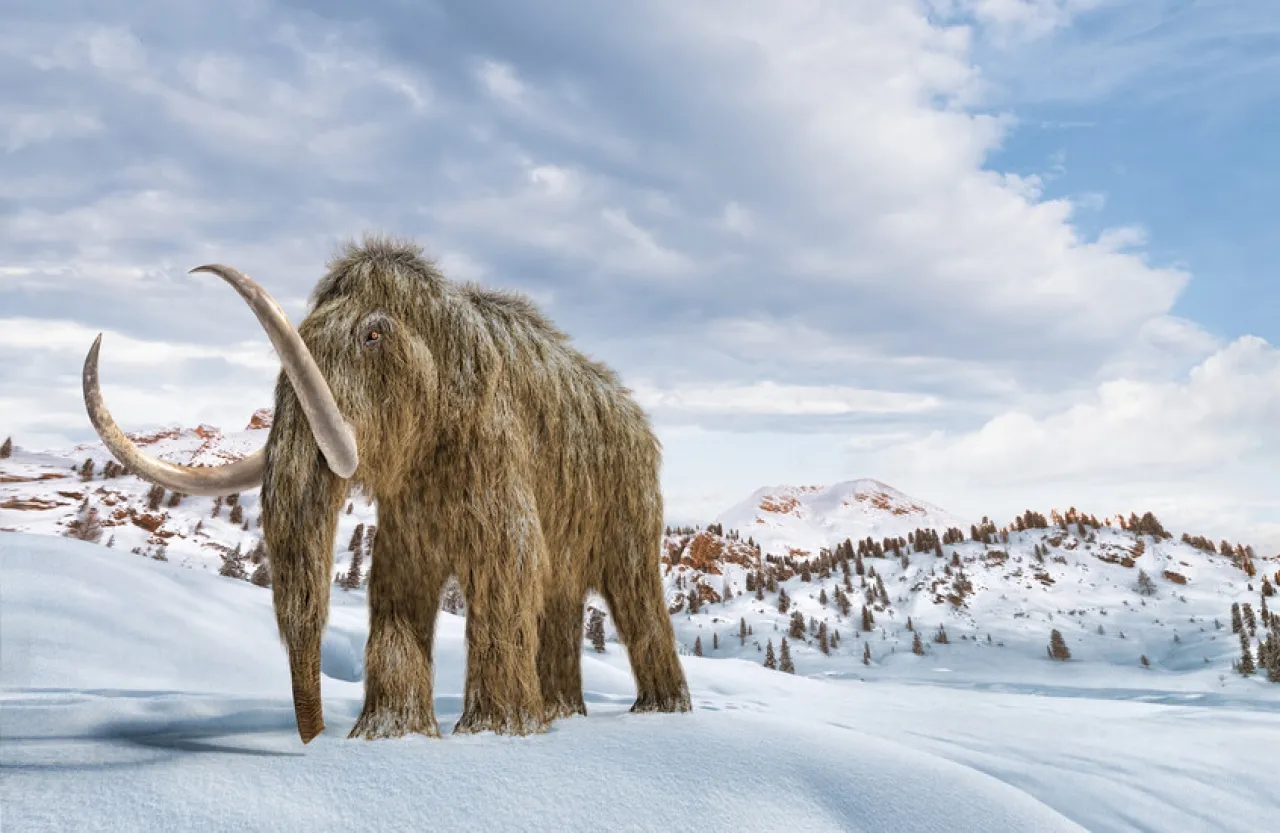
The project to revive the woolly mammoth to life faces greater challenges than expected, prompting scientists to use artificial intelligence in an attempt to solve a problem dating back around 4,000 years.
Colossal Biosciences, based in Dallas, USA, is working to bring this furry ancestor of the elephant back to life using gene-editing techniques, alongside DNA extracted from frozen mammoth remains found in Siberia in 2018.
The company had estimated in 2024 that it would be able, within four years, to breed mammoth calves in its labs, but it has now announced that the timeline for bringing these animals back to life will be delayed.
The company's CEO, Ben Lamm, told TIME magazine: "We believe this will happen in the early 2030s."
He added: "We don't have a specific date. It will not be 2036, but it won't be 2030 either."
The company explained that modifying the mammoth's genes was more complicated than expected, compared to the work it did on the Dire Wolf, which it announced reviving in 2025.
Initially, scientists thought they needed to modify about 60 genes only in an elephant cell nucleus to turn it into a mammoth cell nucleus, which would later develop into a mammoth embryo, according to the magazine.
But they now believe the project will require modifying more than 150 genes.
Ongoing research has helped scientists gather information about the genetic code of elephants and mammoths, including discovering genes responsible for controlling the size of mammoth ears, according to the magazine.
As part of its research, Colossal Biosciences has successfully produced a strain containing 38 woolly mice, using the mammoth's genetic code linked to dense fur.
The company uses artificial intelligence and CRISPR gene-editing technology in all its projects, which include reviving the flightless dodo bird, the Tasmanian tiger, and the moa bird similar to the emu.