Khaberni - Chinese competition in the European car market is no longer limited to offering low-cost electric models, but has entered a new stage targeting the most profitable category in the industry, with a group of Chinese technology companies ready to enter the luxury car market, directly challenging established German brands such as Mercedes-Benz, BMW, and Porsche.
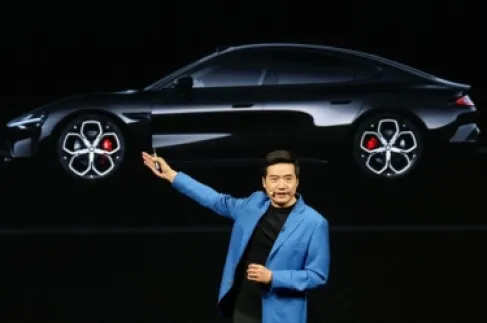
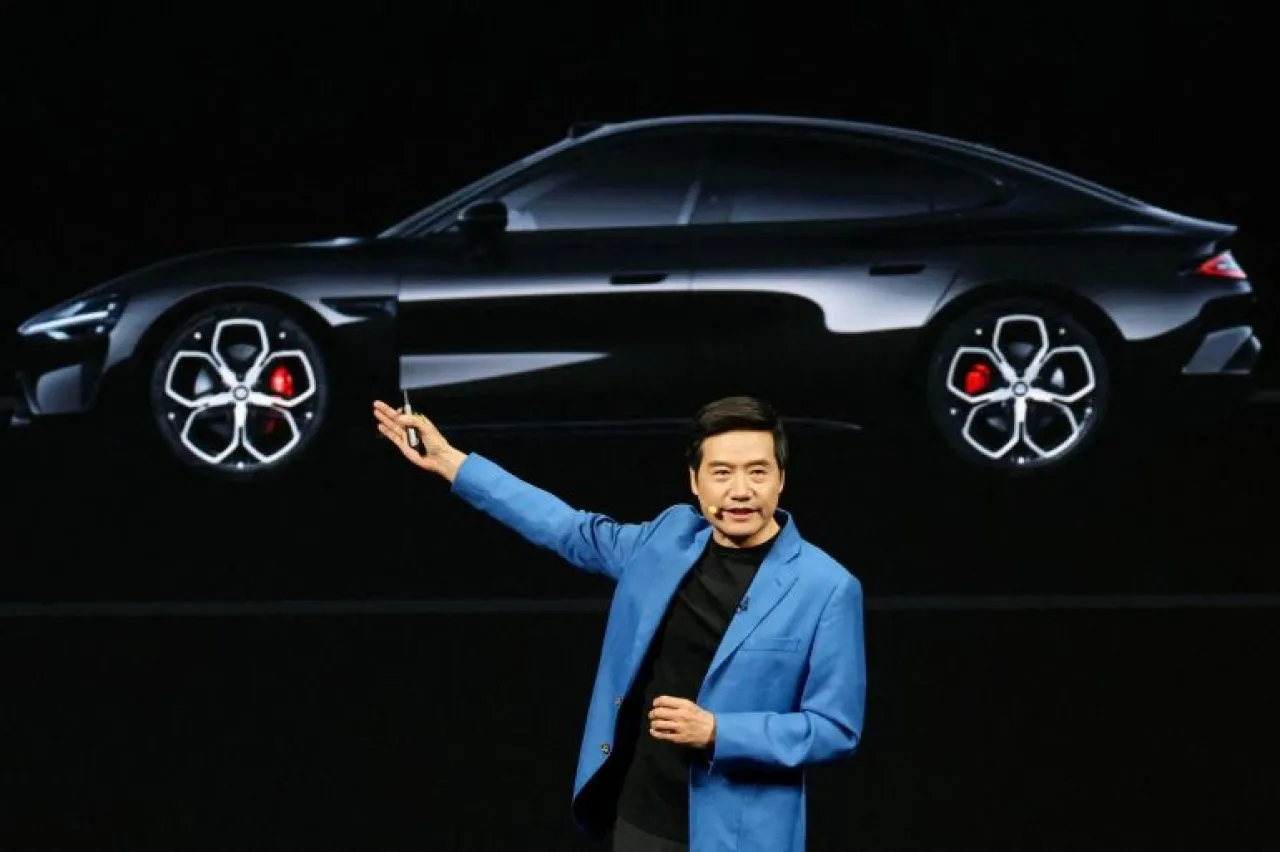
According to the Financial Times, Xiaomi is leading this new wave, having announced plans to enter the European market next year, choosing Germany, the largest and most competitive car market on the continent, as the starting point for its strategy, aiming to be among the top five luxury car brands in Europe by 2030.
Xiaomi is not moving alone, as companies like Xpeng, Li Auto, and Aito, backed by Huawei, are preparing to expand their international presence, benefiting from their experience in the world's largest electric car market.
From price competition to technology competition
Over the past years, Chinese companies have relied on low prices to penetrate foreign markets, but the new wave bets more on technology than price.
The Financial Times notes that these companies present themselves as technology companies that manufacture cars, not car companies that develop some technologies, which is evident in their focus on autonomous driving systems, software, artificial intelligence, and digital user experience.
For this reason, Xiaomi has recruited engineers and designers who have previously worked at BMW, Porsche, and Tesla, as part of a plan to develop cars capable of competing with European brands in the luxury category.
Analysts believe that the Chinese consumer, especially the younger demographic, was the first testbed for this strategy, as these companies succeeded in building a broad fan base in China before heading to foreign markets.
The Chinese presence in Europe is no longer a marginal phenomenon, as per the newspaper, Chinese brands accounted for about 9% of new car sales in Europe and 15% in the United Kingdom during the first half of the year, while one out of every ten cars sold in Europe during May was Chinese-made.
AlixPartners, a consulting firm, expects this share to rise to about 16% within the European Union by 2030, a level close to the combined share of Japanese and Korean brands.
Europe.. The toughest battle
Despite this expansion, the luxury sector still represents the most challenging test for Chinese companies. The German brands do not just sell cars; they possess a legacy spanning decades, and a customer base more connected to the brand than the technical specifications.
For this, some European car dealers are skeptical about the newcomers' ability to shift the market balance, noting that Japanese and Korean companies tried for decades to penetrate it without major success.
Burkhard Weller, head of the German car dealers' association, said that German brands are firmly established in the luxury car sector, expecting that the new Chinese companies will not be able to replicate their domestic success within Europe.
Huawei enters through the back door
The competition is not limited to car manufacturing companies. According to the Financial Times, Huawei is gradually becoming a major player in the global automotive industry through the development of operating systems, electronic chips, and smart driving technologies, after U.S. sanctions pushed it to enhance its semiconductor manufacturing capabilities.
The company is currently collaborating with six Chinese brands, with Aito being the most advanced in its foreign expansion plans, targeting Europe and the Middle East in the coming years.
Analysts believe that the next wave will not rely on reducing prices as seen in past years, but will strive to position itself between low-cost Chinese cars and European luxury brands, achieving higher profit margins.
However, this approach is not without risks, as some experts fear the price war seen in the Chinese market might spread to Europe, which could pressure German companies even in higher-priced categories.
Tu Le, founder of Sino Auto Insights, said he would be worried if he were a responsible official at Mercedes, BMW, or Porsche, because the upcoming competition will revolve not only around price but also technology.
Post-sale challenges
Despite the momentum enjoyed by Chinese companies, their success in Europe will depend on factors extending beyond car quality.
Many of these companies rely on direct sales to consumers through their own stores, instead of traditional dealer networks, a model that has not achieved great success in Europe, forcing some Chinese companies to abandon it later.
Experts also raise questions about these companies' ability to provide spare parts, technical support, and software updates over many years, factors that form an essential part of the luxury car ownership experience.
The upcoming competition is not just a race to increase sales, but represents a test of the ability of Chinese technology companies to translate their software and artificial intelligence superiority into a firm position in one of the most brand-loyal markets in the world.
If Xiaomi and its peers succeed in penetrating the luxury segment, it will not just be a new expansion for the Chinese industry, but the beginning of a shift in the global competitive balance within the automotive sector, where technology, not just industrial history, will be the decisive factor in determining the winners.