Khaberni - "Valve" the owner of the famous "Steam" store for personal computer games recently unveiled its latest gaming-dedicated devices, a home platform with a starting price of about $1,050 to compete with other gaming platforms such as PlayStation, Xbox, and Nintendo, following the success of the first generation of its portable gaming platform "Steam Deck".
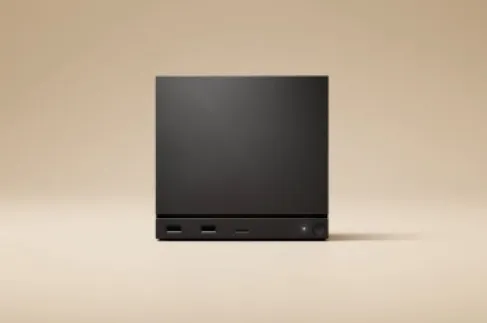
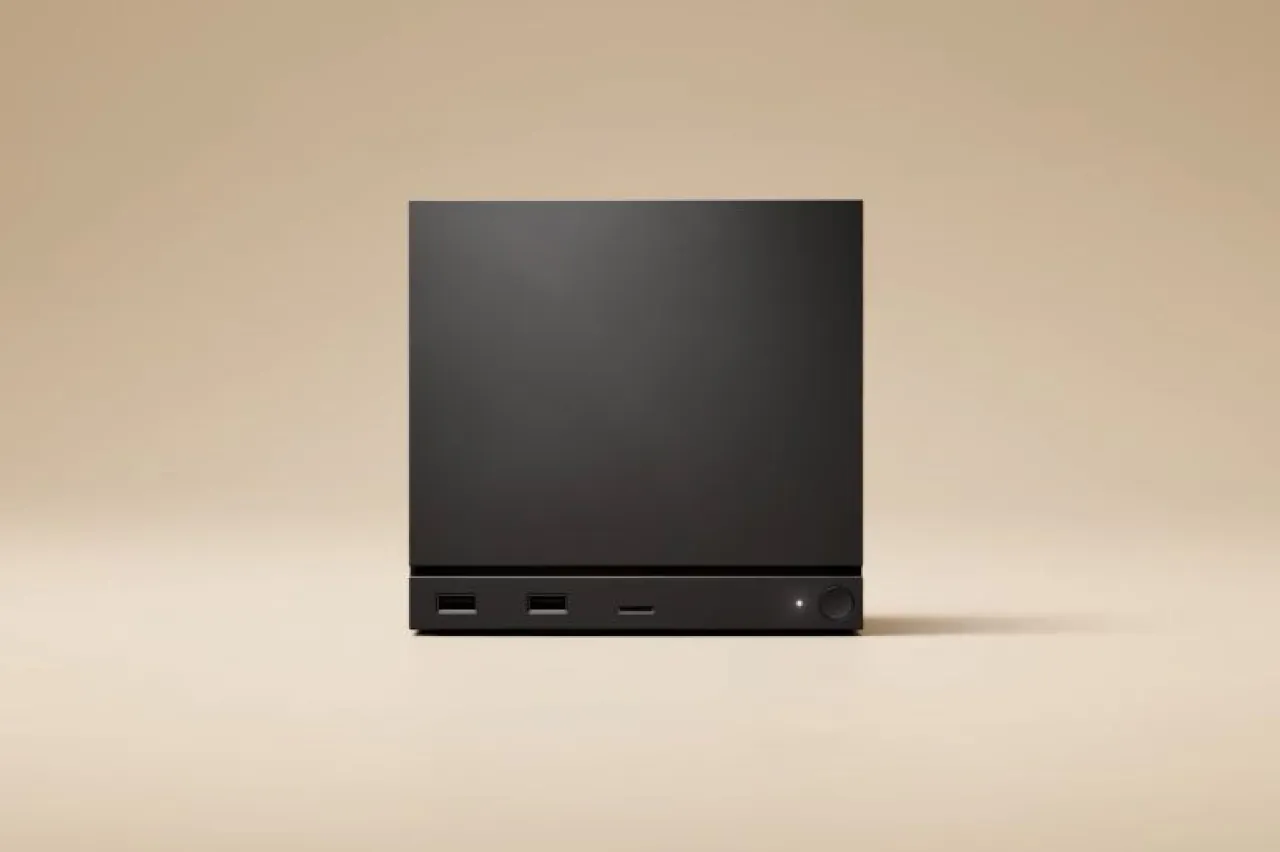
The new platform comes under the name "Steam Machine", and it features a very simple cubic design with an external colored lighting strip, as well as an external controller that can be purchased separately.
While "Steam" promotes the new platform as a device specifically for enjoying games on large TV screens in a way that mimics traditional gaming platforms, it is in fact a mini personal computer that comes with the company's own "Steam OS" operating system.
But what does the "Steam Machine" offer compared to traditional home gaming platforms and personal computers? And is it worth buying despite its price being double the price of "PlayStation" and "Xbox" devices?
Hardware Matches Consoles
"Steam" adopted in its design for the new device hardware similar to that used in home platforms from "AMD", meaning you won’t find a typical commercial central processor like you can buy for your home computer, but rather a version of the central processors designed for home gaming platforms.
The company chose an "AMD" processor from the "Zen 4" series with a frequency up to 4.8 gigahertz and 12 processing paths and 6 central processing cores with 16 gigabytes of "DDR5" leading random access memory.
The company also used a graphics card from "AMD", which is "RDNA 3 Navi" with 62 computing cores at a frequency of 2.45 gigahertz and 8 gigabytes of dedicated random access memory, according to the "Digital Foundry" technical European site report.
And these specifications are comparable to those used in the "PlayStation 5 Pro" which uses the same generation "RDNA 3" graphics card but with 60 computing cores and a slightly older central processor from the "Zen 2" generation, according to a previous report from "Digital Foundry".
However, the actual specifications do not affect the buying decision when it comes to home platforms, including now the "Steam Machine", because ultimately, you cannot modify or improve the platform’s specs as you wish unlike personal computers.
"Steam Machine" offers other leading specifications such as two fast ports for display and internet, and the storage space reaches up to 2 terabytes in the larger version, and the platform of course relies on the "Steam OS" operating system built on open-source Linux kernels.
The device is priced at $1,049 for the version with less space, compared to $900 for the "PlayStation 5 Pro" and $650 for the standard version of "PlayStation 5".
How does "Steam Machine" Perform in Games?
Although the "Steam Machine" is essentially a computer running a dedicated operating system, those who buy it are primarily thinking about the platform's performance in terms of games, and whether it can run their favorite games better than other platforms.
This does not mean that you cannot benefit from the other features in the "Steam Machine" such as using it as a traditional computer, but this is not the main reason for acquiring it.
The "Digital Foundry" report puts the new device in direct competition with the first generation of the "PlayStation 5" in many games including "Black Myth Wukong," "Crimson Desert," and the new "Alan Wake 2" and "First Light 007."
The report shows varying performances with "PlayStation 5" in most games, for instance, in "Black Myth Wukong," the "Steam Machine" achieved 38 frames compared to 43 frames on "PlayStation 5", and in "Alan Wake 2" the device managed 50 frames per second compared to 54 frames for PlayStation 5.
However, in "Crimson Desert," "Steam Machine" had the upper hand maintaining a rate of 41 frames compared to 33 frames in "PlayStation 5" in some areas, while in other areas its performance dropped to 43 frames with "PlayStation 5" surpassing it at 52 frames.
The reason for this is due to the specifications of the games and their dependency on the graphics card, random access memory, and central processor, as "Steam Machine" devices excel in places that rely on the central processor compared with "PlayStation 5" which excels in places that depend on the graphics card.
The scenario is not very different when compared to personal computers, as a report by the American tech site "The Verge" reveals a comparison between the "Steam Machine" and a personal computer with an "Nvidia" "3060 Ti" graphics card and an AMD "5800 X" central processor, showing a clear superiority for the personal computer by more than 20% in most games, including "Black Myth" where the "Steam Machine" achieved 19 frames compared to 24 frames for the personal computer, and similarly with the game "Shadow of the Tomb Raider" in which the device achieved 74 frames per second compared to 102 frames for the personal computer.
A Device for a Specific Audience
A report published by the site "GamesIndustry.biz" indicates that the price of the "Steam Machine" is not surprisingly high, but it makes the device aimed at a specific audience of users, justifying the matter with the rise in prices of memory and components specific to the device.
It adds that the "Steam Machine" does not have a specific audience like "Steam Deck" which was targeting users looking for strong portable gaming platforms providing them a "Windows" gaming experience.
Therefore, "Steam Machine" may not achieve the spread or success that the company was able to achieve with "Steam Deck", nor will it be a strong competitor for traditional home gaming platforms like "PlayStation 5" or "Xbox", according to the same report.