Khaberni - In recent days, France and wide areas of Western Europe have been subject to an intense heatwave, where temperatures reached more than 44 degrees Celsius in some regions, accompanied by disruptions in schools, transportation, and electricity, along with a significant rise in energy demand due to the operation of air conditioners and fans.
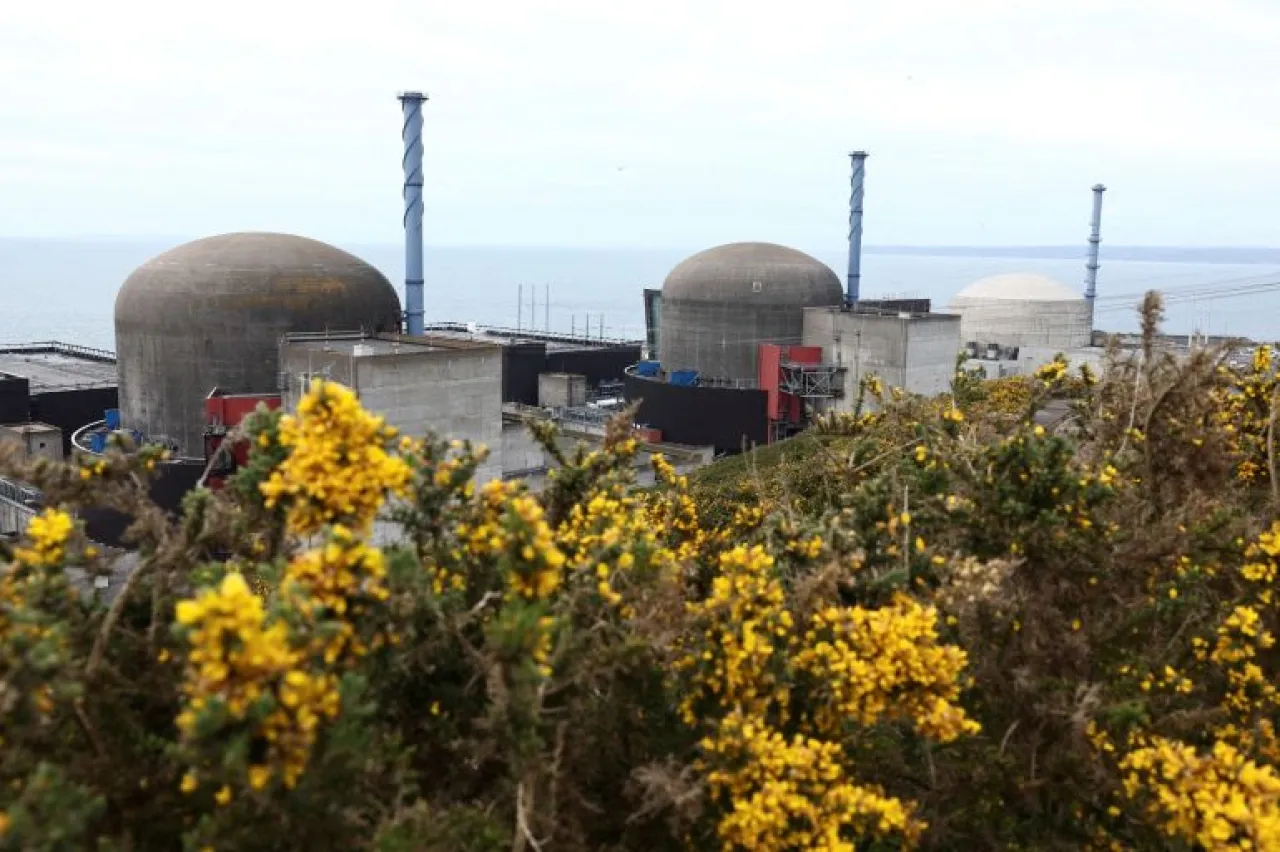
At the heart of this scene, nuclear power stations faced a problem, as the French electricity company shut down the second reactor at the Golfech station, located on the Garonne River in southwestern France, after the river water temperature rose.
At the same time, it reduced the output of the second reactor at the Nogent-sur-Seine station in north-central France and planned to reduce production of a reactor at the Bugey plant on the Rhône River.
According to French reports, these measures affected about 4.6% of the installed nuclear capacity in France, and the company warned of the possible impact on the Blayais and Saint-Alban stations if high temperatures continue.
A Fragile System Due to Climate
The scientific reason is simple at its core, but it reveals a fragility not previously considered in the energy system. A nuclear reactor does not convert nuclear fission directly into electricity; instead, the heat from splitting uranium atoms heats water, producing high-pressure steam that drives massive turbines to generate electricity.
Subsequently, the steam must be cooled back into water, and the cycle continues. Therefore, nuclear stations need a constant cooling source, represented by a river, sea, lake, or cooling towers.
Under normal circumstances, the station draws water from the river and uses it for cooling, then returns part of it to the river slightly warmer. However, during a heatwave, the river is already hot, and its level may be low if the heat is accompanied by dry weather.
In such cases, the environment surrounding the reactor is no longer capable of absorbing more heat without damage, and as the water temperature increases, the dissolved oxygen decreases, putting fish and aquatic life under thermal stress.
If a power plant returns hotter water to an already hot and low-flow river, the environmental risks may increase. Therefore, authorities impose limits on the water temperature at the discharge point or below the station, and when these limits are close to being exceeded, the station reduces its output or temporarily shuts down the reactor. However, this is not related to a radiation risk, but because continuing full-capacity operation may harm the ecosystem.
Regarding Golfech, the French electricity company stated that the closure is not linked to nuclear safety risk but is a measure related to environmental regulations. The company also confirmed that France has sufficient production capacity to meet demand, even with the potential shutdown of some units in the following days.
Climate Change Affects Everyone
However, these actions open the door to a broader discussion, as thermal power stations, whether nuclear, coal, or gas-operated, rely to varying degrees on water for cooling. With rising temperatures, electrical networks face double pressure, as demand increases because people operate air conditioners, and at the same time, the efficiency of some power plants may decrease or their capacity might be restricted due to water temperature or low river levels.
Worse still, broad heatwaves reduce the margin for maneuver. If neighboring countries face the same problem, the ability to easily import electricity from abroad diminishes. In France, specifically, every additional Celsius degree during heatwaves increases the national demand for electricity by about 0.7 to 1 gigawatt, mainly due to air conditioning.
Even though the impact of summer in France is still less than that of winter, where demand soars due to electric heating, the rise of air conditioning with recurrent heatwaves may gradually change this equation. This means that nuclear energy must consider climate change.