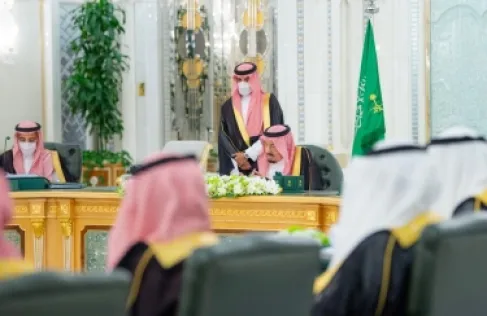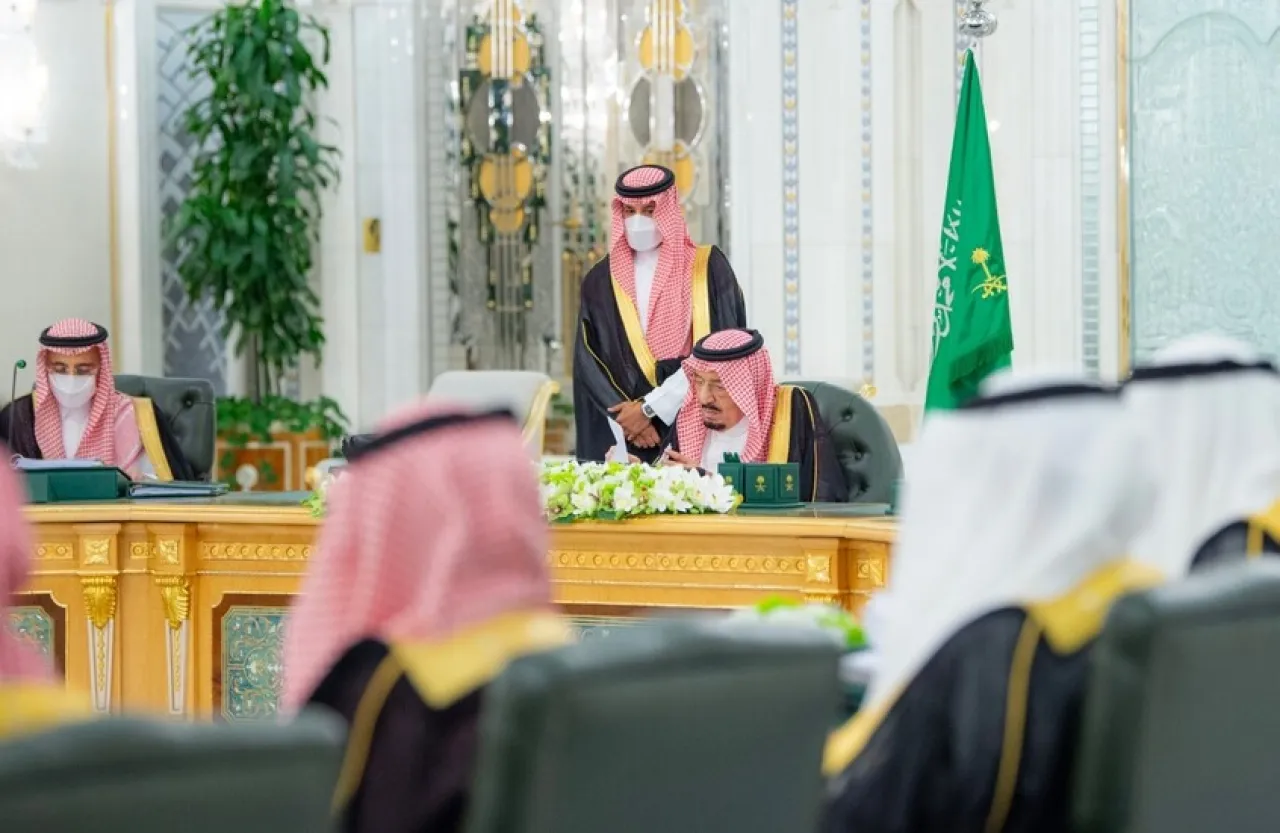
Khaberni - The Saudi Cabinet approved during its session held today, Tuesday, presided over by the Custodian of the Two Holy Mosques King Salman bin Abdulaziz, an initiative to design and build the first Saudi-Egyptian joint satellite.
The project is part of the efforts of the Kingdom of Saudi Arabia and Egypt to enhance scientific and technological cooperation, develop national capacities in the space sector, which will support the development plans and digital transformation in both countries and enhance their regional position in modern space industries and technologies.
It is expected that the joint satellite will support multiple areas, including Earth observation and remote sensing, improving the management of natural resources, monitoring environmental and climate changes, in addition to supporting scientific research and developing human competencies specialized in space science and technology.
The project is seen as one of the most prominent fruits of Egyptian-Saudi cooperation in future sectors, especially with the growing trend in both countries to invest in knowledge industries and advanced technology, in line with the targets of Saudi Vision 2030 and Egypt's strategy for sustainable development.
The space cooperation between Egypt and Saudi Arabia has seen significant development in recent years, alongside the growing Arab interest in the space sector as one of the most important strategic sectors linked to development, the knowledge economy, and national security.
Egypt has accumulated expertise in the field of satellites through remote sensing programs, research satellites, and communications, while Saudi Arabia has enhanced its presence in the space sector by establishing the Saudi Space Authority and launching several innovative and advanced technology-related initiatives and projects.
The Saudi-Egyptian joint satellite project comes at a time when the relations between the two countries are experiencing increasing momentum in the fields of investment, energy, industry, and technology, as Cairo and Riyadh seek to expand the scope of cooperation to include future sectors with high strategic and economic returns, notably the space industry, artificial intelligence, and digital transformation.