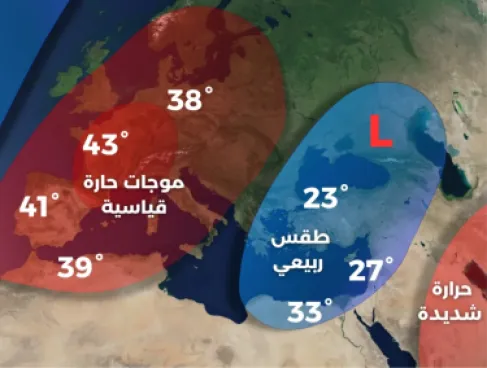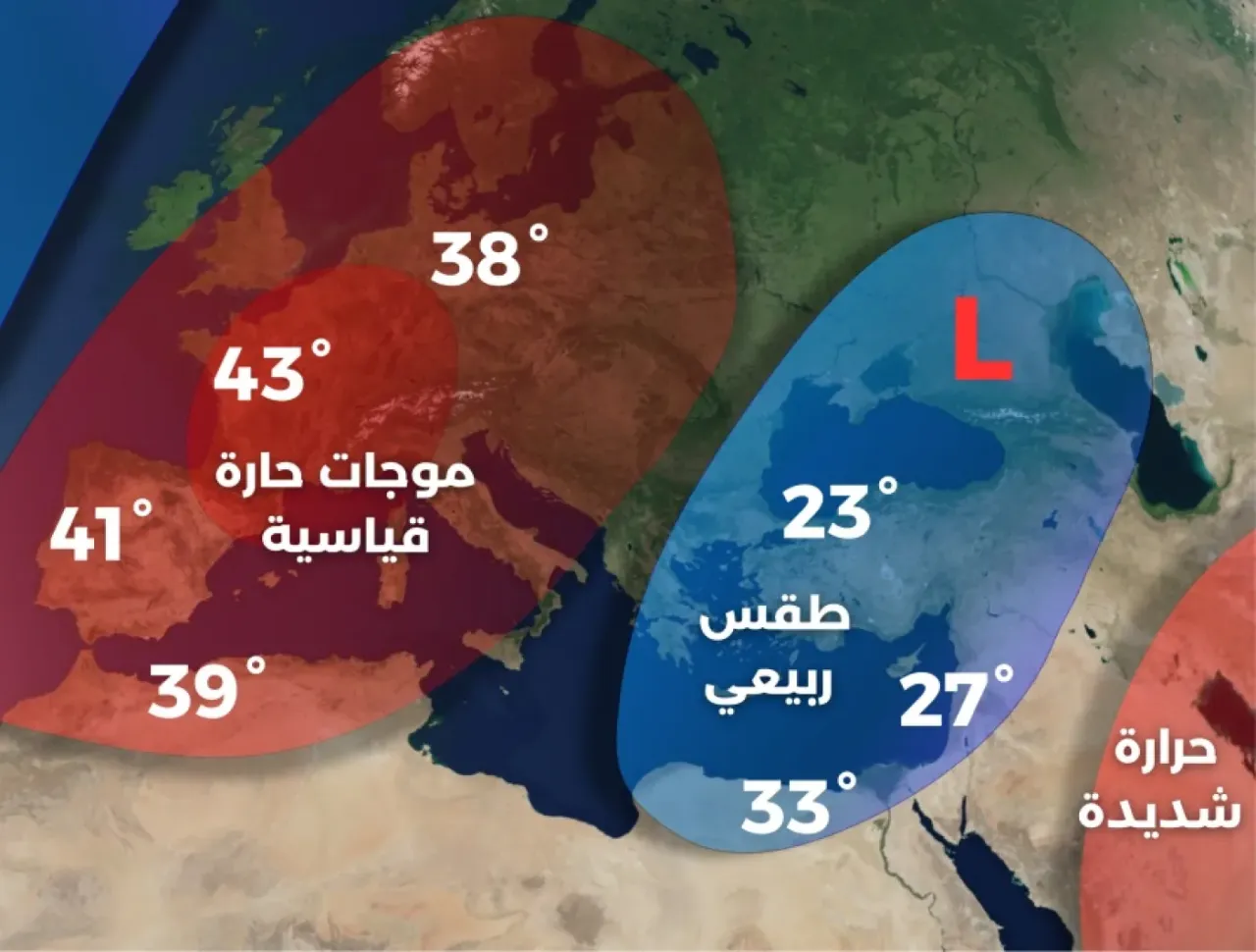
Khaberni - The Levant region, including Jordan, has been experiencing unusual weather since May, with temperatures recorded at levels 2 to 4 degrees Celsius lower than seasonal averages, making the weather feel more like spring despite the onset of summer, in a rare phenomenon linked to extensive changes in the movement of the atmosphere.
According to the Regional Climate Center, this significant decrease in temperature is due to the interaction of complex climatic factors, most notably the retreat of the Indian monsoon low towards the Arabian Peninsula, opposite the advance of the westerly and northwesterly winds carrying moderate air masses from the Mediterranean regions.
The analysis also indicated that these moderate masses have become stronger than usual due to continuous feeding of cold air coming from northeastern and eastern Europe, which has contributed to the continuation of moderate weather during the summer in an unconventional manner.
In May, the Levant region recorded the lowest temperatures in 33 years, with values about two degrees Celsius lower than the general average, as the region experienced uncharacteristic winter cold waves that caused rainfall and clear activity in low-pressure systems.
With the beginning of the summer solstice, temperatures are still below the normal ranges, with a continued negative thermal difference between 2 and 4 degrees Celsius in most areas, due to an unusual disturbance in the movement of the atmosphere.
This weather pattern has also contributed to prolonged periods of moderate weather, making the climate more reminiscent of spring despite the summer timing, which is a rare occurrence at this time of year.
Conversely, Europe is experiencing strong and record heatwaves, with forecasts indicating temperatures in some parts of France reaching 45 degrees Celsius, with the possibility of breaking historic records in several European countries.
According to climate analyses, these heat waves are due to a clear deviation in the jet stream in the upper layers of the atmosphere towards the Atlantic Ocean, which has caused extensive disturbance in the distribution of air masses across the Northern Hemisphere.
It is expected that the heatwaves will continue to increase during the next month in Europe, in a manner described as unprecedented since the beginning of modern climate data recording, contributing to the enhancement of the flow of moderate masses towards the Levant region.
The forecasts also indicate the continuation of moderate weather in the Levant in the coming weeks, with a limited possibility of a temperature rise for a short period during the second week of August, before returning to normal levels.
Conversely, the continuation of this weather pattern may delay the impact of the monsoon rains in southwest Arabia, due to the Indian monsoon low remaining positioned more towards the east and south, before the rainfall activity returns stronger during August with the advancement of the summer season.