Khaberni - A Lebanese military expert warned that the ongoing Israeli incursion into southern Lebanon and its crossing of the Litani River indicate an attempt to impose new ground realities within Lebanese territory, saying that the extensive destruction and evacuation orders stretching from Tyre to Nabatieh and Sidon reflect an intention to pressure the population and the Lebanese state in upcoming negotiations.
Retired Brigadier General and military and strategic expert Khalil El-Jamil stated that the Israeli army continues to expand its ground operations inside southern Lebanon, expecting the incursion into Lebanese territory to continue in the absence of any indications of a ceasefire, alongside escalating air raids and evacuation orders covering extensive areas of the south.
El-Jamil explained that the results of the security meeting recently held in the United States did not translate on the ground, noting that the Israeli army continues to advance into Lebanese territory and intensify bombing and destruction operations, while the front witnessed a field development represented by Hezbollah's missiles reaching the Meron area inside Israel, which is about 10 kilometers from the Lebanese border and includes an air base, according to Al Jazeera.
He indicated that the Israeli forces have indeed crossed the Litani River and taken control of several towns and locations, including Zawtar Al-Sharqiyah, Al-Hamra Farm, and Yohmor, and are advancing towards the town of Arnoun, located about four kilometers from the city of Nabatieh.
The military expert added that another field development emerged in the central sector, where the Israeli forces reached Hadatha Hill after weeks of attempts, stating that Israeli tanks are now in the middle of the town, and the location grants the forces fire and geographical oversight over the western and central sectors of southern Lebanon.
He pointed out that controlling locations like Shqif Castle and its surroundings, in addition to Zawtar and Hadatha, allows the Israeli army to monitor wide areas of the region and control movement paths within it.
Indications of Intent to Stay
In response to a question about whether these movements represent temporary incursions or a long-term occupation, El-Jamil said that the Israeli forces, upon entering the Lebanese areas, proceed to destroy buildings and infrastructure, considering this behavior an indication of the intent to stay for a relatively long period.
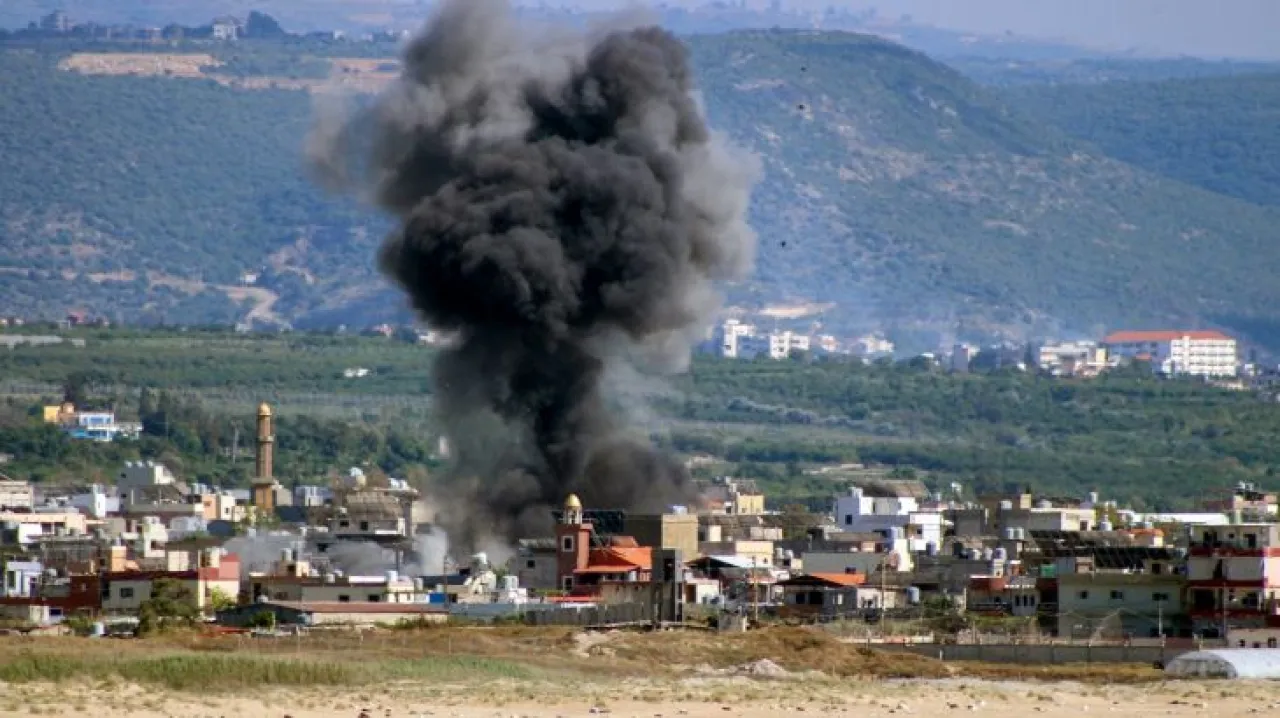
He explained that what happened in the town of Debaal exemplifies this, where the Israeli forces entered the area during the day before blowing up the buildings at night, adding that this approach suggests that Israel aims to use these areas as a bargaining chip in any future negotiations, as well as attempting to impose a new ground reality within Lebanese territory.
Jamil confirmed that the incursion into areas such as Zawtar Al-Sharqiyah, Yohmor, Al-Hamra Farm, and Arnoun holds special military significance, given their proximity to the city of Nabatieh, one of the prominent cities in southern Lebanon.
He detailed that these areas are not far from the border due to their proximity to the Litani River course, but advancing towards them represents a serious development because it positions Israeli forces close to Nabatieh, which he described as a city of great historical and moral symbolism in Lebanon.
Objectives of Evacuation Orders
Regarding the evacuation orders that covered wide areas extending from Tyre to Sidon and Nabatieh, reaching areas north of the Zaharani River, El-Jamil saw that the Israeli objective goes beyond direct military considerations.
He said Israel aims through these measures to exert pressure on the environment supporting Hezbollah and push residents towards displacement into inner Lebanon, exacerbating humanitarian and demographic burdens on the Lebanese state.
He added that this policy also aims to enhance Israeli leverage in any upcoming negotiations, noting that the number of people affected by the displacement operations could exceed one and a half million people.
He explained that the Israeli warnings do not target the city of Nabatieh directly, but focus on the surrounding villages such as Mayfadoun, Zebdine, Shoukin, Zifta, and Haboush, with the aim of turning the entire area into a zone threatened with evacuation and targeting.
El-Jamil concluded by stating that through bombing, destruction, and evacuation orders, Israel seeks to evacuate the main cities in southern Lebanon, including Tyre, Sidon, and Nabatieh, leading to extensive field and demographic changes in the region.