Khaberni - The United States is witnessing an unprecedented invasion of a poisonous and dangerous terrestrial insect identified as originating from China, while Americans' fears flare up that the spread of this insect is a deliberate Chinese attack targeting public health.
US officials have sounded the alarm over the invasion of the poisonous Asian needle ant across increasing parts of American territory, posing a threat to public safety.
A report published by the British newspaper "Daily Mail" and reviewed by "Alarabiya.net" states that these insects, native to China, have a sting that can cause severe allergic reactions, and in rare cases, can lead to death.
According to the newspaper, this invasive species was first observed in the United States more than 90 years ago, but its numbers have recently increased to include at least 20 American states.
These states include Florida, Georgia, Alabama, Mississippi, Arkansas, Tennessee, North Carolina and South Carolina, Kentucky, Virginia, Ohio, Pennsylvania, Maryland, Connecticut, Rhode Island, Massachusetts, New York, Wisconsin, Washington State, and Texas.
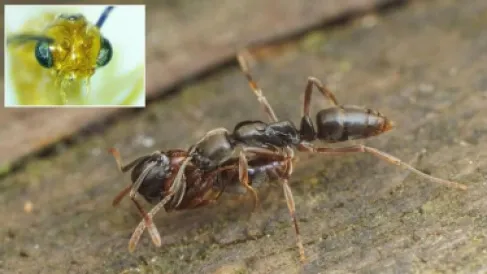
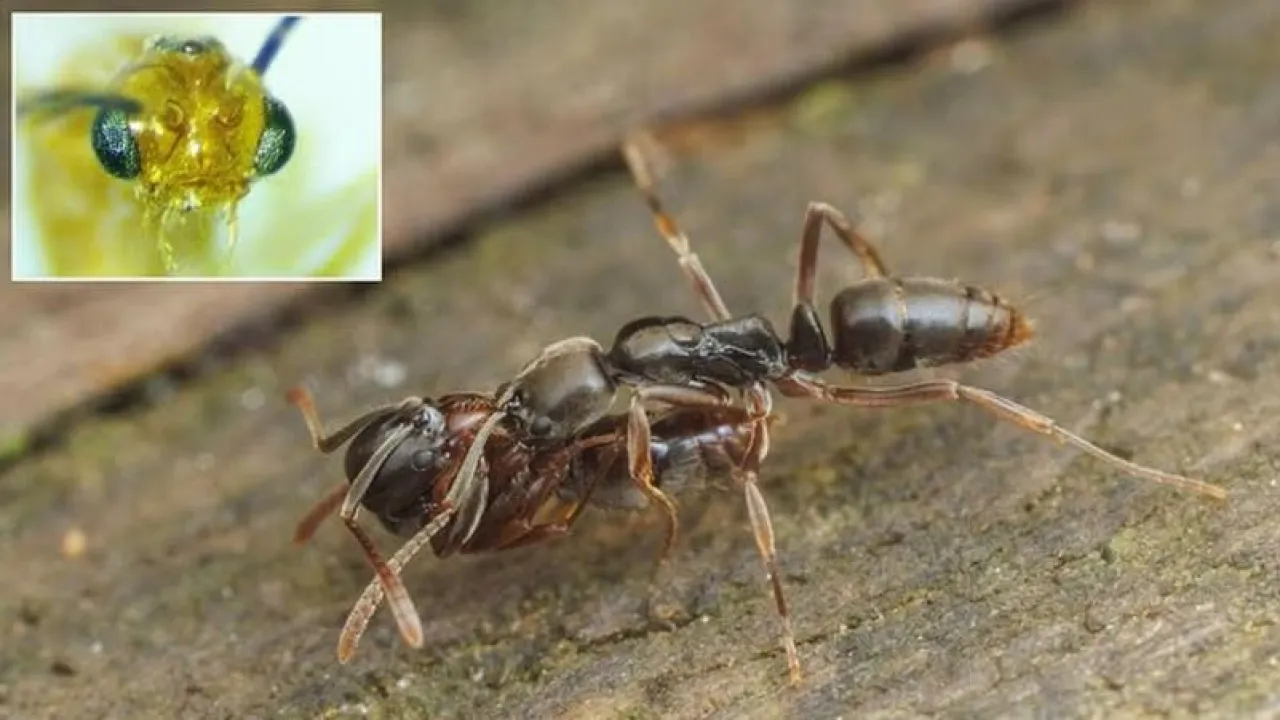
The Asian needle ant is a small to medium-sized ant, with workers and queens approximately 3 mm in length. It is characterized by its glossy appearance with a dark brown to black color, while the tips of its antennae and legs are light brownish-orange.
The bites cause severe pain at the site of the sting, appearing and disappearing over several hours, but some people have reported feeling pain in areas other than the site of the sting, according to the US Department of Agriculture.
Some people may also suffer from a severe allergic reaction that may be life-threatening, resulting from the sting of the Asian needle ant.
This ant prefers moist areas under stones or rotting tree trunks, but it is also found in gardens, lawns, plant pots, and under piles of wood, and hides in building materials such as tree trunks, bricks, and tiles.
This ant was recently spotted in Texas, where Scott Egan, an associate professor of biology at "Rice University," stated that "it is important to be aware of this new type of invasive ant, but we need to learn more about it."