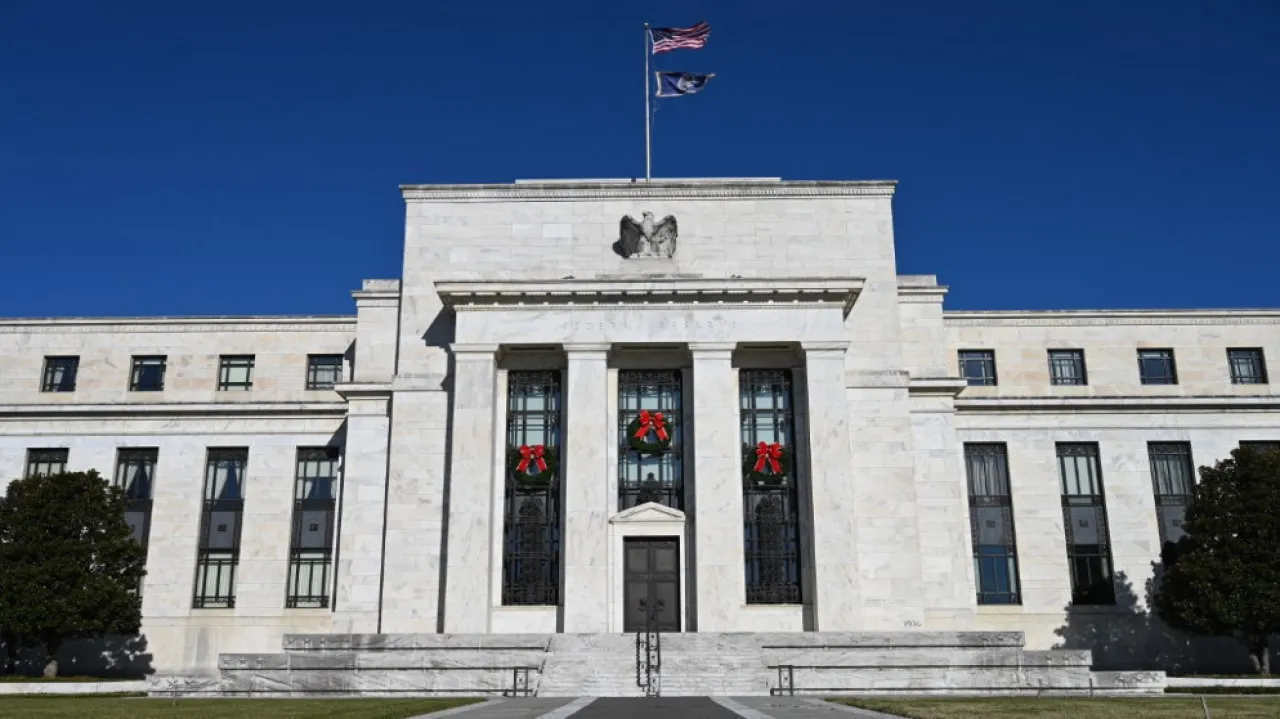
Khaberni - Officials at the Federal Reserve (the U.S. Central Bank) who opposed this week's monetary policy statement said that the increasing oil price shock due to the war in Iran means that the Federal Reserve should be clear that it can no longer lean towards cutting interest rates, with the likelihood of rising borrowing costs in the future.
In the most divided vote since 1992, the Federal Reserve this week kept the overnight benchmark interest rate steady at a range of 3.50% to 3.75%, but maintained a tone indicating that its next likely move would be to cut interest rates, in line with a process begun about 18 months ago to lower the high borrowing costs used to combat inflation towards a more "neutral" stance.
However, inflation is still much higher than the Federal Reserve's two percent target and continues to widen, amid risks related to the war’s fallout to the extent that policy makers are less certain about the possibility of cutting interest rates from their current levels. Indeed, some of them worry that they might actually have to raise them.
Federal Reserve President in Cleveland Beth Hamack said "Inflationary pressures are still broad, and rising oil prices add more pressure on inflation." Hamack supported, like two of her colleagues at the central bank, keeping interest rates steady, but she opposed the monetary policy statement of the Federal Open Market Committee due to its "bias towards easing".
She added in a statement "I feel that this tendency towards easing is no longer appropriate given the outlook."
Federal Reserve President in Dallas Lori Logan echoed this view.
Federal Reserve President in Minneapolis Neel Kashkari said he felt that the prolonged closure of the Strait of Hormuz and any other damage to energy infrastructure in the Middle East might result in a significant price shock such that the central bank would need "perhaps a series" of interest rate hikes to keep inflation expectations under control.
Kashkari mentioned in a separate statement released after the end of the Federal Reserve's meeting this week "With the continued closure of the Strait of Hormuz and the potential for more damage to the infrastructure of energy and primary commodities in the Middle East... the price shock wave may exceed what is currently anticipated."