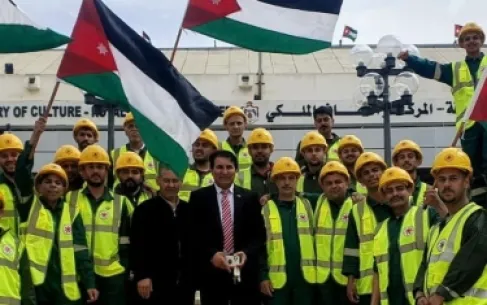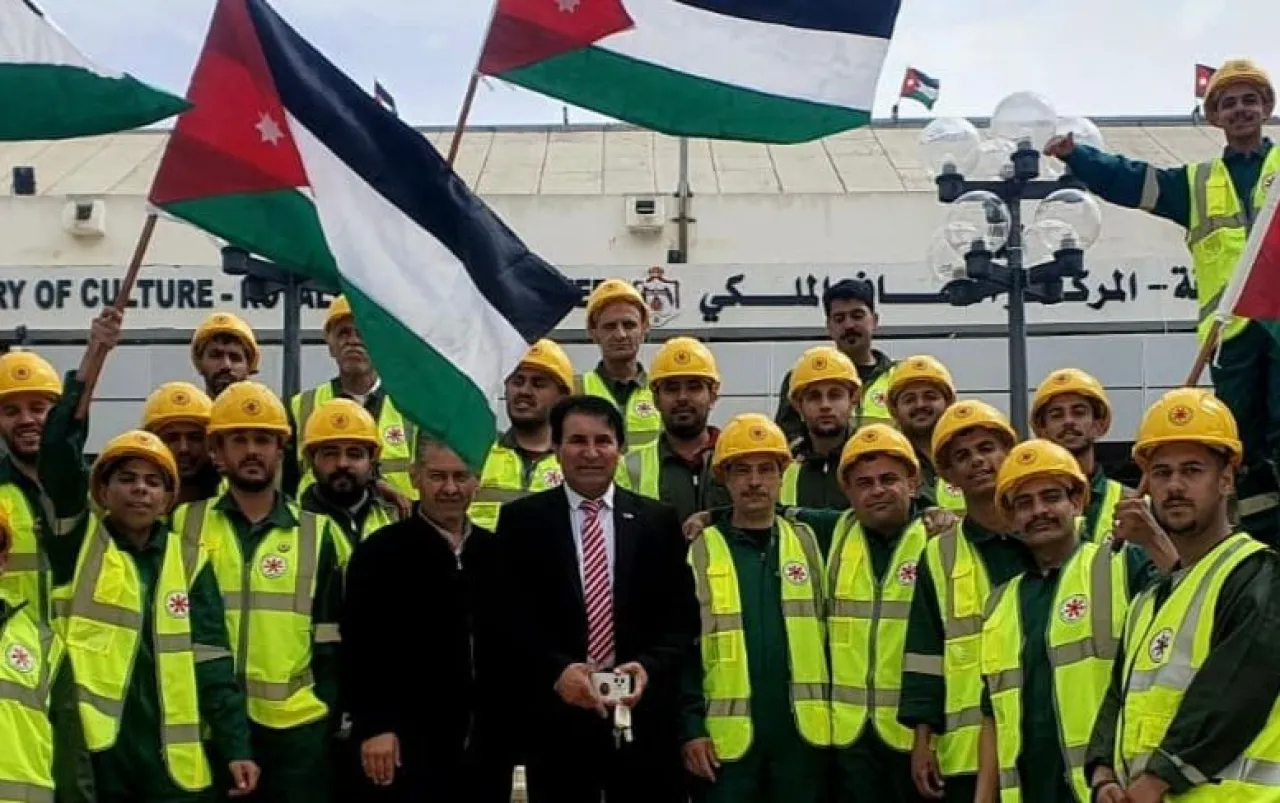
Khaberni - Khaled Al-Ziyoud, the head of the General Union of Petroleum and Chemical Workers of Jordan, emphasized that International Workers' Day is a cherished occasion for every worker, where we honor the nation builders and the makers of nations' glory, who are unsung heroes, stressing the need to translate the slogans waved on this occasion into practical steps that enhance workers' rights and achieve justice in the labor market, amid challenges and difficult conditions faced by the working class in Jordan at various work and production sites.
Al-Ziyoud said in a statement on the occasion of Labor Day, which falls on May 1st every year, that the media highlights the importance of workers and their value on this occasion, but this attention quickly fades as Labor Day ends, while labor issues remain unresolved.
He added that workers in both organized and unorganized sectors suffer from difficult conditions, pointing out that there are cases of exploitation and mistreatment that have reached concerning levels, in the face of emerging forms of exploitation related to need, unemployment, and the growing scope of poverty.
He explained that the labor market witnesses unbalanced contracts that end a worker's service depending on the whims of the employer, which weakens labor protection and affects job stability.
Al-Ziyoud stressed that raising these issues should not be a matter of hesitation, emphasizing that labor problems are numerous and complex, and that not addressing them hinders the achievement of real economic growth and tangible social stability.
He called for achieving real justice in the labor market, establishing values and principles that are translated into practical reality, and building labor relationships that preserve human dignity in terms of wages, legislation, and the labor market.
Al-Ziyoud raised several questions about major labor issues, which included:
1. Has the new social security law met the aspirations of workers, or has it touched on their fundamental rights and security and stability? He pointed out that the amendments related to the retirement age, the number of contributions, and the benefit coefficient have become a source of concern for some, as many reject its current form.
2. The Jordanian Labor Law and some of its articles, especially (23, 25, and 31), have become controversial, as some see them as weakening labor protection and legitimizing the termination of worker services without a clear justification other than notice.
3. Where is the health insurance that ensures the dignity of workers in their old age and weakness?
4. Where is the fair wage that keeps up with the rising cost of living and declining purchasing power, while some retirees' salaries remain below the minimum wage?
5. Where is the education system linked to the labor market, and how can saturated specializations be addressed amid declining employment opportunities and the withdrawal of some industries and rising production costs?
6. Where is the balance in directing spending towards productive projects instead of consumptive ones, which contributes to creating real job opportunities and addressing unemployment and poverty?
7. Where is the response to His Majesty the King's directions to empower youth and create modern job opportunities that keep up with the digital transformation and the knowledge economy?
Al-Ziyoud emphasized the need for genuine will and practical solutions, calling on the government to reconsider the mechanisms for implementing tenders and services that are sometimes referred to certain entities, which sometimes do not take into account the rights of workers in terms of wages, insurances, and working conditions.
He also called for considering the establishment of public companies managed according to clear standards that ensure service quality and preserve the rights of workers, emphasizing that these funds are public money and must be protected from exploitation.
He noted that the Jordanian economy faces real challenges in various production sectors such as agriculture, tourism, industry, services, and energy, emphasizing that diagnosing the problem is not a defect, but ignoring it is the real problem.
He stressed that addressing economic crises is not done with slogans or promises, but through clear plans and sincere will, ensuring a decent livelihood, fair wages, and a safe work environment, alongside involving workers in shaping economic policies and achieving justice in the distribution of development opportunities and employment.
In conclusion of his statement, he emphasized that workers form the foundation of renaissance and the lever of development, pointing out that addressing challenges like poverty, unemployment, and debt requires recognition of the pivotal role of workers in building the economy and enhancing stability.
He extended greetings to the working hands in Jordan and the world, affirming that they are nation builders in various fields, from construction and industry to trade, agriculture, and services, and that work and production represent the fundamental pillars for the strength and stability of nations.